
 3 min read
 20
 Linkedin
 Threads
 Facebook
 X

More than half a century after American astronauts last walked on the Moon, NASA is preparing to send a new generation of explorers beyond Earth.
And this time, the goal is not simply to visit.
NASA announced that applications are open for its next astronaut class, expanding the team responsible for the Artemis program and America's long-term plans for lunar exploration.
The announcement came during an aviation and space event at Kennedy Space Center in Florida.
NASA currently has just 32 active astronauts, a relatively small workforce for an agency preparing increasingly complex missions involving lunar landings, spacecraft operations, scientific research, and eventually a permanent Moon base.
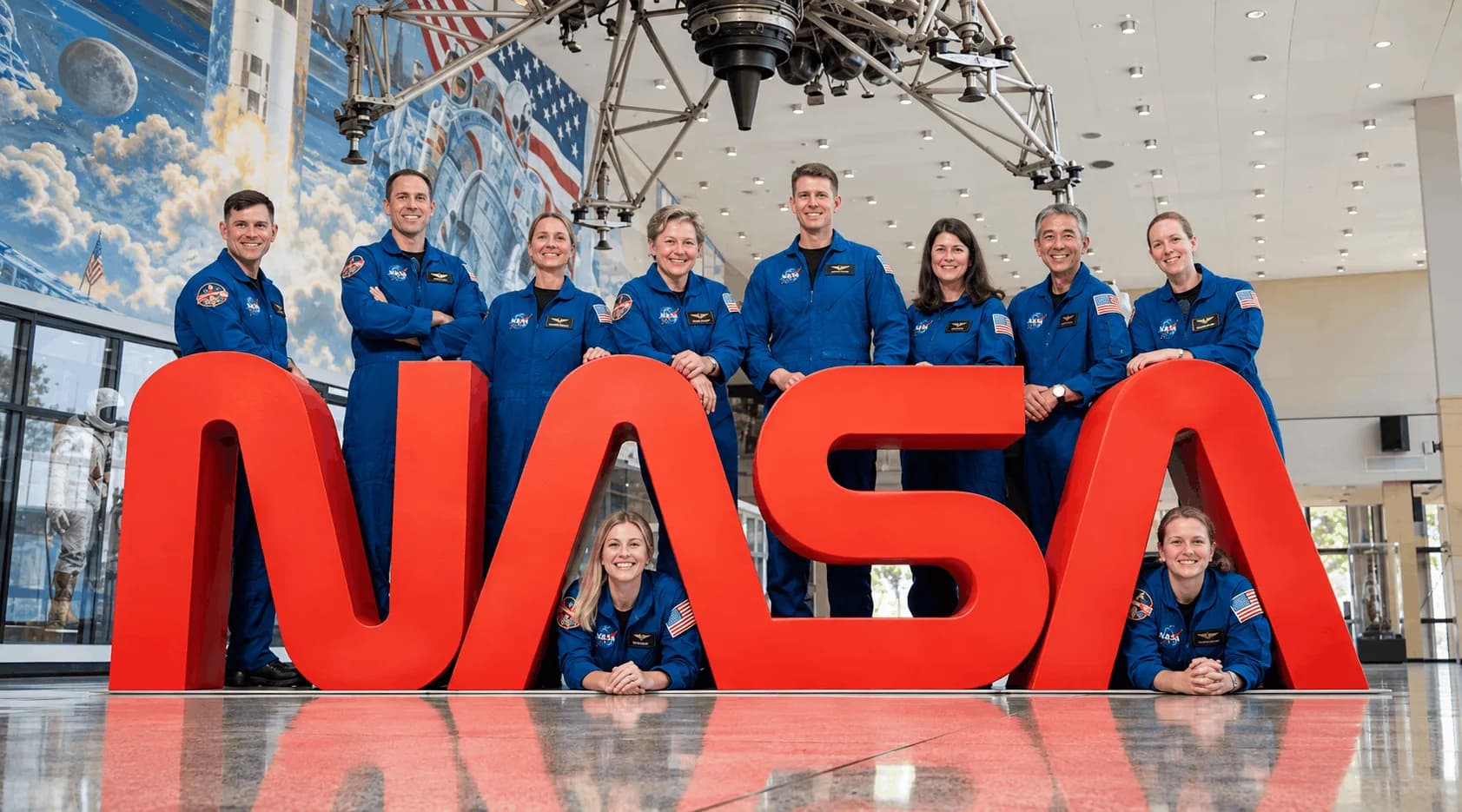
The recruitment effort represents the agency's 25th astronaut class since the original Mercury Seven were selected in 1959.
The larger story is about America's transition from short visits to the Moon toward developing the technology, workforce, and infrastructure necessary to establish a sustained human presence beyond Earth.
NASA Needs More Astronauts for a Bigger Mission
Becoming an astronaut remains one of America's most competitive career opportunities.
During NASA's previous recruitment period in 2024, more than 8,000 people submitted applications.
Only 10 were selected in September 2025.
Now, the agency is looking for another group of qualified candidates who could participate in lunar missions, support operations at a future Moon base, and contribute to preparations for eventual human exploration of Mars.
NASA plans to complete its selection process by late 2027, with astronaut candidates beginning training in early 2028.
Training typically lasts approximately two years and includes spacecraft operations, robotics, survival skills, and other demanding technical preparation.
Even after graduating, candidates may spend several additional years supporting missions before receiving a spaceflight assignment.
Astronaut Randy Bresnik, commander of the upcoming Artemis III mission, explained that NASA's expanding ambitions require considerably more personnel than its current astronaut corps can provide.
The recruitment reflects a fundamental change in NASA's goals: preparing enough people to support repeated exploration missions rather than isolated flights.
America's Next Moon Landing Is Planned for 2028
NASA's Artemis program has already reached an important milestone.
In April 2026, the Artemis II crew completed a journey around the Moon, demonstrating capabilities needed for future human exploration beyond low-Earth orbit.
The next step is Artemis III, scheduled for 2027.
Unlike earlier plans, Artemis III will not attempt a lunar landing.
Instead, four astronauts will travel into low-Earth orbit to test critical rendezvous and docking procedures involving NASA's Orion spacecraft and experimental lunar landing systems.
The mission will include NASA astronauts Randy Bresnik, Frank Rubio, and Andre Douglas, alongside European Space Agency astronaut Luca Parmitano.
Two American companies, SpaceX and Blue Origin, are developing the landing vehicles involved in the testing program.
These demonstrations are intended to verify systems before NASA attempts the more challenging task of transporting astronauts to the lunar surface.
That milestone is planned for Artemis IV in 2028.
The mission is expected to send two astronauts to the Moon's south polar region, marking humanity's first crewed lunar landing since Apollo 17 in December 1972.
The schedule remains dependent on successful spacecraft testing, hardware readiness, and mission safety assessments.
The Moon Base Could Change Space Exploration
NASA's long-term objective goes beyond planting another American flag.
The agency wants to establish infrastructure that would allow astronauts to live, work, and conduct scientific research on the Moon for increasingly extended periods.
Future lunar operations could involve habitats, robotic vehicles, communication networks, energy systems, and equipment designed to withstand extreme environmental conditions.
The Moon's south pole is particularly important because permanently shadowed regions contain evidence of water ice.
Water could support future astronauts and potentially be processed into oxygen and rocket propellant, although developing those capabilities at useful scales will require substantial technological advances.
A functioning lunar base would also provide opportunities to study how humans and equipment perform away from Earth over extended periods.
Those lessons could help NASA prepare for eventual crewed missions to Mars.
The base remains a planned development, not an operational facility.
Why This Matters for American Industry
The Artemis program is also a major technological undertaking involving American businesses, research institutions, and skilled workers.
Developing rockets, spacecraft, lunar landers, robotics, navigation equipment, and life-support systems requires advanced manufacturing and engineering capabilities.
NASA's commercial partnerships create opportunities for established aerospace contractors and newer companies developing specialized technologies.
The work also supports demand for computer scientists, electrical engineers, technicians, manufacturing specialists, and software developers.
These technologies may eventually produce applications beyond spaceflight, although their economic value will depend on which innovations prove commercially useful.
There is also a strategic dimension.
The United States is pursuing its lunar objectives during a period of increasing international competition in space exploration.
Establishing reliable transportation, communications, and scientific infrastructure beyond Earth could help determine which nations play leading roles in the next era of space activity.
For NASA, the challenge is accomplishing these ambitions safely while controlling costs and maintaining a sustainable exploration program.
Could You Become a NASA Astronaut?
NASA's recruitment is open to qualified United States citizens.
Applicants generally need advanced education in a qualifying scientific, engineering, mathematical, or related technical discipline, along with relevant professional experience.
Certain medical degrees and qualifying test-pilot backgrounds may satisfy the educational requirements.
Candidates must also meet NASA's medical and physical qualifications.
The application deadline is December 3, 2026, at 11:59 p.m. Eastern Standard Time.
NASA will evaluate applicants through a competitive selection process before announcing its next astronaut class.
For students and young professionals interested in space exploration, the announcement illustrates the growing importance of technical education, scientific research, and advanced engineering skills.
But becoming an astronaut is not the only way to participate in America's return to the Moon.
Thousands of engineers, researchers, technicians, and mission-support professionals will be needed to develop and operate the systems behind future expeditions.
The Next Generation of American Explorers
The Apollo program demonstrated that American science, industry, and determination could accomplish what once seemed impossible.
Artemis is intended to build upon that achievement.
Rather than treating the Moon as a destination for occasional visits, NASA is preparing for an era of repeated missions, long-term research, and increasingly sophisticated operations beyond Earth.
The next astronaut class could help make that vision possible.
America's return to the Moon is about more than reaching another historic milestone. It is an investment in scientific discovery, technological leadership, skilled American workers, and the next generation of explorers who may one day carry humanity farther into space than ever before.