
 3 min read
 544

 Linkedin
 Threads
 Facebook
 X

WASHINGTON, D.C. — November 16, 2026. Tomorrow, millions of Americans will hear an emergency message interrupt their television and radio programming as the Federal Emergency Management Agency (FEMA), working with the Federal Communications Commission (FCC), conducts a nationwide test of the Emergency Alert System.
The test is officially scheduled for Tuesday, November 17, 2026, at approximately 2:20 p.m. Eastern Time (1:20 p.m. Central).
This is real.
It is confirmed.
And Americans should know what to expect.
But before we go any further, one message must be absolutely clear:
Do not panic. This is a scheduled test, not an announcement of a national emergency.
There is no official warning that electricity will be disconnected, that communications will collapse or that Americans must shelter in their homes.
The test is expected to interrupt television and radio programming for approximately one minute.
No action is required from the public.
Still, as the federal government evaluates its emergency communication systems and the Pentagon pursues separate plans to strengthen military preparedness, this is an appropriate moment for American families to consider their own readiness.
Not out of fear.
Out of wisdom, responsibility and faith.
FEMA and the @FCC will test the Emergency Alert System nationwide Tues., Nov. 17, 2026, around 2:20 p.m. ET. Radio and TV may pause for about 1 minute. Cell phones will not get this test. No action is needed. ➡️ https://t.co/itCau4kr6A https://t.co/n8u5VIVEYV
— FEMA (@fema) September 17, 2026
What Will Happen on November 17?
According to the FCC's official public notice issued September 16, FEMA will transmit a nationwide Emergency Alert System message at approximately 2:20 p.m. Eastern Time.
The message will be distributed through participating radio stations, television broadcasters, cable systems and satellite providers.
Americans may hear the familiar emergency alert tones, followed by a message explaining that the broadcast is a nationwide test.
The announcement will be available in English and Spanish.
Regular programming will resume afterward.
Importantly, FEMA has confirmed that this year's exercise does not include a nationwide Wireless Emergency Alert test on mobile phones.
The federal government is evaluating whether participating broadcasters and communication systems can successfully receive and retransmit emergency information.
Under federal law, nationwide public alert systems must be tested at least once every three years.
The previous nationwide test took place in October 2023.
If a real emergency or severe weather prevents Tuesday's test, the backup date is December 3.
This is a communications readiness exercise, not a power-grid shutdown.
The Pentagon's Separate 90-Day Preparedness Initiative
There is another development that Americans should understand.
The Pentagon has been advancing an initiative known as FORTRESS America, designed to strengthen the ability of major U.S. military installations to continue operating during disruptions to civilian infrastructure.
The initiative focuses on resilience against threats such as cyberattacks, sabotage, supply-chain interruptions and failures affecting essential services.
Reporting on the initiative indicates that military installations are being directed toward the ability to sustain critical operations independently for at least 90 days.
That includes essential capabilities such as electricity, water, fuel and communications.
The Pentagon has examined technologies including independent power generation, microgrids and battery storage.
But there is an important distinction.
The military is preparing its installations to withstand possible infrastructure disruptions. It has not announced that the American public will experience a 90-day blackout.
The November 17 FEMA test and the Pentagon's longer-term military resilience program are separate initiatives.
There is no verified evidence that the emergency alert test is a rehearsal for deliberately shutting down civilian electricity.
Nevertheless, the military's emphasis on resilience reflects a reality that families should understand.
Modern society depends heavily on electricity, digital communications, transportation, financial networks and supply chains.
When any of those systems fails during a natural disaster or other emergency, ordinary life can become difficult very quickly.
And that raises a practical question.
If the military is strengthening its ability to operate during infrastructure failures, shouldn't American families also maintain basic emergency supplies?
Preparedness Is Not Panic
No one needs to rush into stores or empty supermarket shelves because of tomorrow's test.
There is no reason to spend money recklessly or purchase months of supplies overnight.
But basic preparedness is a responsible habit.
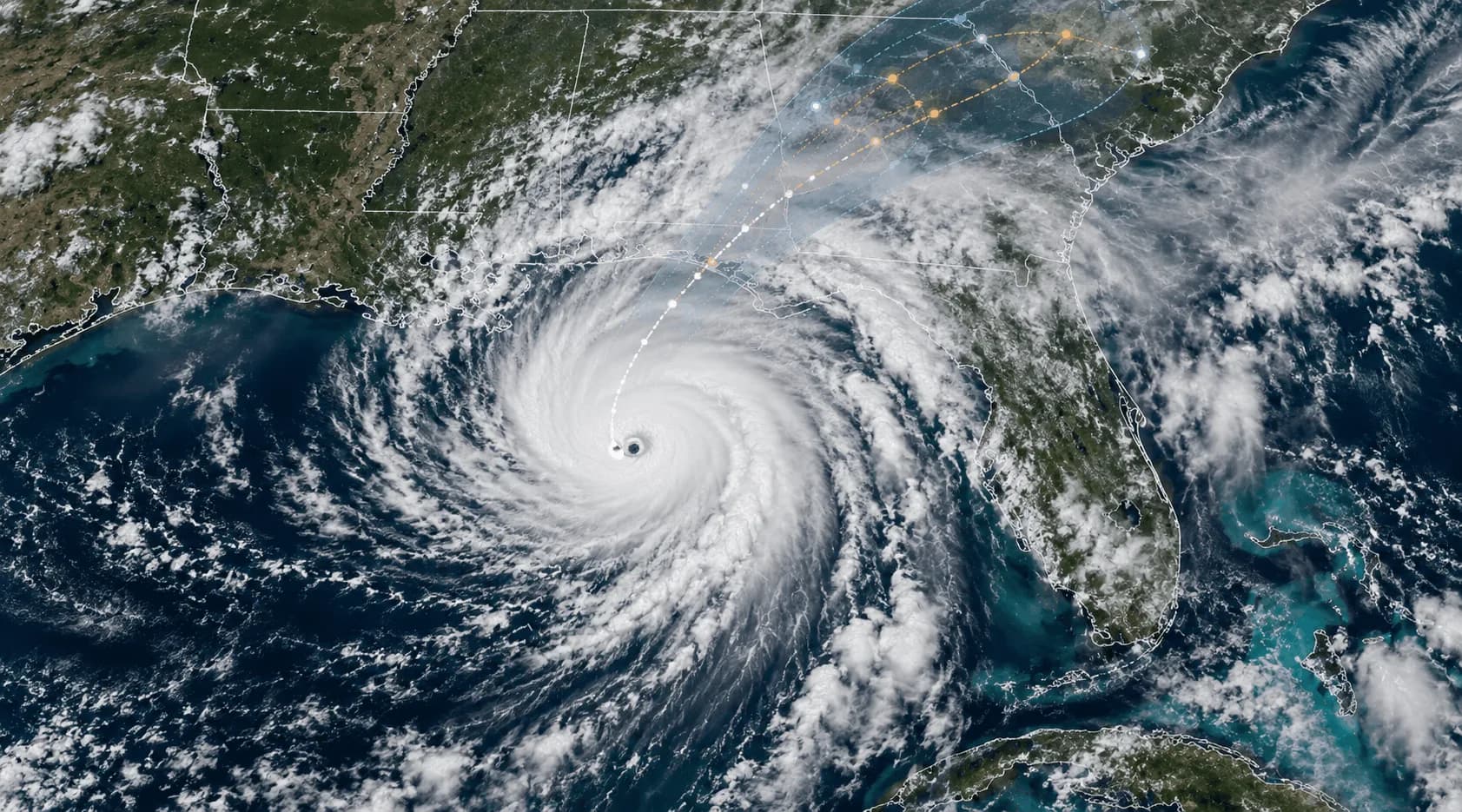
Consider what happened during major hurricanes, winter storms and prolonged regional power outages.
Families sometimes lost access to electricity, clean water, fuel or electronic payment systems.
Those emergencies were real, and they demonstrated why keeping basic supplies at home can make a difference.
Start with simple steps.
Water: Maintain a reasonable emergency supply of drinking water. Federal preparedness guidance generally recommends one gallon per person per day, with at least three days available.
Food: Gradually build a pantry containing nonperishable foods your family already eats. Canned vegetables, beans, rice, shelf-stable meals and other practical items can help during temporary disruptions.
Documents: Organize important identification, insurance information, medical details and emergency contacts. Keep copies protected in a waterproof container and, where appropriate, securely backed up.
Lighting and communications: Keep flashlights, batteries, a battery-powered or hand-crank radio, and charged portable power banks available.
Medication and family needs: Consider prescription medications, first-aid supplies, baby necessities and anything elderly family members or people with disabilities may require.
A family communication plan: Discuss where family members should meet and how they can communicate if phone service becomes unreliable.
These are not extreme measures.
They are ordinary precautions that can help during hurricanes, floods, severe storms and other emergencies.
Build your supplies gradually, according to your family's needs and financial circumstances.
Prepare with wisdom, not desperation.
Why Christians Must Not Surrender to Fear
There is another kind of preparation that cannot be purchased in a supermarket.
Spiritual preparation.
When frightening headlines circulate, when rumors spread across social media and when uncertainty fills the public conversation, Christians have a responsibility to remain grounded in truth.
Our confidence must not depend entirely on whether the electricity is working, whether the internet is available or whether tomorrow's headlines are reassuring.
Our confidence rests in the Lord.
Scripture reminds us in 2 Timothy 1:7 that God has not given us a spirit of fear, but of power, love and a sound mind.
That is not an invitation to ignore genuine dangers.
It is a reminder that fear should not control our decisions.
A sound mind verifies information.
A responsible parent prepares a household.
A faithful believer prays.
And a strong community looks after its neighbors.
Faith and preparation are not enemies. They belong together.
We do not prepare because we believe disaster is inevitable.
We prepare because we have responsibilities to our families, our communities and the people who may need our help.
America Needs Discernment, Not Rumors
Social media has been filled with speculation about nationwide blackouts, communications failures and supposed government warnings.
Some posts have incorrectly connected the November 17 test with claims of an imminent national power outage.
Others have misrepresented the Pentagon's military resilience planning as proof that civilian electricity will soon be disconnected.
Those claims are not supported by the official announcements.
Americans should examine the source of every alarming message before sharing it.
Ask questions.
Is the information from FEMA, the FCC or another identifiable authority?
Does the claim describe an actual announcement or merely someone's prediction?
Is a routine preparedness exercise being presented as evidence of an impending catastrophe?
And perhaps most importantly:
Are we responding with knowledge—or allowing fear to make our decisions?
A prepared nation is not a frightened nation.
It is a nation whose citizens understand risks, take reasonable precautions and remain capable of helping one another when challenges arise.
A Call to Prayer: Remnant at the River, January 1–3, 2027
As America approaches a new year, there is an opportunity for believers to gather, pray and strengthen one another.
Remnant at the River will take place January 1–3, 2027, at FlashPoint Ranch in Texas.
Gene and Teri Bailey are inviting believers to begin the year with three days of prayer and worship.
The gathering will begin Friday, January 1, at 7 p.m., continue Saturday evening at 7 p.m., and conclude with a Sunday gathering at 10 a.m.
For families who are concerned about the future of our nation, this is an opportunity to begin 2027 focused not on fear, but on faith.
Not on panic, but on prayer.
Not on the uncertainty of tomorrow, but on the promises of God.
Because while governments prepare emergency systems and military leaders strengthen national infrastructure, believers also have a responsibility to strengthen their spiritual foundations.
We cannot control every event that may affect our nation.
But we can choose how we respond.
We can pray for our leaders.
We can prepare our families.
We can help our neighbors.
And we can stand together in faith.
Tomorrow's Test Is Not a Reason to Fear
On Tuesday afternoon, an emergency message will interrupt regular programming across America.
For approximately one minute, millions of people will hear the nation's warning system being tested.
Then normal programming is expected to resume.
There is no need to panic.
There is no verified announcement of an impending nationwide blackout.
But perhaps tomorrow can serve as a useful reminder.
Check your emergency supplies.
Organize your important documents.
Make sure your family knows what to do during an actual emergency.
And above everything else, pray.
Our preparation should be practical. Our minds should remain sound. And our trust should remain in the Lord.
As we approach 2027, consider joining fellow believers at Remnant at the River, January 1–3, at FlashPoint Ranch.
Let us enter the new year not overwhelmed by the uncertainty of the world, but strengthened by faith, prayer and the promises of God.
Be informed. Be prepared. Do not panic. Trust in the Lord.
Register for Remnant at the River: https://www.fparmy.com/events/remnant-at-the-river-jan-1-3-2027/