

 4 min read
 45
 Linkedin
 Threads
 Facebook
 X

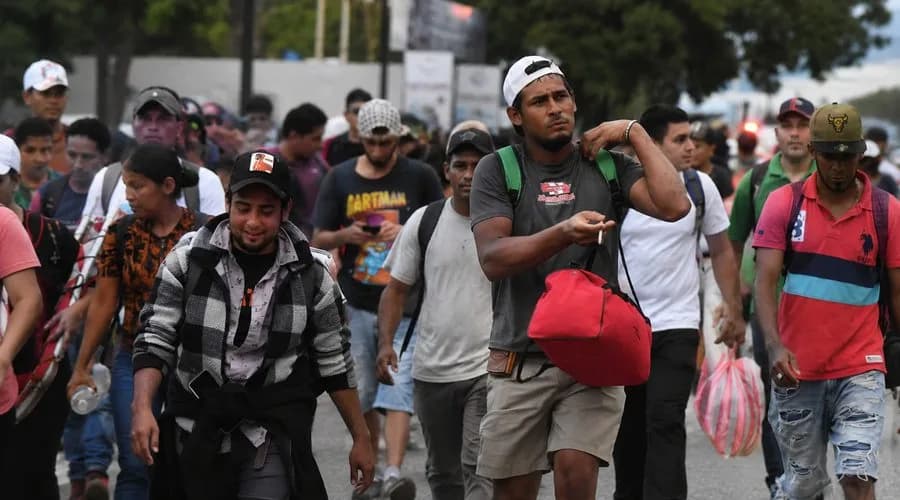
A new migrant caravan departed Honduras on Election Day, November 3, heading toward the United States at the very moment American voters were deciding the future balance of political power in Washington and Texas.
The timing is drawing attention because some migrants openly expressed hope that the elections would weaken President Donald Trump's immigration restrictions.
The caravan departed San Pedro Sula, Honduras, with dozens of men, women, and children beginning a journey through Central America and Mexico toward the United States.
It is the third such caravan to leave Honduras since September.
And while the migrants remain far from the American border, the development raises a question for Texas: How will the state's border-security policies change following the election of Democrat Gina Hinojosa as governor?
HONDURAN CARAVAN ENTERING: just like many predicted, a Honduran caravan has left San Pedro Sula yesterday, now headed towards the US. https://t.co/wDTtXHNLNy
— Real America's Voice (RAV) (@RealAmVoice) November 4, 2026
Migrants Leave Honduras Hoping U.S. Elections Will Change Immigration Policy
According to reporting by AFP, CNN en Español, and Deutsche Welle, the caravan began assembling at the metropolitan transportation terminal in San Pedro Sula.
Participants cited unemployment, insecurity, poverty, and the rising cost of living as reasons for leaving Honduras.
But the election was also on their minds.
One migrant, Jimena Morazán, 47, told AFP that she was taking the risk partly because she believed the elections could change Trump's political position. She was traveling with five family members.
Another participant, Jesús Carías, 30, was traveling with his wife and three children. According to AFP, this would be his fourth attempt to enter the United States.
CNN also interviewed a Honduran man who had lived in the United States for 26 years before being deported in September. He said he was trying to reunite with his wife and children.
These accounts illustrate the different motivations behind the caravan, from economic hardship and family separation to expectations about American immigration policy.
They also reveal an important political reality: Decisions made by American voters can influence how prospective migrants perceive their chances of entering the country.
However, an election result does not change immigration law overnight.
A Third Caravan in Less Than Two Months
The November 3 departure follows earlier caravans from Honduras in September and October.
CNN reported that the September caravan involved approximately 400 people and that another group of at least 500 departed in October.
The latest group was organized through online communication, including social media and WhatsApp groups.
Traveling in a caravan can provide participants with some protection against robbery and reduce transportation costs. At the same time, the journey exposes migrants, including children, to dangerous conditions and potential exploitation by criminal organizations.
U.S. officials have warned that some caravan organizers facilitate unlawful migration and that individuals who attempt unauthorized entry may face detention and removal.
The U.S. Embassy in Honduras has also warned migrants not to trust smugglers or assume that reaching the American border guarantees admission.
Gov. Ron DeSantis is worried TEXAS will become a SANCTUARY STATE with how many Democrats just won statewide
🚨 NOW: Gov. Ron DeSantis just EMERGED for his SECOND press conference of the day after the midterms, saying Florida held the line and all statewide offices went RED "When you look at our sister state who we always compete with — Texas — not only did they lose the US Senate race, which they haven't lost one of those in I think like 30 years, but lost it by double digits, then they lose the governor's race overwhelmingly!" Florida has a HUGE role to play over the next 2 years. We are THE BEACON ☀️ If Republicans did not surge yesterday like they did, we were done.
— Eric Daugherty (@EricLDaugh) November 4, 2026
Trump Administration Warns Against Illegal Entry
The Trump administration has maintained a restrictive approach to unauthorized border crossings and has worked with governments in Central America and Mexico to disrupt irregular migration routes.
Before the November caravan departed, American officials warned that organizers involved in facilitating illegal immigration could face visa restrictions.
U.S. officials also praised cooperation with Honduras, Guatemala, and Mexico in establishing checkpoints and preventing large groups from reaching the American border.
But the latest caravan demonstrates that enforcement warnings have not eliminated the desire to migrate.
Some participants believe political changes in Washington could eventually produce a more favorable immigration environment.
That belief does not mean the new Congress has changed immigration law or that migrants will be permitted to enter the United States.
Texas Faces a New Political Reality
The caravan's departure coincided with another major political development: Republican Governor Greg Abbott's defeat by Democrat Gina Hinojosa.
Abbott made border security one of the defining issues of his administration, including through Operation Lone Star and repeated disputes with the federal government over immigration enforcement.
Hinojosa's election raises questions about the future of those initiatives, state spending on border operations, and cooperation between Texas and federal immigration authorities.
Yet the incoming governor will not possess unlimited power to rewrite immigration law.
Federal authorities retain primary responsibility for immigration admissions and removals. Texas lawmakers control state appropriations and legislation, while the courts can review executive actions.
Nevertheless, the governor's office has significant influence over state enforcement priorities, emergency declarations, and the deployment of state resources.
That is why the political transition deserves close attention.
Representative Brian Harrison Urges Abbott to Act Before January
On November 4, Texas State Representative Brian Harrison sent Governor Abbott a letter demanding an immediate special legislative session to limit gubernatorial emergency powers before Hinojosa takes office.
Harrison argues that Texas law gives governors excessive authority during declared emergencies.
His proposed reforms include prohibiting the suspension or modification of statutes, requiring legislative approval for emergency orders lasting more than 30 days, preventing the reissuance of rejected orders, narrowing the scope of emergency directives, and accelerating judicial review.
Harrison previously introduced similar legislation through House Bill 911 in 2022.
The representative has consistently argued that emergency powers should be limited regardless of which political party occupies the governor's office.
His latest letter makes the issue particularly timely because Republicans still control the state government during the transition.
But Harrison's proposal concerns emergency executive authority, not a specific bill to stop the Honduran caravan. Its potential implications for border-security operations would depend on the legislation's final language and existing constitutional limits.
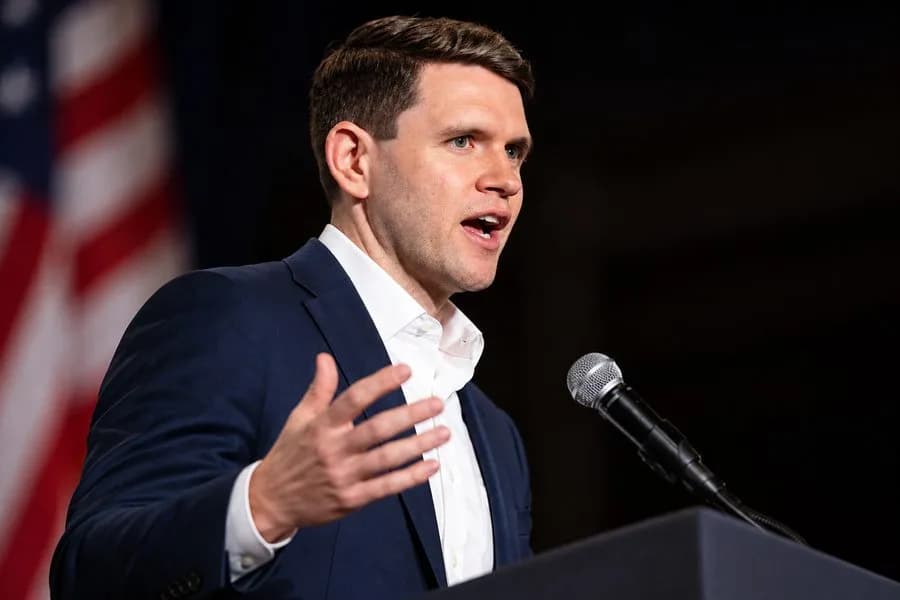
🚨 I call on Gov. Abbott to IMMEDIATELY convene a special session to REIN IN EXECUTIVE EMERGENCY POWERS… before Gina Hinojosa is sworn in! Republicans lost last night, but Democrats were not sworn in. We still have total power in Texas, and we must act like it by using the remaining ten weeks to restore separation of powers and limit the emergency powers that Governor-Elect Hinojosa is set to inherit, which would allow her to destroy liberty in Texas by executive fiat. I’ve warned since I was first elected that NO governor, Republican or Democrat, should have unchecked emergency powers! Now that Texas has elected a Democrat Governor, the urgency is undeniable… and inaction is intolerable. Without action, Governor Hinojosa will inherit the powers of a DICTATOR. Due to the absurd (and almost certainly unconstitutional) Texas emergency powers laws, Gov. Hinojosa will literally have the power to modify laws, ignore laws, or create and enforce laws – including criminal laws – on a whim! Today is a day for ACTION, and bold leadership. The Texas Legislature must immediately pass, and Governor Abbott must sign, legislation like HB911, which I filed in 2022 and warned at the time, that “Never ending emergency powers are antithetical to representative government and render people powerless. Legislative bodies allowing a single executive branch official to both write and enforce laws is the biggest threat to our constitutional system of divided government and should be opposed irrespective of which political party runs the executive branch.” My legislation would protect liberty from executive fiat by, among other things, taking the following actions: 1. Prohibit the Governor from suspending or modifying statutes 2. Sunset emergency orders in 30 days if the legislature does not ratify the order 3. Prohibit the governor from reissuing emergency orders that expired or the legislature rejected 4. Require emergency orders to be narrowly tailored 5. Subject emergency orders to expedited judicial review We have TEN WEEKS LEFT to protect Texas from near total Democrat rule. I encourage every elected Republican in Texas to join my demand for Gov. Abbott to call a special session. The future of liberty in America is literally on the line in Texas, and Texans deserve leadership that acts accordingly. @GregAbbott_TX
— Brian Harrison (@brianeharrison) November 4, 2026
What Happens Before the New Governor Takes Office?
Governor Abbott retains the constitutional authority to convene a special session before leaving office.
Lawmakers could use such a session to debate emergency-powers reform, border-security appropriations, or other matters included in the governor's call.
Whether they should do so—and what restrictions would best protect constitutional government—is a matter for public debate.
Supporters of Harrison's proposal argue that executive authority should not become a substitute for legislative decision-making.
Others may contend that strict limitations could reduce the governor's ability to respond quickly to natural disasters, public-health emergencies, and border-related crises.
Both concerns deserve examination.
A Caravan, an Election, and a Border-Policy Debate
The Honduran caravan is still at the beginning of a long journey. Its members have not been shown to have reached Texas, and their eventual immigration outcomes remain unknown.
Yet its departure on Election Day, combined with participants' stated hopes for a change in American policy, makes the timing politically significant.
At the same time, Texas is preparing for a change in leadership that could reshape its approach to border security.
Representative Harrison's letter adds another dimension: whether the outgoing Legislature should reconsider emergency powers before the incoming governor assumes office.
The central questions now are clear: Will the Trump administration's border restrictions remain effective as new caravans organize? What will Governor-elect Hinojosa change in Texas? And will Abbott call lawmakers back to Austin before the transfer of power?
Those questions deserve answers grounded in law, public accountability, and verified developments. Texans are entering in a different time. Let's mobilize. Create your account and join our efforts for 2028: https://app.fparmychapters.com/login