


 3 min read
 31
 Linkedin
 Threads
 Facebook
 X

Talarico offers to work with Trump while El-Sayed mocks JD Vance. An analysis of the two new Democratic senators and the GOP's next challenge.
1. Abdul El-Sayed: Victory, Mockery, and Questions About Political Judgment
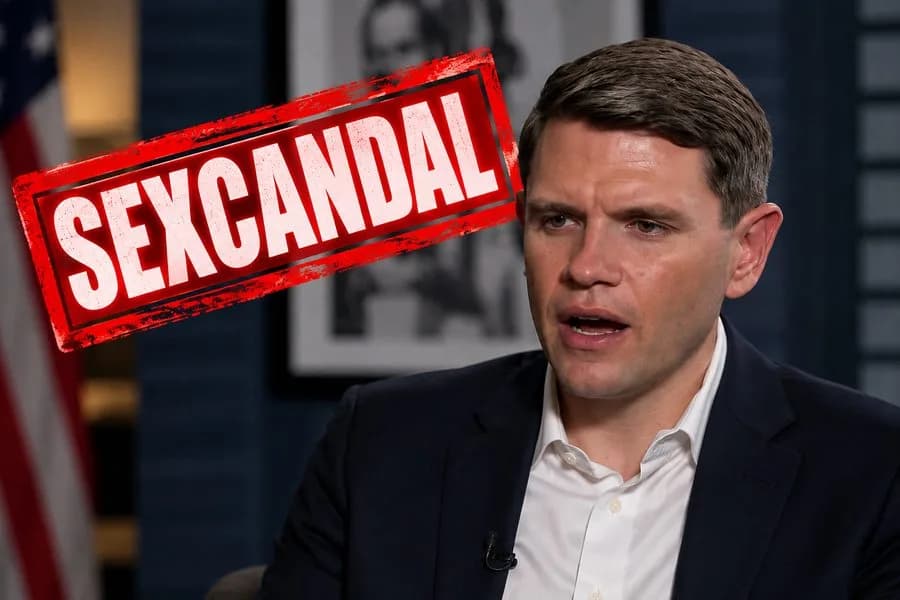
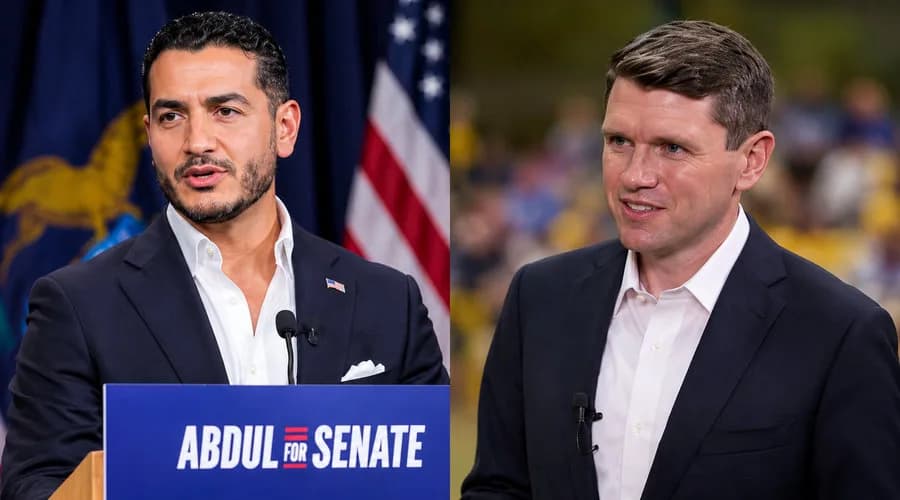
America has elected a new generation of senators, and Michigan's Abdul El-Sayed is already demonstrating how confrontational the next Congress could become.
During his November 4 victory speech, El-Sayed mocked Vice President JD Vance, addressing him with the Arabic expression habibi and celebrating the irony that Vance would be expected to administer his Senate oath. He also criticized President Trump and the attacks directed at him during the campaign.
Political opponents are entitled to respond to criticism. But there is a difference between defending your principles and turning your first moments as senator-elect into a personal confrontation.
The language El-Sayed used is not the problem. Arabic is spoken by millions of Americans and people worldwide. The question is what his remarks reveal about his approach to governing and working with political opponents.
There is also an unresolved controversy surrounding his campaign.
“JD, habibi, there is this delicious irony in the fact that you are constitutionally obligated to swear me in in January.” Michigan Democrat Abdul El-Sayed mocks VP JD Vance right out of the gate after securing a Senate seat. https://t.co/i8zXvjSP6v
— FOX & Friends (@foxandfriends) November 4, 2026
In October, an undercover recording published by O'Keefe Media Group showed Democratic organizer Abdoul Beckwith alleging that El-Sayed received contributions from overseas donors through intermediaries.
The Michigan Democratic Party subsequently dismissed Beckwith. El-Sayed's campaign rejected his allegations as false and said it complied with federal campaign-finance law.
These are serious allegations, but they are not verified evidence of illegal donations. The available reporting also does not establish that prohibited money originated in Yemen.
Foreign nationals generally cannot finance American election campaigns, although eligible American citizens and lawful permanent residents living abroad may legally contribute.
The proper response is transparency: Examine campaign-finance disclosures, investigate credible evidence, and establish whether any laws were violated.
El-Sayed has every right to celebrate his victory. Americans have an equal right to scrutinize his judgment, campaign operations, and conduct in office.
The election gave him a Senate seat. His record will determine what he does with it.
2. James Talarico Praises Trump: Cooperation or Political Calculation?
Now consider the strikingly different message coming from Texas.
James Talarico, newly elected to the U.S. Senate after defeating Ken Paxton, is suddenly emphasizing his willingness to work with President Donald Trump.
During a November 4 Fox News interview, Talarico credited Trump with improving border security compared with the Biden administration. He also proposed cooperation on comprehensive immigration reform, housing construction, regulatory reform, marijuana legalization, and criminal-justice policy.
In a separate interview released November 2 on The Diary of a CEO, Talarico expressed interest in working with Trump to fulfill some of the promises of the MAGA movement.
Think about the political contrast.
Trump repeatedly attacked Talarico during the campaign, even using the nickname “Talafreako.”
Yet Talarico now speaks about cooperation, shared priorities, and delivering results for Texans.
Is this a genuine attempt at bipartisanship? Or is it a calculated effort to build a broader national political identity?
My concern is that voters should not confuse an appealing television interview with a proven commitment to compromise.
🔥🚨 HOLY CRAP! — JAMES TALARICO is blasting his own party and saying he will work with President Trump on immigration, housing, and criminal justice after the midterms. TALARICO: "I think there’s a wide variety of issues that we could work together on. Immigration is one of them." "We should figure out a pathway to citizenship for those hardworking neighbors who have been here for years and decades so they can come out of the shadows." "I also want to work with the president on housing. He’s a builder, and we need to cut the red tape, the regulation that sometimes my party has been guilty of so that we can build millions of new homes in this country."
— The Patriot Oasis™ (@ThePatriotOasis) November 4, 2026
Talarico has demonstrated considerable communication skills. He knows how to frame progressive policy goals in language that can appeal to moderates and even some conservatives.
That approach may also increase his national visibility at a time when Democrats are searching for future leaders.
From an editorial perspective, the possibility of a carefully managed political repositioning deserves scrutiny. But describing it as a Machiavellian strategy remains an interpretation, not a proven account of his intentions.
There is another possibility: Talarico may genuinely believe cooperation is necessary to accomplish his legislative goals.
The test will come through his votes, the bills he sponsors, and his willingness to negotiate when doing so carries political costs.
Watch what he does in Washington—not simply what he says on television.
3. Republicans Lost the Election. Now Comes the Accountability Test.
The election is over. Republicans made mistakes, including failures in candidate development, political communication, and explaining their accomplishments.
Another weakness deserves attention: Republicans often struggle to communicate their policy successes while responding effectively to allegations involving political opponents.
The Epstein files offer a test of whether accountability can be pursued consistently.
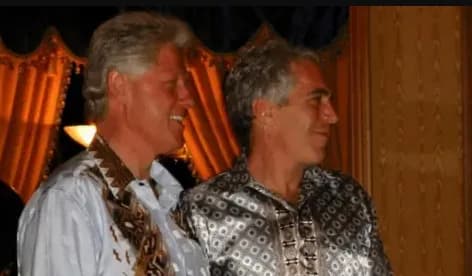
Bill Clinton appears in flight records documenting 26 segments aboard Jeffrey Epstein's aircraft. White House records also document 17 Epstein visits during Clinton's presidency.
DOJ-released photographs show Clinton in a pool with Ghislaine Maxwell and another person, and in a hot tub beside a person whose identity was redacted.
Those images raise questions, but they do not prove that the unidentified person was a minor or that Clinton committed a crime. Clinton has denied wrongdoing.
Democrats can take Congress. They still don’t get the White House. Foreign policy is executive power. Rubio just said the quiet part out loud: Trump was elected to run it for four years. Midterms don’t rewrite that. Our enemies can game the midterms all they want. America First stays locked in for two more years. Nothing changes that.
— Brigitte Gabriel (@ACTBrigitte) November 4, 2026
The same evidentiary standards must apply to Trump and everyone else named in the files.
Congress should pursue credible evidence wherever it leads, without turning investigations into partisan theater.
Meanwhile, Republicans face a separate challenge: preparing for the next presidential election.
Whether future leadership comes from Marco Rubio, JD Vance, or another candidate, party organizations should begin evaluating leadership, building effective communications, and developing policy proposals now.
Democratic control of Congress could produce investigations or impeachment efforts targeting Trump. But such proceedings are not inevitable, and removing a president would require a two-thirds Senate vote.
Republicans cannot spend the next two years reacting to every political attack while neglecting their own future.
The lesson of November 3 is not that America has stopped listening to Republicans.
It is that political trust must continually be earned—and that the conduct of newly elected Democrats deserves the same careful scrutiny as the record of the Republicans they defeated.