
 3 min read
 147
 Linkedin
 Threads
 Facebook
 X

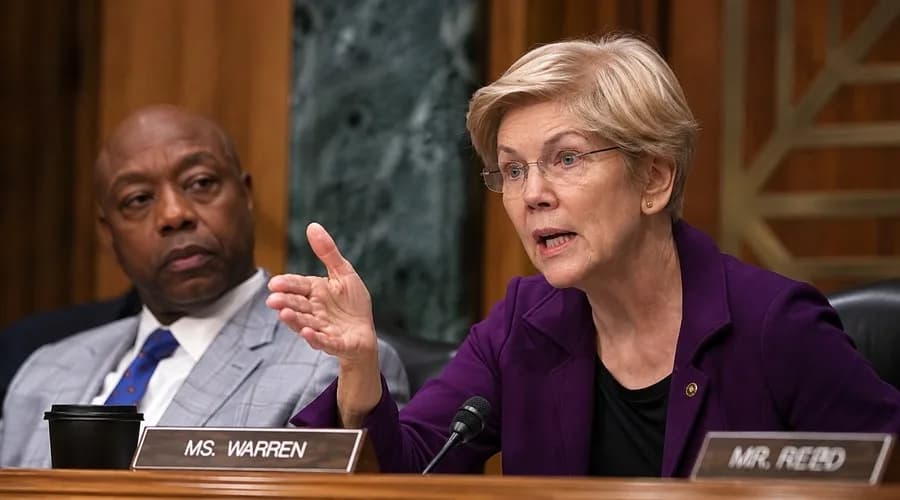
WASHINGTON, D.C. — November 16, 2026. A federal prosecutor has issued a formal warning to Democratic Senator Elizabeth Warren of Massachusetts, demanding that she preserve documents related to potential congressional investigations targeting individuals and businesses associated with President Donald Trump.
U.S. Attorney Aaron Reitz, who leads the Southern District of Texas, sent Warren a letter on November 15 warning of possible legal consequences if relevant records are not preserved.
The warning comes as Democrats prepare to assume control of Congress in January, placing Warren in line to become chair of the powerful Senate Banking Committee.
At the center of the dispute is a constitutional question:
Can congressional investigations become a weapon against Americans because of their political associations?
Federal Prosecutor Demands Preservation of Records
Reitz accused Warren of preparing to use her anticipated committee authority against private citizens associated with President Trump.
His letter cited federal civil rights statutes, specifically 18 U.S.C. Sections 241 and 242, which address conspiracies against constitutional rights and willful deprivation of rights under color of law.
The prosecutor instructed Warren to preserve potentially relevant emails, messages, documents and other electronic communications.
He also demanded written confirmation by 6 p.m. Eastern on November 23 that the senator had received the notice and taken steps to preserve the records.
Reitz warned that failure to comply could bring sanctions or other legal consequences.
However, the letter does not establish that Warren committed a crime, and no criminal charges were announced.
Warren's Television Interview Raises Concerns
The confrontation followed Warren's November 8 appearance on CBS News' Face the Nation.
During the interview, Warren discussed plans to investigate corporations and executives she believes may have violated federal laws.
She specifically raised concerns about financial misconduct and companies receiving favorable treatment from the Trump administration.
When asked whether Democrats would focus on legislation or investigations, Warren responded that both would be necessary.
She also indicated that investigations should examine individuals and corporations accused of cheating consumers or investors.
Reitz interpreted those remarks differently.
He argued that Warren's statements suggested an intention to investigate individuals because of their relationships with Trump.
That allegation remains disputed. Warren's public comments do not, by themselves, establish an unlawful investigative purpose.
Trump Allies and Corporate Executives Under Scrutiny
Warren has repeatedly criticized major technology companies and influential executives, including Elon Musk, Jeff Bezos and Mark Zuckerberg.
She has also questioned relationships between corporations and the Trump administration.
The federal prosecutor's warning follows similar preservation demands involving Democratic Senators Richard Blumenthal and Elissa Slotkin.
Representative Robert Garcia has also received a separate warning from White House Counsel Will Scharf.
The growing confrontation reflects an increasingly contentious relationship between the executive branch and congressional Democrats preparing to exercise investigative authority.
White House Communications Director Steven Cheung accused Democrats of attempting to weaponize government power against individuals associated with the president.
Democrats, meanwhile, maintain that congressional oversight is necessary to investigate potential misconduct.
What Does the Constitution Actually Allow?
Congress possesses broad investigative authority when inquiries serve legitimate legislative purposes.
The Constitution's Speech or Debate Clause also provides important protections for legislative activities.
But congressional authority is not unlimited.
Investigations cannot lawfully be conducted solely to punish individuals for exercising protected constitutional rights.
At the same time, political association does not grant immunity from legitimate investigations into potential wrongdoing.
The essential distinction is whether an investigation seeks evidence of unlawful conduct or attempts to punish someone for political relationships.
Reitz's letter raises that concern but does not prove that Warren crossed the constitutional line.
Trump Administration Responds to Democratic Investigation Plans
President Trump recently directed the Justice Department to examine what he characterized as threatening conduct by Democratic lawmakers.
Attorney General Todd Blanche initially declined to rule out possible criminal consequences.
He subsequently clarified that there were no ongoing criminal investigations based on statements made by incoming members of Congress.
Trump also shared Reitz's warning on Truth Social.
The developments have generated competing concerns.
Administration officials argue that political opponents should not be permitted to misuse congressional authority.
Critics of the administration warn that federal prosecutors must likewise avoid using criminal enforcement powers to intimidate lawmakers conducting legitimate oversight.
Both concerns involve fundamental constitutional principles.
A November 23 Deadline and a Constitutional Test
Warren's office had not publicly responded to the preservation demand when the initial reports were published.
The immediate question is whether she will provide the requested confirmation before the November 23 deadline.
But the larger dispute will extend beyond one letter.
As Democrats prepare to assume congressional leadership, disputes over subpoenas, investigations and executive accountability could intensify.
Americans deserve investigations based on evidence, not political loyalty or hostility.
They also deserve federal law enforcement that operates independently and respects constitutional boundaries.
No American should face government punishment merely for supporting a president. And no public official should be shielded from legitimate scrutiny because of political connections.
The question now is whether both branches of government will respect those limits.
Because the Constitution does not exist to protect one political party from another.
It exists to protect the rights of the American people.