
 2 min read
 17
 Linkedin
 Threads
 Facebook
 X

At one of America's most sacred military memorials, First Lady Melania Trump delivered a message of remembrance, gratitude, and national unity.
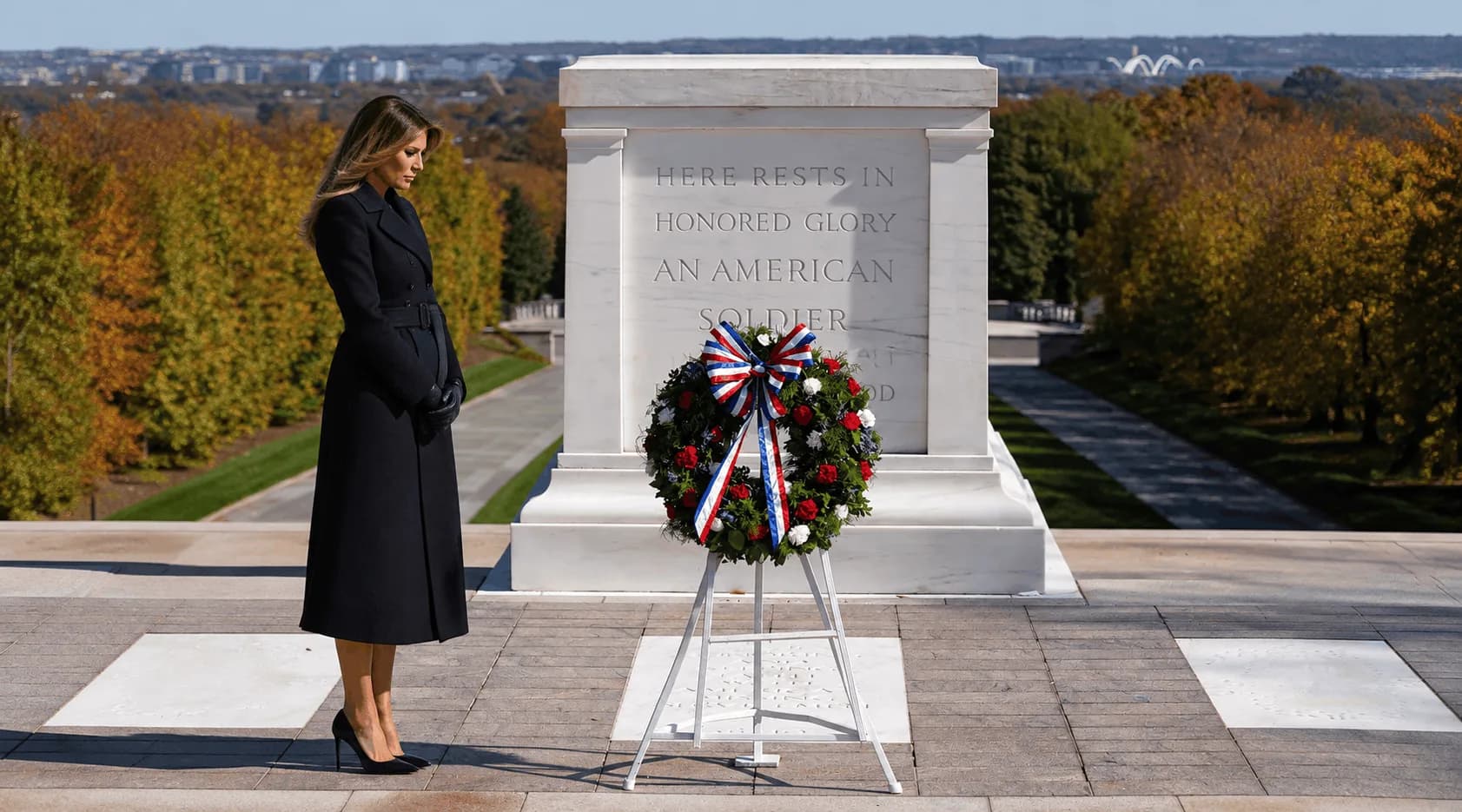
The First Lady participated in a wreath-laying ceremony at the Tomb of the Unknown Soldier at Arlington National Cemetery in Virginia.
The White House released her reflections the following day, emphasizing the lives sacrificed in military service and the importance of preserving their memory for future generations.
Her remarks focused on something often overlooked during national commemorations: behind every fallen service member was an individual with dreams, relationships, talents, and a future that never came to pass.
For Melania Trump, honoring these Americans means remembering not only their military service but everything they surrendered for their country.
Remembering the Lives America Lost
In her statement, the First Lady reflected on the quiet atmosphere surrounding the memorial and the opportunity it provides to contemplate military sacrifice.
She remembered Americans who died defending the nation's freedom and acknowledged the families and loved ones whose lives were permanently changed.
Her message emphasized that military casualties represent more than historical statistics.
Among America's fallen were parents, future leaders, artists, athletes, and individuals whose contributions to society were cut short.
Each represents a life of possibilities surrendered in service to the nation.
This understanding gives the Tomb of the Unknown Soldier particular significance.
Although the identities of those honored there are unknown, their sacrifices represent countless Americans whose personal stories deserve remembrance.
A Memorial That Has United America Since 1921
The Tomb of the Unknown Soldier was established at Arlington National Cemetery on November 11, 1921.
That day, President Warren G. Harding presided over the burial of an unidentified American service member who had died during World War I.
The memorial later expanded to honor unknown service members from World War II and the Korean War.
An unidentified Vietnam War service member was interred there in 1984. DNA testing subsequently established his identity as Air Force First Lieutenant Michael Joseph Blassie, and his remains were returned to his family in 1998.
The Vietnam crypt remains empty, dedicated to Americans still missing from that conflict.
Today, the memorial serves as a national symbol of courage, remembrance, and the sacrifices made by military personnel throughout American history.
Honoring Americans From Every Background
One of the strongest themes in Melania Trump's statement was national unity.
The First Lady emphasized that America's military has brought together people of different backgrounds, races, and religious traditions in the common defense of freedom.
Their shared commitment to the country transcended personal differences.
That legacy is particularly meaningful as America approaches the 250th anniversary of its independence.
Across generations, Americans have answered the call to military service, often leaving their homes and families to defend a nation whose future they might never see.
The Tomb represents that enduring commitment.
It reminds visitors that the freedoms Americans enjoy today were protected by individuals who placed service above personal security.
The Soldiers Who Never Abandon Their Post
Melania Trump also recognized the elite soldiers assigned to guard the Tomb.
Members of the 3rd U.S. Infantry Regiment, known as The Old Guard, maintain a continuous vigil over the memorial.
Since 1937, the Tomb has been guarded 24 hours a day, seven days a week, regardless of weather.
The Old Guard assumed this responsibility in 1948.
Its sentinels undergo demanding training and maintain precise ceremonial standards that reflect the dignity of their assignment.
The First Lady described their commitment as an example for America's children.
Their unwavering presence demonstrates that the nation's responsibility to its fallen service members does not end when a war concludes.
It continues through remembrance, military tradition, and the preservation of national history.
A Legacy Future Generations Must Preserve
The Veterans Day ceremony connected remembrance of fallen heroes with appreciation for all Americans who have served in uniform.
While Veterans Day primarily honors military veterans, the Tomb provides an opportunity to recognize those who never returned home.
For military families, these commemorations carry deeply personal meaning.
They recognize the sacrifices made not only by service members but also by spouses, children, parents, and loved ones.
For younger Americans, the memorial offers a lesson about patriotism, responsibility, and the true cost of freedom.
Melania Trump's tribute reinforces an enduring American principle: freedom carries a responsibility to remember those who defended it. Their names may be unknown, but their sacrifice belongs to the entire nation. Honoring them means ensuring that future generations understand the courage, unity, and commitment upon which America was built.