
 3 min read
 22
 Linkedin
 Threads
 Facebook
 X

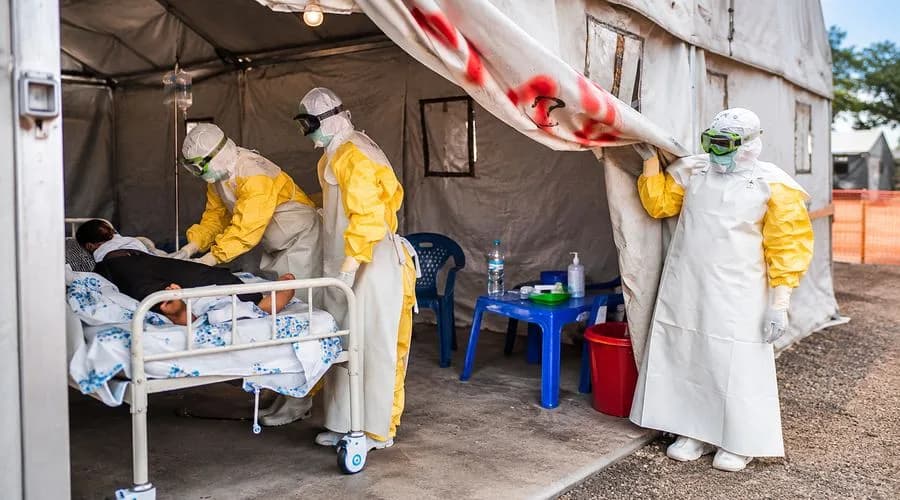
BUNIA, DEMOCRATIC REPUBLIC OF THE CONGO — A devastating Ebola outbreak has surpassed 11,000 infections, killing more than 5,300 people and placing thousands of families in a desperate struggle for survival.
According to figures released Wednesday by Congo's Health Ministry, 11,042 infections and 5,387 deaths have been recorded since the outbreak began in May.
The virus has spread across eight of the country's 26 provinces, making this Congo's deadliest recorded Ebola outbreak.
Behind every statistic is a human life: a mother, a father, a child, or a healthcare worker who entered a treatment center hoping to save someone else.
A Deadly Virus Without an Approved Vaccine
The outbreak is caused by the Bundibugyo virus, a type of Ebola virus for which no approved vaccine or specific antiviral treatment currently exists.
Unlike the Zaire Ebola virus, for which vaccines and treatments have been developed, Bundibugyo presents a particularly difficult challenge.
The disease spreads through direct contact with infected bodily fluids or contaminated materials.
Early symptoms can include fever, fatigue, headaches, and muscle pain. Severe cases may progress to organ damage, bleeding, and death.
Supportive medical care can improve survival, but early detection and isolation remain essential.
Violence Is Making the Emergency Worse
Eastern Congo has endured years of armed conflict, displacement, and instability.
Now those conditions are interfering with lifesaving medical operations.
Health workers have faced attacks, treatment facilities have been damaged, and dangerous roads have prevented medical teams from reaching vulnerable communities.
Ituri province accounts for nearly 70% of reported infections, while North Kivu has become a major center of new transmission.
In some communities, misinformation and distrust have led residents to resist medical intervention.
The consequences are devastating.
When healthcare workers cannot safely reach patients, a treatable emergency can become a fatal one.
Children and Schools Are Suffering
The outbreak has also reached educational communities.
Schools in affected areas have reported infections among teachers, while students and staff struggle with fear, grief, and uncertainty.
Some schools have lost employees to the disease.
For children already growing up amid poverty and armed violence, Ebola represents another traumatic disruption to ordinary life.
Education, healthcare, and family stability are being threatened simultaneously.
The Threat Has Crossed Borders
Ebola infections associated with the outbreak have also been reported in Uganda, Kenya, and Nigeria.
International health agencies are strengthening surveillance, contact tracing, and infection-control procedures.
The United States has introduced additional travel-screening measures for people with recent exposure to affected regions.
However, the CDC reports that no cases connected to this outbreak have been confirmed in the United States and that the risk to the American public remains low.
There Is Still Hope
Despite the suffering, health authorities report encouraging developments.
Nearly 3,000 people have recovered, and transmission has begun slowing in some affected communities.
Scientists are also evaluating experimental vaccine candidates that could provide additional protection against the Bundibugyo virus.
The World Health Organization continues coordinating international assistance while calling for safer access to affected populations.
But medical science cannot succeed alone.
Healthcare workers need security. Families need accurate information. Patients need functioning treatment centers.
And communities devastated by conflict need an opportunity to recover.
The World Cannot Look Away
More than 5,300 lives have already been lost.
These are not distant statistics. They represent families grieving, children losing parents, and communities fighting to survive.
The measure of the international response will not be the number of emergency declarations issued, but the number of lives protected through effective medical care, humanitarian access, and sustained public-health action.
Congo's families deserve more than headlines.
They deserve a chance to survive.