

 3 min read
 8
 Linkedin
 Threads
 Facebook
 X

Nvidia, the semiconductor giant at the center of America's artificial intelligence revolution, is facing one of the most consequential leadership transitions in its history.
On Thursday, November 12, the company confirmed that co-founder Jensen Huang had resigned as president, chief executive officer, and board member, effective immediately.
Chief Financial Officer Colette Kress has been appointed interim CEO while Nvidia searches for a permanent successor.
Now another legendary technology executive is entering the conversation: Tim Cook, Apple's former chief executive.
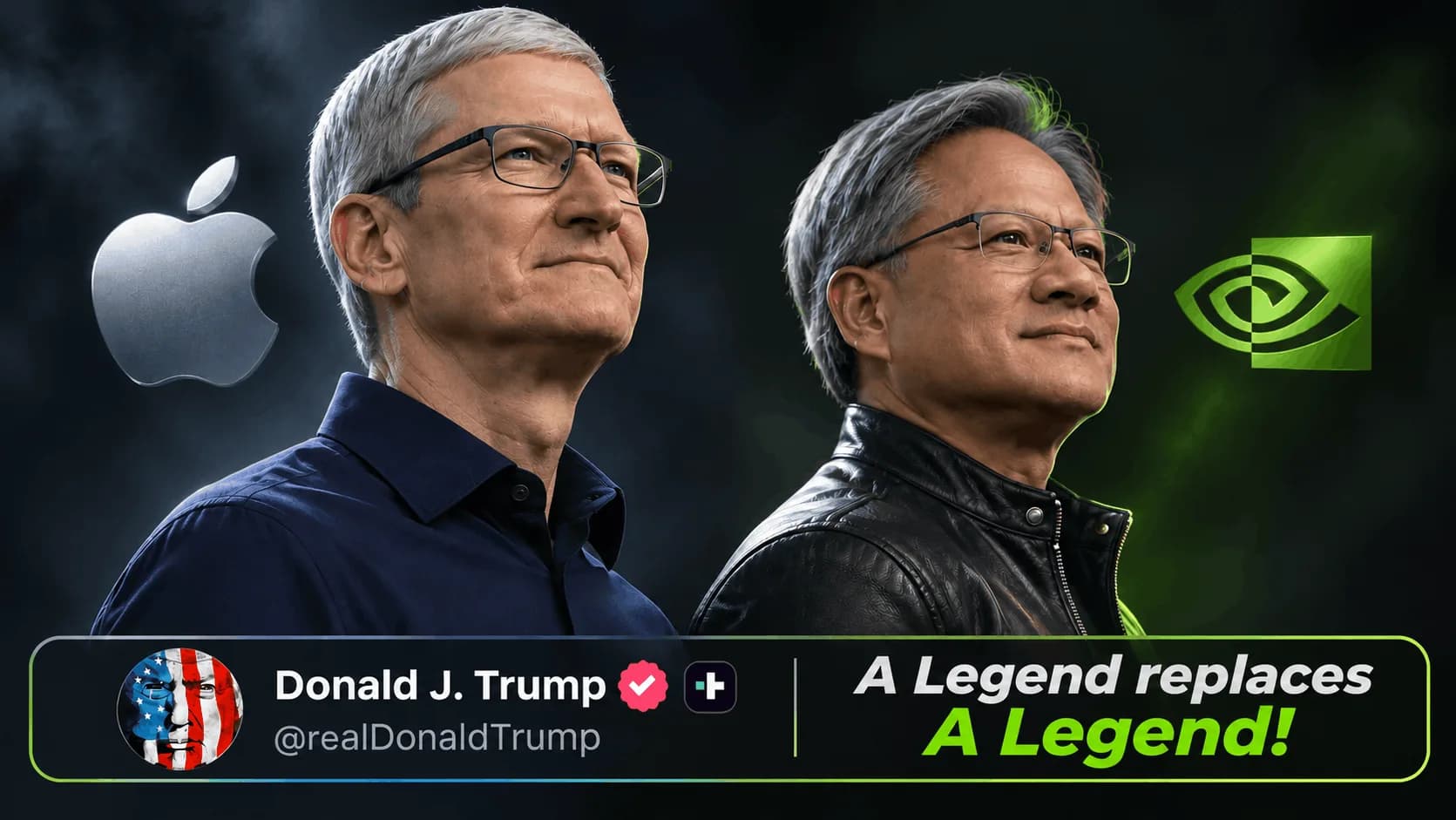
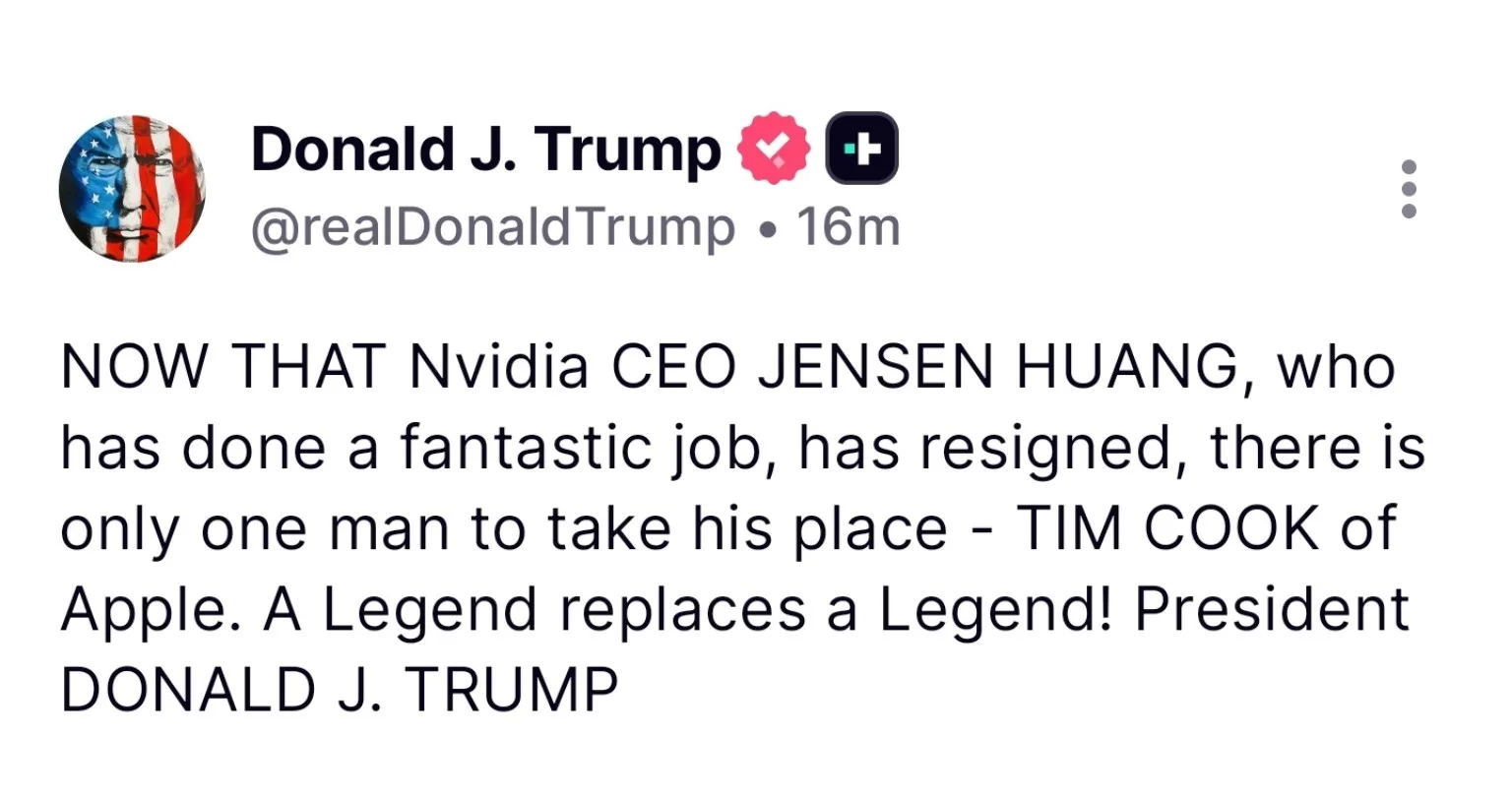
President Donald Trump has publicly endorsed Tim Cook as his preferred successor to Jensen Huang following the Nvidia founder's resignation. In a November 12 statement on Truth Social, Trump praised Huang's leadership and declared that Cook, Apple's former CEO, was the person he wanted to see take over. The president's endorsement introduces a major new dimension to Nvidia's leadership transition, placing one of America's most experienced technology executives at the center of the conversation. Cook's record managing Apple's global operations, navigating international trade relationships, and overseeing a multitrillion-dollar technology business could offer investors a measure of confidence during a period of uncertainty. However, the final decision rests with Nvidia's board, which has appointed Colette Kress as interim CEO while it searches for a permanent replacement.
Could the executive who guided Apple through its post-Steve Jobs era provide the leadership Nvidia needs during an extraordinary crisis?
Why Tim Cook's Name Is Being Discussed
Cook's name has surfaced in public commentary about Nvidia's succession.
Yale School of Management professor Jeffrey Sonnenfeld identified Cook as a possible outside candidate, alongside former Google CEO Eric Schmidt.
Financial commentator Douglas A. McIntyre also argued on November 12 that Cook could be considered for the position.
Neither suggestion establishes that Nvidia's board is considering him.
But the reasoning is understandable.
Cook led Apple through an extraordinary period of global expansion, managing complex manufacturing operations, international relationships, and one of the world's most valuable technology businesses.
He also understands the political sensitivities of doing business across the United States and China.
Those skills could become especially relevant to Nvidia.
Why Jensen Huang's Departure Shook the Market
Huang co-founded Nvidia in 1993 and spent more than three decades transforming it from a graphics processor company into a dominant supplier of artificial intelligence computing hardware.
His resignation follows reports concerning personal relationships, corporate governance questions, and allegations involving a businesswoman suspected of connections to Chinese intelligence.
Nvidia initiated an internal investigation. The allegations do not establish that Huang knowingly compromised company secrets or national security.
Nevertheless, investors reacted sharply.
Nvidia shares fell approximately 13% in early Thursday trading, according to Investopedia.
The market's concern extends beyond the departure of a chief executive.
Huang was deeply involved in Nvidia's technology strategy, customer relationships, and long-term product vision.
Replacing that combination of technical knowledge and executive leadership will not be simple.
Why Cook Could Bring Stability
Cook's experience offers three qualities that investors may find relevant.
First, operational discipline. Apple's enormous supply chain required consistent execution across manufacturing partners, suppliers, and global markets.
Second, leadership continuity. Cook successfully guided Apple after the death of its co-founder Steve Jobs, demonstrating that a company closely associated with one visionary leader can continue operating under new management.
Third, international relationships. Nvidia operates in an industry where American export controls, Asian semiconductor manufacturing, and international technology competition are central business considerations.
However, there is a significant limitation.
Cook's experience does not automatically translate into mastery of Nvidia's GPU architectures, CUDA software ecosystem, and AI infrastructure roadmap.
A successful transition would require strong technical leadership alongside executive management.
Nvidia Is Bigger Than One Executive
There is an important reason for investors to distinguish leadership uncertainty from the company's underlying business.
Nvidia still possesses its technology portfolio, software ecosystem, engineering teams, manufacturing relationships, and established customer commitments.
Its processors remain central to the infrastructure used by major AI developers and cloud computing companies.
The board has stated that the company's operations, customer commitments, and product roadmap are expected to continue without interruption.
Kress also brings more than a decade of experience overseeing Nvidia's finances.
That does not eliminate the risks associated with losing Huang.
But it demonstrates that the company has an established management team and a formal succession process.
A founder's departure can change a company's direction without automatically destroying the business that founder built.
What Investors Should Watch Next
Nvidia is scheduled to release its third-quarter fiscal 2027 financial results on November 17.
That announcement will provide an opportunity for management to address performance, customer demand, spending, and future expectations.
Investors should also watch the board's permanent CEO search, the status of its internal investigation, and any changes to its AI product roadmap.
Tim Cook remains an interesting possibility raised by outside commentators—not an announced appointment.
The next chapter will depend on Nvidia's board and the leadership it ultimately selects.
Nvidia helped build the modern AI revolution. Its immediate challenge is demonstrating that the revolution can continue without the executive who helped lead it for 33 years.
For Wall Street, reassurance will come not from speculation about a famous replacement, but from transparent governance, consistent execution, and credible leadership.