
 2 min read
 6
 Linkedin
 Threads
 Facebook
 X

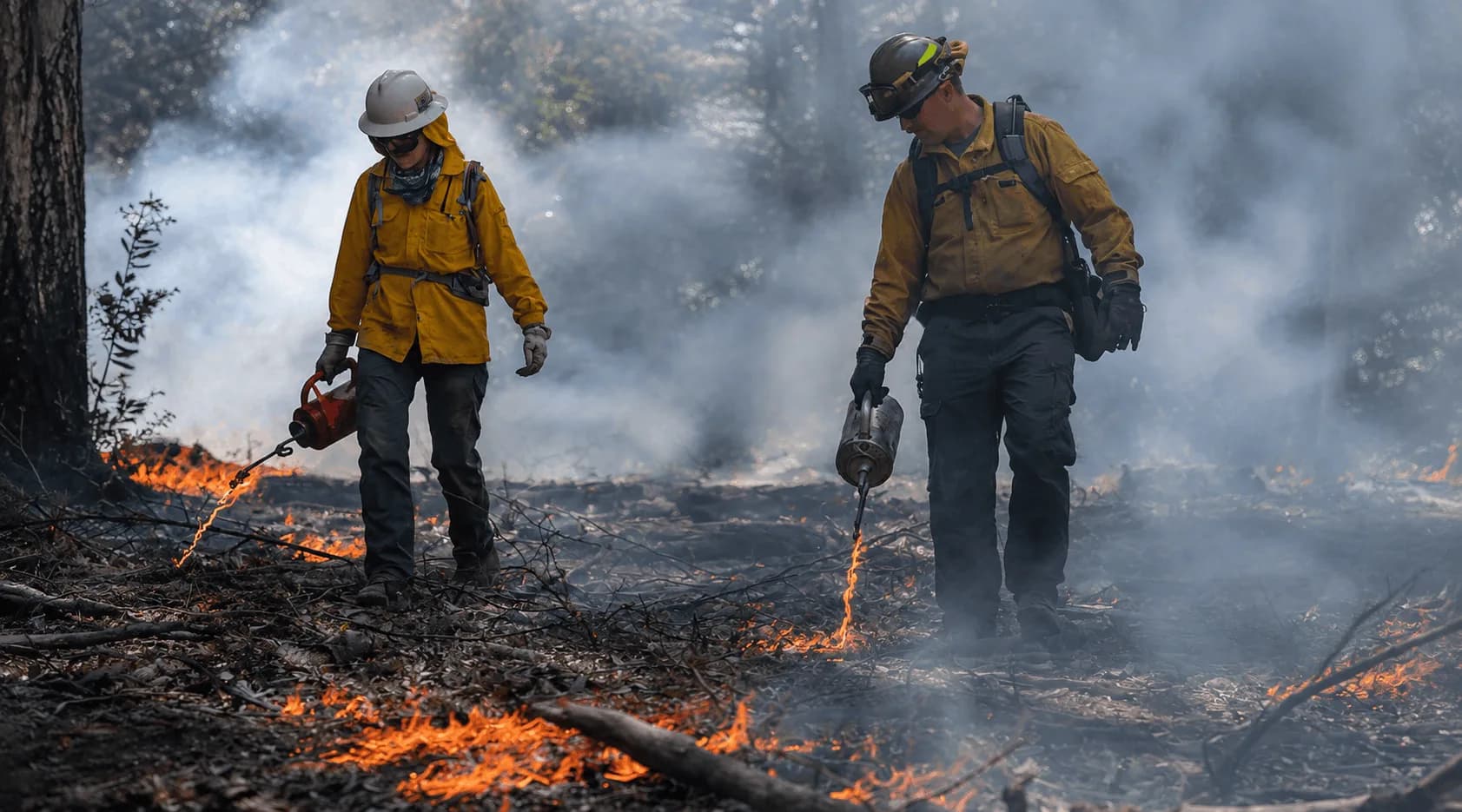
President Donald Trump is taking action to ensure federal firefighters have access to critical equipment as the United States prepares for another wildfire season.
On November 10, the president signed a memorandum temporarily exempting federal wildfire suppression activities, including aerial fire-retardant drops, from certain water-pollution requirements under the Clean Water Act.
The exemption takes effect immediately and remains in place through November 10, 2027.
It applies to the U.S. Forest Service, the Department of the Interior, other federal agencies, and their contractors.
The White House says the measure is intended to remove legal uncertainty surrounding aerial firefighting operations while protecting communities facing dangerous and unpredictable wildfires.
The central objective is to ensure that firefighters can act quickly to contain dangerous blazes before they threaten homes, businesses, forests, and essential infrastructure.
Why Aerial Fire Retardants Matter
When wildfires spread across forests and mountainous terrain, firefighters often depend on aircraft to deliver retardants ahead of advancing flames.
These substances help slow combustion, giving ground crews additional time to construct firebreaks, protect structures, and coordinate containment operations.
Aerial retardants are particularly valuable when flames threaten remote communities or areas that firefighters cannot safely access from the ground.
They do not extinguish every wildfire, but they can provide an important tactical advantage when combined with coordinated ground operations.
For rural communities surrounded by forests and rangelands, an effective initial response can make a significant difference in limiting damage.
A Legal Dispute Created Uncertainty
The presidential action addresses litigation involving aerial fire-retardant discharges into waterways.
In 2023, a federal district court in Montana determined that certain unpermitted discharges of retardant into federally protected waters violated the Clean Water Act.
The court did not prohibit firefighters from using aerial retardants. Instead, it required the Forest Service to continue pursuing the appropriate discharge permit.
A subsequent court order in 2025 maintained that permitting requirement without imposing a permanent prohibition on retardant use.
The White House argues that the permitting process created uncertainty for federal firefighting agencies preparing for future emergencies.
Trump's memorandum uses authority under Section 313 of the Federal Water Pollution Control Act to establish a temporary exemption.
Importantly, the measure does not eliminate every environmental obligation. Two specified Clean Water Act provisions remain applicable, as do other laws governing federal firefighting operations.
Protecting Homes, Jobs, and American Resources
Wildfires can have devastating consequences far beyond the areas directly burned.
Families may lose homes, businesses can face extended closures, and communities can experience damage to roads, electricity networks, and water infrastructure.
Forests also support American industries, including timber production, construction materials, recreation, and tourism.
Large fires can damage valuable timber supplies and create costly restoration challenges.
Watersheds face additional risks when severe fires remove vegetation, increasing erosion and affecting water quality.
The administration argues that improving firefighting readiness can help reduce these losses while strengthening the resilience of rural communities.
The memorandum does not announce additional firefighting funding or guarantee that future fires will cause less damage. Its immediate effect is to temporarily change the legal requirements applicable to specified federal firefighting activities.
Part of a Broader Wildfire Strategy
The latest action builds on previous administration initiatives involving forest management and disaster preparedness.
In March 2025, Trump signed an executive order aimed at expanding domestic timber production and improving federal forest management.
Another order that month addressed state and local disaster preparedness.
In June 2025, the president directed federal agencies to streamline wildfire prevention and response.
The White House also points to measures intended to accelerate reconstruction in California communities affected by destructive wildfires.
Together, these policies reflect an approach emphasizing faster emergency response, forest management, domestic resources, and government coordination.
Balancing Firefighting and Environmental Protection
Fire retardants are valuable firefighting tools, but their use near waterways creates legitimate environmental considerations.
Federal aerial firefighting guidance generally directs crews to avoid dropping retardants within 300 feet of waterways, subject to operational safety considerations.
The new exemption changes specified pollution-control requirements for one year; it does not automatically cancel other applicable environmental safeguards.
The practical challenge is protecting water resources while ensuring firefighters have the tools necessary to respond to immediate threats to human life and property.
That balance will remain important as agencies prepare for the 2027 season.
Preparing America for the Next Fire Season
The latest presidential determination provides federal firefighting agencies with greater regulatory certainty regarding aerial retardant operations.
Its effectiveness will depend on operational readiness, firefighter training, coordination between agencies, and conditions during the coming wildfire season.
For communities vulnerable to fast-moving fires, timely action remains essential.
By addressing permitting uncertainty before the next wildfire season, the administration is seeking to strengthen America's ability to protect lives, property, forests, and rural economies. The ultimate measure of success will be whether firefighters can respond effectively while preserving the natural resources communities depend upon.