
 3 min read
 10
 Linkedin
 Threads
 Facebook
 X

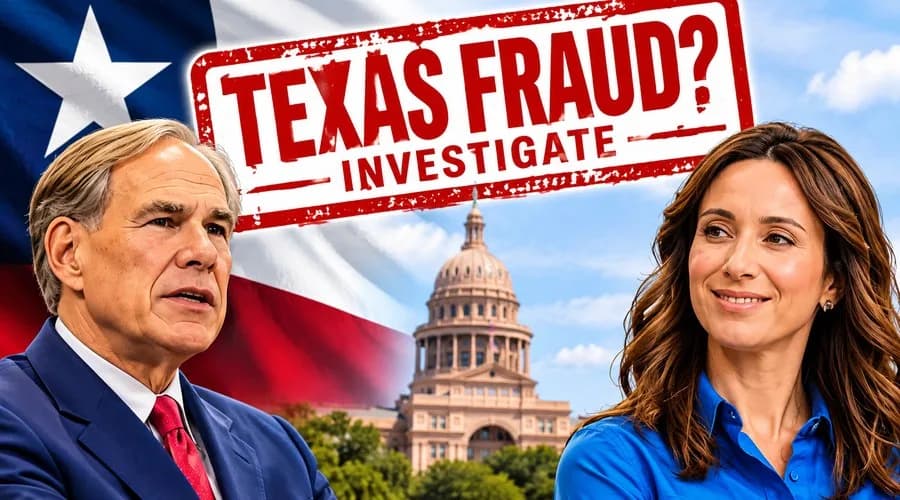
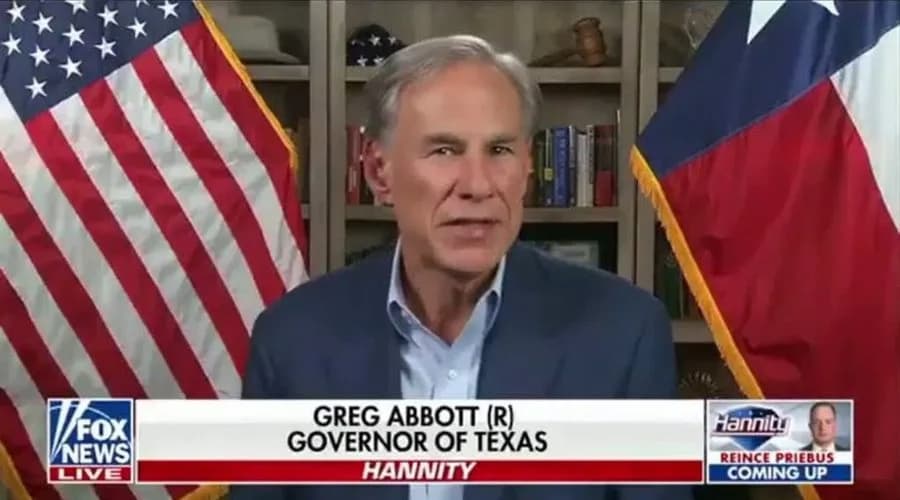
AUSTIN, TEXAS — Texas Governor Greg Abbott announced an aggressive effort to investigate what he describes as illegal Sharia courts operating in the Dallas area, declaring that no religious legal system can supersede the laws of Texas or the United States.
During an appearance on Fox News' Hannity, Abbott said state authorities were aware of at least two entities in the Dallas area that warranted investigation.
He also described efforts to expand scrutiny into Dallas and Collin counties, including letters urging local officials to examine the matter.
His central message: Texas has one constitutional legal system, and no religious institution can claim governmental authority outside that system.
Abbott Targets Alleged Sharia Courts in Dallas
Abbott said his administration was taking steps to identify organizations that might be attempting to exercise judicial powers under Islamic religious rules.
He described sending letters to local officials in Dallas and neighboring Collin County requesting action.
The governor stated:
"We know of at least two that exist in the Dallas area. We're looking broader in Dallas County as well as Collin County, which is right next to Dallas, and that's why I sent the letter to officials both in Dallas and Collin Counties to urge them to take action to root out any Sharia courts."
The remarks signal Abbott's intention to make the issue a statewide law-enforcement priority rather than leaving it exclusively to local authorities.
The names of the two entities, their specific activities, and evidence of any violations were not identified in the material accompanying the remarks.
Texas Department of Public Safety Drawn Into the Effort
Abbott also announced that he was deploying the Texas Department of Public Safety to investigate alleged attempts to establish religious courts exercising unlawful authority.
He said:
"And I am deploying the Texas Department of Public Safety to also root out any Sharia courts anywhere in the state of Texas. To be clear, the Texas Constitution does not allow Sharia courts or Sharia law. Texas statutes have banned Sharia law, and we are going to pursue this until we purge any attempt to impose Sharia law in Texas."
The governor's statements reflect a concern about the possibility of religious rules being presented as binding civil authority.
Under the American constitutional system, criminal prosecution, governmental judicial powers, and the enforcement of civil judgments remain subject to state and federal law.
No religious organization can independently replace those institutions.
Religious Freedom Does Not Create a Second Government
The First Amendment protects the right of Americans to practice their religion, including Islam, Christianity, and Judaism.
Religious communities may also offer voluntary mediation or religious guidance, subject to applicable law.
But participation in a religious organization does not exempt anyone from criminal statutes, constitutional protections, or legally binding court orders.
The distinction matters.
A voluntary religious dispute-resolution process is not automatically an unlawful parallel court. The legal question is whether an organization claims governmental authority, coerces participants, or engages in conduct prohibited by law.
Texas law restricts the enforcement of certain foreign-law provisions when they conflict with constitutional rights or public policy.
It does not impose a blanket prohibition on private religious observance or every form of religious arbitration.
A Wider Debate About Texas Sovereignty
Abbott's announcement follows earlier disputes involving Muslim-oriented residential developments and organizations he has accused of promoting political or religious extremism.
Those controversies have raised questions about property development, local oversight, religious freedom, and constitutional authority.
Any enforcement action must be supported by evidence of specific unlawful conduct.
The governor's accusations do not, by themselves, establish that the organizations under scrutiny have violated the law.
Nevertheless, the investigation places an important constitutional issue before Texas officials: how to distinguish protected religious activity from attempts to exercise authority reserved for government.
One Constitution, One System of Civil Law
The United States protects freedom of religion precisely because government cannot establish an official religion or require citizens to follow religious doctrine.
That protection operates alongside the principle that civil laws apply to everyone.
Abbott's initiative will ultimately be judged by what investigators establish and whether any resulting enforcement actions withstand legal scrutiny.
Texas can protect constitutional sovereignty while respecting religious freedom. Both obligations are part of the same constitutional system.
For now, the governor has made his position unmistakable: any organization attempting to exercise unlawful judicial authority in Texas can expect scrutiny from state law enforcement.