
 3 min read
 16
 Linkedin
 Threads
 Facebook
 X

WASHINGTON — November 16, 2026. Iran may still possess as many as 2,500 ballistic missiles despite months of military operations by the United States and Israel, according to a reported American intelligence assessment, raising new concerns about Tehran's ability to sustain attacks and threaten American military installations beyond the Middle East.
The findings come as Iranian state television warns that modified ballistic missiles could reach U.S. military facilities in Europe, specifically identifying RAF Fairford in Gloucestershire, England, a Royal Air Force installation used by American strategic bombers.
The developments highlight a growing challenge for Washington: although American and Israeli strikes have damaged Iran's military infrastructure, Tehran may retain enough weapons to continue threatening U.S. forces and regional allies.
U.S. Intelligence Estimates Iran Still Has Thousands of Missiles
According to a November 15 report by the New York Post, citing reporting from The Wall Street Journal, American intelligence officials estimate Iran retains between 1,500 and 2,500 ballistic missiles.
Officials characterized the estimate as having low confidence because accurately tracking Iran's remaining weapons is difficult.
That distinction is important. The upper figure of 2,500 is an intelligence estimate, not a verified inventory.
Israeli officials reportedly believe Iran possesses more than 1,500 ballistic missiles.
The estimates suggest that Iran's missile capabilities have not been eliminated, despite substantial damage to military facilities and production infrastructure during the conflict.
Former U.S. defense official Simone Ledeen said even the lower estimate would indicate a substantial remaining arsenal.
The concern extends beyond weapons already in storage.
Reports indicate that Iran has continued rebuilding missile infrastructure and replenishing its inventory, raising questions about how quickly its military could recover from additional strikes.
Tehran Names U.S. Air Base in Britain as Potential Target
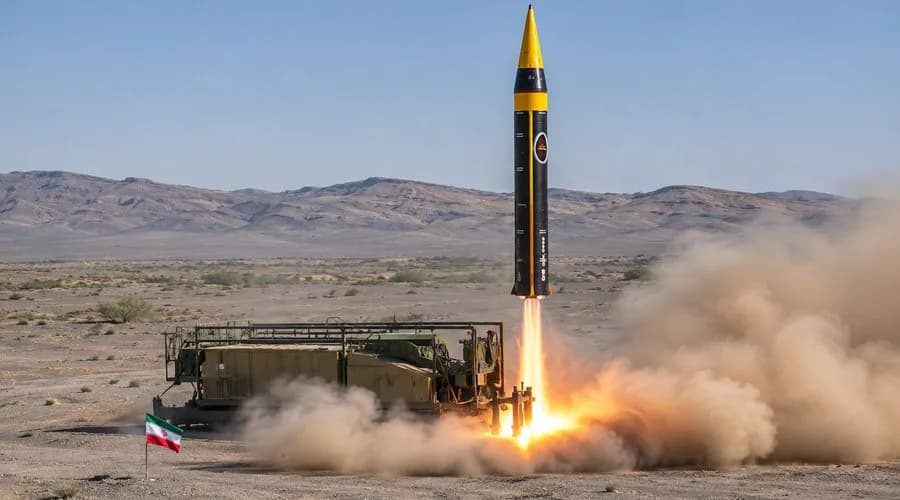
Iranian state television has identified RAF Fairford as a potential target, claiming modified versions of the Khorramshahr ballistic missile could reach American military installations in Europe.
The Khorramshahr-4, publicly unveiled in 2023, has a reported range of approximately 2,000 kilometers when carrying a heavy warhead.
Iranian media now claim that reducing the missile's payload could significantly extend its range.
However, there is no independent confirmation that Iran currently possesses an operational version capable of striking RAF Fairford.
The distinction between a claimed capability and a demonstrated military capability remains critical.
RAF Fairford has supported U.S. bomber operations, making it strategically significant in any confrontation involving American long-range aircraft.
Iran's warning follows statements from senior Iranian security official Mohsen Rezaei, who said American bases outside the Middle East could face retaliation if aircraft operating from those facilities attack Iran.
The statements indicate that Tehran wants Washington and its allies to consider the possibility of retaliation beyond the immediate conflict zone.
Iranian Drones Target American Military Facilities in Bahrain
The missile warnings coincided with renewed attacks in the Persian Gulf.
On November 15, Iran's Islamic Revolutionary Guard Corps claimed it launched six drones toward an American military facility in Bahrain.
Iranian reports identified an air-defense radar at the Al-Rifaa helicopter base as the intended target.
Bahrain issued security alerts, while its military reported intercepting Iranian aerial attacks.
There was no independently confirmed evidence that the claimed strike destroyed its intended target.
The incident followed another reported Iranian drone operation against an American radar installation in Bahrain on November 13.
U.S. Central Command disputed Iran's claims of successful damage from that earlier attack, reporting that two drones were intercepted without damage.
Bahrain is home to the U.S. Navy's Fifth Fleet, making threats to its military installations particularly significant for American operations in the Persian Gulf.
American Military Bases in Europe Face New Security Concerns
Iran's threats come amid heightened security concerns involving American military facilities in Britain.
Recent reporting indicates that U.S. aircraft were relocated from RAF Mildenhall following intelligence concerning a possible Iran-related threat.
Security measures were also increased at RAF Lakenheath.
Separately, British authorities have investigated an alleged Iran-linked plot involving RAF Fairford.
Those developments do not establish that Iran has the missile range it claims.
They do, however, demonstrate that American and British authorities are responding to potential threats against military facilities beyond the Middle East.
The concern is no longer limited to missile launches against regional installations.
It also includes possible sabotage, drone operations and other attacks against military assets stationed farther from Iran.
Trump Faces Difficult Decisions as Iran Rebuilds
The reported missile estimates arrive as President Donald Trump weighs the next phase of American policy toward Tehran.
Washington has maintained military and economic pressure, including restrictions affecting Iranian maritime activity.
Diplomatic efforts have continued without producing a comprehensive agreement ending the conflict.
According to recent reporting, Trump has considered withholding additional strikes if Iran and Iranian-backed groups avoid new provocations.
However, Tehran's continued missile and drone activity complicates that approach.
American officials must evaluate not only how much of Iran's arsenal has been destroyed but also how much remains operational and how quickly additional weapons can be produced.
The central strategic question is whether military pressure can meaningfully reduce Iran's ability to threaten American forces without triggering another major escalation.
Why the Remaining Missiles Matter
Ballistic missiles remain among Iran's most consequential conventional military capabilities.
They allow Tehran to threaten military installations, infrastructure and population centers across significant distances.
Even a diminished arsenal can pose serious risks, particularly when attacks involve multiple missiles and drones intended to overwhelm defensive systems.
For the United States, the danger is not measured solely by the total number of Iranian missiles.
It also depends on their accuracy, range, operational readiness and the effectiveness of American and allied defenses.
For Britain and other European allies, Iran's latest statements introduce another question: could military installations supporting American operations become targets even when located thousands of miles from the battlefield?
That possibility is precisely what Tehran appears determined to emphasize.
The reported intelligence assessment does not prove that Iran has 2,500 operational missiles, and its claimed ability to strike Britain remains unverified.
But the warnings, renewed drone attacks and continuing military preparations indicate that Iran's remaining capabilities deserve serious attention.
The immediate question for Washington is not simply how many missiles Iran has lost.
It is how many remain—and whether Tehran is prepared to use them.