
 3 min read
 28
 Linkedin
 Threads
 Facebook
 X

Is New York Becoming Gotham City?
Mayor Zohran Mamdani is eliminating a specialized NYPD unit and restricting certain crowd-control tactics. Supporters call it police reform. Critics question whether New York is weakening its response to violent disorder.
There is a reason Gotham City became one of the most recognizable fictional cities in American culture.
It wasn't simply the criminals.
It was the fear that institutions responsible for protecting ordinary citizens could lose control of the streets.
The Joker, Batman's notorious adversary, represented chaos—a world where disorder became a spectacle and public confidence in law enforcement began to collapse.
New York City is not Gotham.
But Mayor Zohran Mamdani's latest decision raises a serious question about the balance between civil liberties and public safety.
What happens when a city dismantles a specialized police unit responsible for confronting some of its most volatile situations?
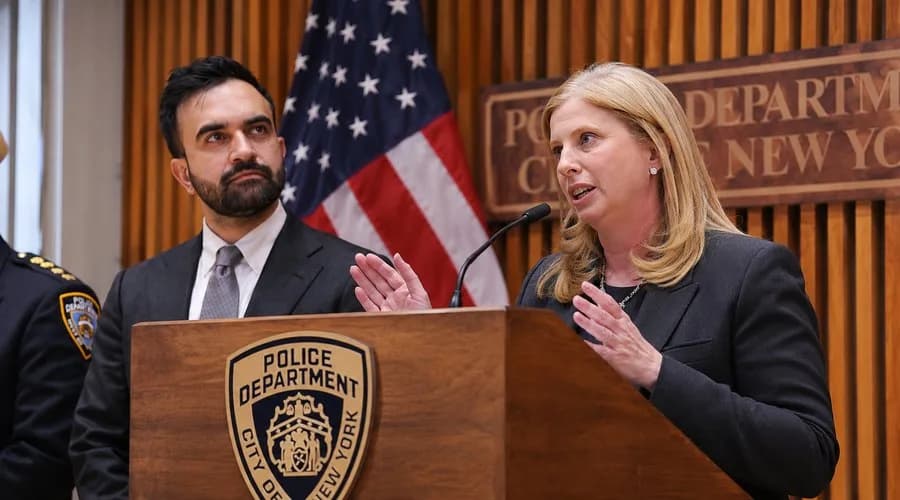
On Monday, November 16, Mamdani and NYPD Commissioner Jessica Tisch announced the disbanding of the department's Strategic Response Group, a roughly 500-officer unit with responsibilities that included counterterrorism, major emergencies and crowd management.
The decision fulfills one of Mamdani's campaign promises.
But fulfilling a political promise and demonstrating that a replacement system can protect the public are two different things.
The NYPD Unit Being Dismantled
The Strategic Response Group, commonly called the SRG, was established in 2015.
Its officers received specialized training and equipment to respond to situations ranging from major security threats to civil disturbances.
The unit also became controversial over allegations of excessive force during demonstrations, particularly protests following George Floyd's death in 2020.
Civil rights advocates argued that aggressive crowd-control tactics sometimes violated the rights of peaceful protesters.
Police supporters countered that the unit provided specialized capabilities when demonstrations escalated into violence or other emergencies.
Now Mamdani is eliminating the unit's existing structure.
Its counterterrorism responsibilities will move into the NYPD's Intelligence and Counterterrorism Bureau.
Other crowd-management responsibilities will shift to a new Patrol Support Division, while civilian personnel and specially trained officers will emphasize dialogue and de-escalation.
The approximately 500 officers will be reassigned rather than dismissed.
The police department is not being abolished. But the way it responds to demonstrations is being fundamentally reorganized.
And that distinction deserves close examination.
A Civilian-Led Approach to the Streets
Under the new plan, the city will establish a Community Dialogue and De-escalation Division within the mayor's Office of Community Safety.
Its civilian personnel will work with organizers and police to reduce tensions before and during demonstrations.
A separate First Amendment Support Team will include 30 uniformed officers trained in communication and de-escalation.
The reforms also restrict several police tactics during protests, including kettling, tear gas, long guns and the use of pepper spray for general crowd management.
Supporters argue that peaceful demonstrations should not be treated like terrorism threats.
That principle is difficult to dispute.
The First Amendment protects peaceful assembly, and law enforcement has an obligation to respect that right.
But another question remains.
What happens when a peaceful demonstration becomes a violent confrontation?
Who makes the decision to intervene?
How quickly can specialized officers respond?
And will the new command structure preserve the same ability to protect residents, businesses and officers when events escalate?
Those questions cannot be answered by a press conference alone.
They require operational evidence.
The Gotham City Question
In Gotham City's fictional universe, the Joker thrives when disorder overwhelms institutions and public confidence begins to disappear.
That is a metaphor, not an accusation that Mamdani supports criminal violence.
But it illustrates the concern behind today's debate.
A city's responsibility is not simply to protect the right to demonstrate.
It must also protect the people who are not demonstrating.
The shop owner who fears another night of vandalism.
The family trying to get home safely.
The police officer confronting an unpredictable crowd.
And the peaceful protester who does not want a demonstration hijacked by individuals intent on destruction.
Their rights matter too.
The constitutional right to protest is not a constitutional right to burn, loot, assault or destroy.
A functioning city must be capable of distinguishing peaceful political expression from criminal conduct.
The question is whether Mamdani's restructuring makes that distinction easier—or makes an already complicated police response more difficult.
Is This Defund the Police Under Another Name?
Mamdani's decision will inevitably renew the debate over the movement commonly described as Defund the Police.
That movement has included several different proposals, ranging from shifting certain responsibilities to civilian agencies to reducing police budgets and personnel.
The mayor's latest announcement does not establish that the NYPD is being defunded.
Officials say the restructuring will not reduce police staffing or require additional funding.
Police Commissioner Jessica Tisch has publicly endorsed the changes, arguing that the department will retain its ability to confront serious threats.
Those facts matter.
But so does the concern raised by critics.
New York City Council Member Phil Wong has argued that the SRG is an important public safety resource and that eliminating it could weaken the city's response to dangerous street gatherings.
The real debate, therefore, is not merely about a slogan.
It is about whether responsibilities previously concentrated in a specialized police unit can be distributed among several new organizations without sacrificing coordination, speed or effectiveness.
Changing the name of a unit is not proof of reform. Eliminating its name is not proof of improved safety.
Results will determine whether this experiment succeeds.
What About the Officers Who Protect New York?
There is another side of this story that deserves attention.
Police officers are frequently asked to make decisions in seconds under circumstances that politicians can debate for months.
An officer responding to a volatile demonstration must protect constitutional rights, prevent injuries, identify criminal behavior and avoid unnecessary force.
Those responsibilities are extraordinarily difficult.
Reform advocates are entitled to demand accountability when officers abuse their authority.
Police officers are equally entitled to clear procedures, adequate training, appropriate equipment and leadership that supports lawful intervention.
Neither responsibility cancels the other.
If the new structure improves communication and reduces unnecessary confrontations, New Yorkers should be able to see that in the evidence.
If it creates delays, confusion or gaps in emergency response, city leaders must acknowledge those problems and correct them.
New York Cannot Afford a Public Safety Experiment Without Accountability
Mamdani has made his decision.
Now his administration must demonstrate that it works.
New Yorkers deserve measurable answers.
How quickly will specialized personnel respond to violent disturbances?
How will civilian teams coordinate with armed officers?
Who will command an operation when an otherwise peaceful protest becomes dangerous?
What training will replace the capabilities previously concentrated within the SRG?
And what independent measures will establish whether the reforms have improved public safety?
Those questions should not be dismissed as hostility toward protesters or opposition to police accountability.
They are fundamental questions of government responsibility.
The mayor has the authority to reorganize the department.
But authority carries accountability.
New York does not need a Batman. It needs institutions capable of protecting constitutional freedom and public order at the same time.
Gotham City was a fictional warning about what happens when fear and chaos overwhelm public institutions.
New York is a real city, home to millions of people whose safety cannot depend on political symbolism.
Mamdani has promised a different approach.
Now the city must measure that promise against reality.
Because the ultimate test of police reform is not how enthusiastically it is announced.
It is whether New Yorkers are safer, their rights are protected, and the law can still be enforced when the streets become dangerous.