
 3 min read
 51

 Linkedin
 Threads
 Facebook
 X

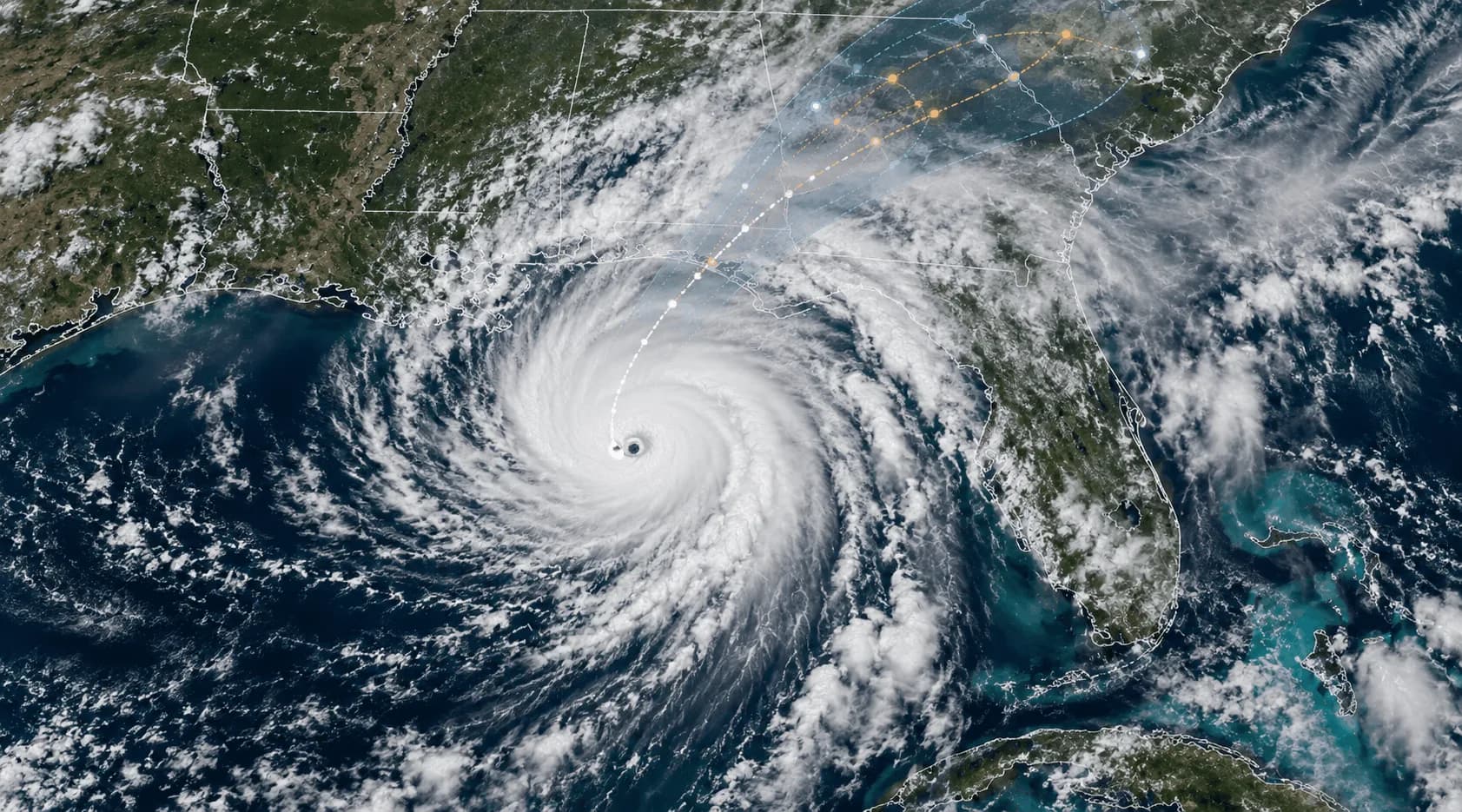
WASHINGTON, D.C. — November 17, 2026. The Federal Emergency Management Agency conducted its scheduled nationwide Emergency Alert System test Tuesday afternoon, interrupting traditional television and radio programming across the United States.
The test began at approximately 2:20 p.m. Eastern Time, or 1:20 p.m. Central, and lasted about one minute.
Early reporting indicates that the exercise proceeded without a major nationwide incident.
Yet many Americans watching television through online platforms may have noticed something unexpected.
No emergency alert appeared on their screens.
For viewers accustomed to watching local television stations through YouTube livestreams rather than traditional television services, the absence of the alert raises an important question:
Why would a nationwide emergency test reach television viewers but not necessarily people watching the same stations online?
The answer involves federal broadcasting requirements, technical differences between television and streaming, and restrictions governing emergency alert sounds.
The Nationwide Test Happened as Scheduled
FEMA and the Federal Communications Commission announced the November 17 test in September.
The exercise was designed to evaluate the nation's Emergency Alert System, a network involving thousands of television stations, radio broadcasters, cable operators, satellite providers and wireline video services.
Participating broadcasters were expected to interrupt normal programming with an emergency-alert tone and a message explaining that the interruption was only a test.
The objective was to determine whether participating systems could receive and distribute emergency communications during a national crisis.
Unlike the nationwide test conducted in 2023, Tuesday's exercise did not include Wireless Emergency Alerts sent directly to cell phones.
Therefore, Americans who expected their phones to sound an alarm were never scheduled to receive one.
The test was also not an announcement of a power outage, military emergency or national lockdown.
Why YouTube Livestreams May Not Have Shown the Alert
One major source of confusion involves the difference between traditional television broadcasting and internet streaming.
Under federal regulations, designated Emergency Alert System participants must carry authorized emergency messages and participate in required testing.
These include traditional broadcasters and specified television distribution services.
However, ordinary YouTube livestreams are not automatically subject to the same EAS carriage requirements.
A local television station may broadcast one signal over the air while simultaneously distributing a different version of its programming to YouTube.
That difference matters.
The station's traditional broadcast signal may pass through equipment that automatically inserts emergency alerts.
Its internet livestream, however, may originate from another point in the station's production system.
If the online feed bypasses the equipment responsible for inserting the alert, YouTube viewers may continue seeing ordinary programming.
This does not necessarily mean the television station failed to conduct the required test.
It may mean that the station's broadcast and streaming systems operate through different technical pathways.
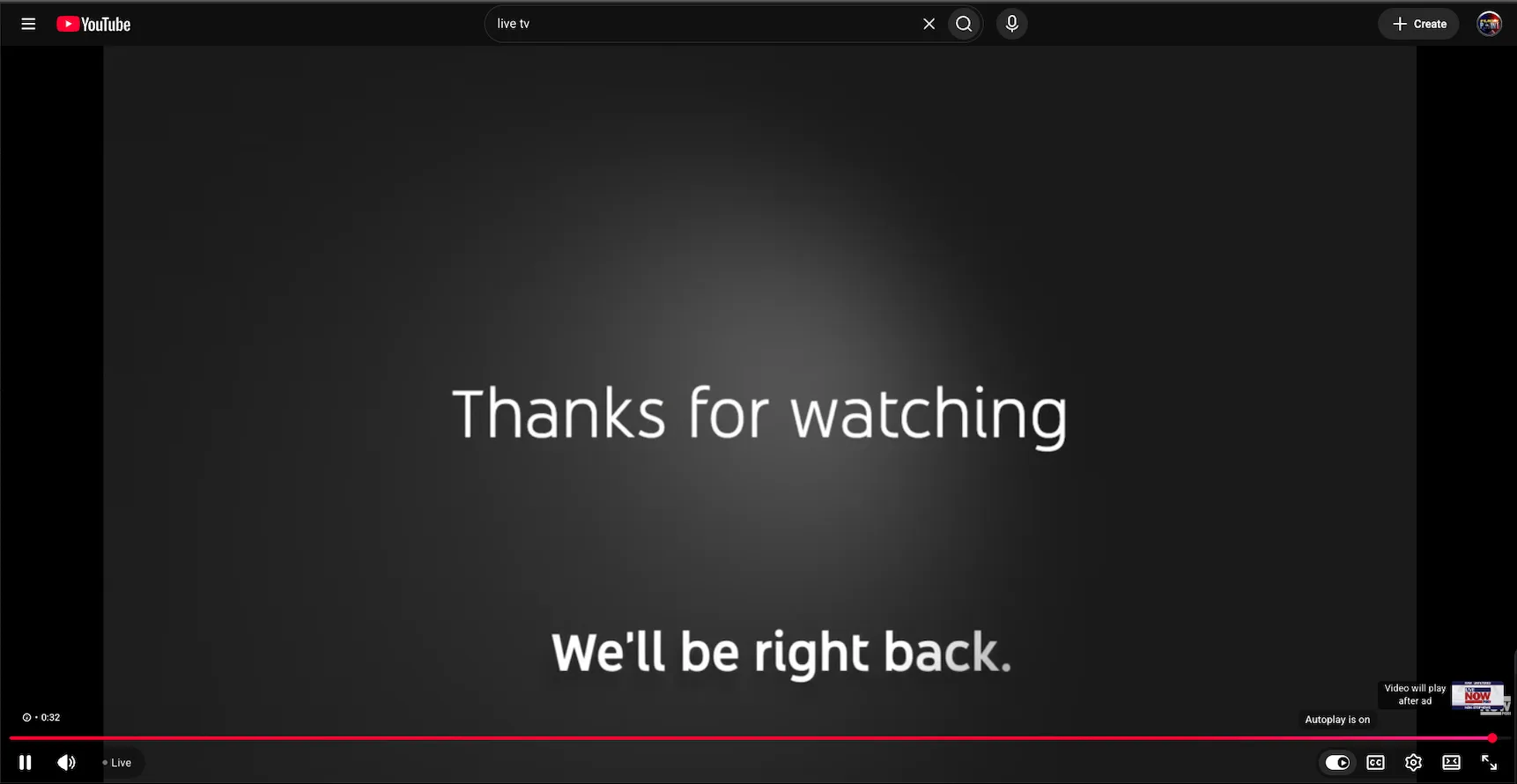
During Fox News' livestream, at exactly 2:20 p.m. ET, YouTube reportedly played approximately seven unskippable commercials, preventing viewers from seeing the nationwide emergency alert test. Was this intentional?
Why Some Stations May Mute or Interrupt Their Online Feeds
Federal rules strictly regulate the use of actual or simulated Emergency Alert System tones.
These sounds are not ordinary sound effects.
They are designed to attract public attention and, in some cases, communicate information to emergency-alert equipment.
The FCC has warned that unauthorized transmission of these tones can create confusion and potentially trigger equipment improperly.
That becomes especially relevant when livestreams are automatically recorded and made available for replay.
An emergency-alert tone that is appropriate during an authorized live test may create compliance concerns if it later appears in an unrelated archived video.
For that reason, some broadcasters may choose to mute alert audio, substitute another video feed or temporarily interrupt an internet livestream.
Such practices are technically plausible, but FPTN has not independently established which Texas stations used them during Tuesday's test.
The important distinction is that a station's decision to modify an online feed does not automatically mean it blocked the federally required television broadcast.

ABC simply decided to skip the one-minute emergency alert test on its online livestream, leaving internet viewers unaware that the test had taken place.
Did YouTube Force Three-Minute Advertisements During the Test?
Another concern involves reports of lengthy, unskippable advertisements appearing on YouTube during the emergency-alert window.
The allegation is that some viewers encountered advertisements lasting approximately three minutes without an option to skip them.
If an advertisement began immediately before the one-minute EAS test, a viewer could have missed the entire message.
But two separate questions must be examined.
First, did viewers actually receive unusually long advertisements at the scheduled test time?
Second, if they did, were those advertisements deliberately scheduled to coincide with the emergency-alert test?
Those are not the same claim.
YouTube uses automated advertising systems, and advertisement length, placement and availability of skip controls can vary.
FPTN has not independently verified a coordinated decision by YouTube to place three-minute unskippable advertisements during the test.
No evidence reviewed establishes that YouTube intentionally prevented viewers from receiving the FEMA message.
Nevertheless, the issue deserves examination.
Should digital platforms allow commercial advertising to interrupt access to an official emergency warning?
That question becomes increasingly important as more Americans receive news and live television through internet services.
Can Big Tech Become a Gatekeeper Between the Government and the American People?
We understand the technical reasoning behind restricting Emergency Alert System tones on internet livestreams. Federal regulations are designed to prevent unauthorized transmissions, accidental activation of emergency equipment and confusion caused by replaying official alerts.
But there is a serious question that deserves attention.
If the concern is preventing people from recording and replaying emergency-alert tones, what actually stops someone from copying the original sound and distributing it online anyway?
Audio can be recorded, duplicated and redistributed through countless digital platforms. Preventing an official livestream from carrying an authorized test does not eliminate that possibility.
Meanwhile, the decision to omit or interrupt the alert creates another problem: a portion of America's digital audience may never see the test at all.
For viewers who depend exclusively on internet streaming, this means missing an opportunity to recognize the warning tones, understand the emergency message and become familiar with how the system operates.
That is not a minor concern.
Emergency communication is not simply about transmitting a signal. It is about ensuring that the public recognizes and understands that signal when a genuine emergency occurs.
The issue becomes even more troubling when major technology platforms control what appears on millions of screens.
If a streaming platform can replace, interrupt or omit a government emergency message, what safeguards ensure that an actual warning will reach the American people?
This does not establish that YouTube or any television network deliberately suppressed Tuesday's test. Ordinary YouTube livestreams are not necessarily required to carry EAS messages, and the circumstances surrounding individual interruptions still require verification.
But the structural concern remains.
Private technology companies increasingly control the channels through which Americans receive public information. Their technical systems, advertising decisions and distribution policies can determine whether an important government message reaches an online audience.
Today, the missing message may be a scheduled one-minute test.
What happens tomorrow if the message concerns an actual national emergency?
Should private platforms be permitted to interrupt official emergency communications with commercial advertising? Should there be a requirement to provide an equivalent warning to viewers who receive television programming exclusively through the internet?
And who is ultimately accountable when those viewers receive nothing?
Congress, the FCC, FEMA and major streaming providers should examine these questions before the next nationwide emergency.
The government may have the authority to issue a warning, but that authority means little if the platforms connecting millions of Americans to information fail to deliver it.
The public deserves an emergency communication system that works across modern technology, not one that leaves digital audiences wondering whether an alert ever happened.
What About YouTube TV?
YouTube TV and ordinary YouTube livestreams are different products.
YouTube TV distributes live television channels through a subscription service.
Ordinary YouTube livestreams are internet video feeds published by individual channels and creators.
Whether an alert appears on YouTube TV can depend on the service's technical arrangements and the channel feed being distributed.
The FCC's nationwide test notice does not establish that every internet television service was required to present the alert identically.
Viewers should therefore avoid assuming that all online television platforms handled Tuesday's test the same way.
A Growing Challenge for America's Emergency Warning System
The incident highlights a larger question about the future of public safety communications.
Americans increasingly consume television, news and live programming through internet-connected devices.
Many households no longer rely primarily on antennas or conventional cable subscriptions.
Instead, they watch live broadcasts through streaming applications, smart televisions, websites and mobile devices.
But emergency-alert requirements were developed around specific communications systems.
That creates a potential gap between the services government agencies are required to test and the platforms Americans increasingly use.
A national emergency does not distinguish between someone watching a local station through an antenna and someone watching that station on a smartphone.
Both viewers may need timely information.
The question for regulators and technology companies is whether emergency-alert systems should evolve alongside modern viewing habits.
What Should Viewers Do Next?
Tuesday's test did not require the public to take action.
But Americans who did not receive an alert can use the experience to better understand how they receive emergency information.
Households should consider maintaining more than one reliable source of emergency notifications.
That may include local television, radio, official emergency-management applications and wireless emergency alerts.
Streaming services can be valuable sources of information, but they should not automatically be treated as replacements for every federally regulated warning system.
Viewers who experienced unusual advertising or missing alerts during Tuesday's test can also document the platform, channel and approximate time.
Such information could help distinguish ordinary technical limitations from problems requiring further investigation.
The Test Worked, but Questions About Streaming Remain
The November 17 nationwide Emergency Alert System test took place as scheduled, and early reports indicate no major nationwide failure.
But not seeing an alert on YouTube does not prove that FEMA canceled the exercise or that broadcasters ignored federal requirements.
The differences between traditional broadcasting and online streaming provide a plausible explanation for why some viewers missed it.
The allegations involving three-minute unskippable advertisements remain unverified and should be examined separately.
The larger question is whether America's emergency-warning infrastructure is keeping pace with the way Americans now watch television.
An emergency alert can only protect the public when the warning reaches the people who need it.
As television continues moving online, that challenge will become increasingly important.
The test is over. The conversation about making emergency warnings accessible across modern digital platforms is not.