
 3 min read
 24
 Linkedin
 Threads
 Facebook
 X

WASHINGTON, D.C. — November 16, 2026. A proposal that could fundamentally change how the United States elects its president has gained new momentum following the November midterm elections.
The National Popular Vote Interstate Compact, an agreement among participating states to award their electoral votes to the winner of the nationwide popular vote, is now just 48 electoral votes away from taking effect.
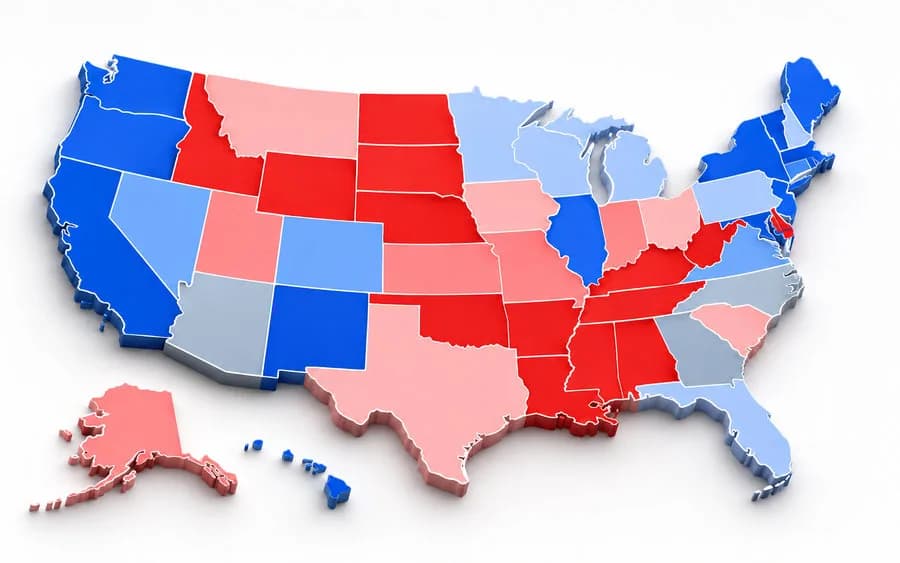
Currently, 18 states and Washington, D.C., representing 222 electoral votes, have adopted the compact.
The agreement would become operational when participating states collectively control at least 270 electoral votes—the majority required to elect a president.
And following Democratic victories in several state governments, that threshold may be within reach.
But important political and constitutional questions remain unresolved.
Five States Could Change the Presidential Election System
Democrats gained unified control of state government in Arizona, Michigan, Nevada, Pennsylvania and Wisconsin.
Together, these five states represent 61 electoral votes.
If all five adopted the compact, its total would rise to 283, exceeding the activation threshold.
Some Democratic lawmakers have already expressed interest in advancing the proposal.
Wisconsin Governor-elect David Crowley has indicated a willingness to discuss the compact, while Pennsylvania Governor Josh Shapiro has expressed support for the national popular-vote approach.
However, adoption is not guaranteed.
Each state would need to pass its own legislation, and some incoming leaders have not committed to supporting the agreement.
What Would Actually Change?
Under the existing system, voters choose presidential electors according to rules established by their states.
Most states award all their electoral votes to the candidate who wins the statewide popular vote.
The proposed compact would change that arrangement for participating states.
Once activated, those states would award their electoral votes to whichever presidential candidate wins the most votes nationwide—even when another candidate wins their individual state.
Supporters argue that every presidential vote should contribute equally to the national result.
Opponents argue that the arrangement could weaken the influence of individual states and bypass the constitutional amendment process traditionally associated with major changes to presidential elections.
The compact would not formally eliminate the Electoral College.
Instead, it would change how enough states allocate their electoral votes to make the national popular-vote winner the expected Electoral College winner.
A Constitutional Battle Could Follow
The Constitution grants states considerable authority over the selection of presidential electors.
But legal scholars disagree about whether states can collectively use that authority through an interstate agreement of this magnitude.
Potential challenges involve the Constitution's Compact Clause, congressional approval requirements and equal protection concerns.
The Supreme Court could ultimately be asked to resolve those disputes.
For now, the proposal remains inactive.
The Electoral College has not been abolished, and no new presidential election system has taken effect.
Why Americans Should Pay Attention to State Government
This debate demonstrates how decisions made in state capitals can influence national policy.
State legislators, governors and election officials have responsibilities that directly affect how elections are administered.
Citizens who want to understand the compact can review pending legislation, attend legislative hearings, contact their representatives and examine arguments from both supporters and opponents.
These are ordinary constitutional avenues for public participation.
But civic engagement does not begin or end with presidential elections.
It also happens in city councils, county governments and school districts.
School Boards: Where Local Participation Begins
Across America, school boards make decisions affecting millions of students and families.
Their responsibilities commonly include district budgets, educational policies, superintendent oversight, facilities and community accountability.
They do not determine presidential electoral votes.
Nevertheless, school boards offer citizens an accessible way to learn how public institutions operate and how local decisions are made.
Parents, teachers, community leaders and other residents can attend public meetings, review district agendas, ask questions and participate in lawful public-comment opportunities.
Eligible residents may also consider serving on school boards, subject to their state's election and eligibility requirements.
For organizations such as FlashPoint Army, civic education can include helping members understand these public processes and encouraging informed, respectful participation.
Public service requires preparation, knowledge of the law and a commitment to representing the entire community.
A Moment for Civic Responsibility
The National Popular Vote Interstate Compact debate is not simply about one political party.
It raises questions about federalism, representation, constitutional authority and the relationship between individual voters and the states.
Americans who support the proposal and those who oppose it both have opportunities to participate in the public debate.
They can study the legislation, question elected officials and make their views known through lawful democratic processes.
The same principle applies to local education.
Citizens who care about their schools can begin by understanding who serves on their school board, when meetings occur and what decisions are being considered.
A constitutional republic depends on citizens who understand their institutions and participate responsibly in them.
The Electoral College debate may soon become one of the most consequential constitutional controversies ahead of the 2028 presidential election.
But whatever happens in Washington or the state capitals, local participation remains essential.
The first step is understanding the system. The next is showing up, asking questions and taking part in the decisions that shape our communities.