 3 min read
 1
1
 Linkedin
 Threads
 Facebook
 X
X
CNN published today Saturday a dramatic picture of a Republican Party supposedly entering electoral triage.
CNN said Republicans are in electoral triage. We went through the polling, race by race, to test that narrative—and the picture is far away froqm their view. Read CNN’s original article here.
According to the vreport, a growing number of House Republicans privately believe their chances of retaining the majority are disappearing. CNN says GOP leaders are discussing moving money away from difficult races and concentrating resources where they believe Republicans can still compete. The story cites more than a dozen people familiar with internal Republican discussions and polling.
That is newsworthy.
But there is a difference between Republicans being worried and Republicans having already lost.
And that distinction becomes important when the actual public polling is placed beside the anonymous-source narrative.
The Republican Problem Is Real
There is no reason to pretend the national environment is currently comfortable for the GOP.
CNN is therefore not inventing Republican anxiety.
But here is where its broader conclusion becomes less complete.
Republican Candidates Are Not Polling Exactly Like Trump
The president’s approval rating is not the same thing as the vote share of every Republican running for Congress.
A Washington Post analysis of national and state polling found Republican congressional candidates were running roughly four percentage points ahead of Trump’s approval rating on average.
In some states the difference was considerably larger. Susan Collins in Maine and Mike Rogers in Michigan were among Republicans significantly outperforming Trump’s standing with voters.
That matters because congressional elections are not one national referendum.
There are 435 House races.
There are dozens of Senate contests.
Different candidates have different brands, constituencies and opponents.
Voters can disapprove of Trump and still vote Republican.
They can approve of Trump and reject a particular Republican candidate.
That is precisely why treating one national approval number as a substitute for hundreds of races can mislead readers.
Look at the Senate Map
Consider Ohio.
Former Democratic Sen. Sherrod Brown has led Republican Sen. Jon Husted in most recent public polling.
But the size of that advantage has varied dramatically.
Marist had Brown ahead 51%-43%.
Days later, InsiderAdvantage measured the race at 44%-43%.
A New York Times/Siena survey completed October 1 put it at 49%-46%.
Those are different pollsters with different methodologies, so they cannot simply be connected into a straight trend line.
But they demonstrate something important:
Ohio is competitive.
Michigan presents another example.
Marist measured Democrat Abdul El-Sayed ahead 51%-44%. A bipartisan Beacon Research/Shaw & Company poll later found him ahead only 50%-49%, while a Trafalgar survey measured 47%-45%.
Again, that is not proof of a Republican surge.
It is proof that the race is not reducible to a national headline.
New Hampshire may be even more uncomfortable for Democrats.
The Associated Press reported this week that Republicans’ financial advantage and John Sununu’s campaign have made the Senate contest difficult enough that Democrats inside the state are openly warning against assuming a national “blue wave” will carry them through.
That does not sound like an election whose conclusion has already been written.
Then There Is Texas
Texas is another state that demonstrates why snapshots need context.
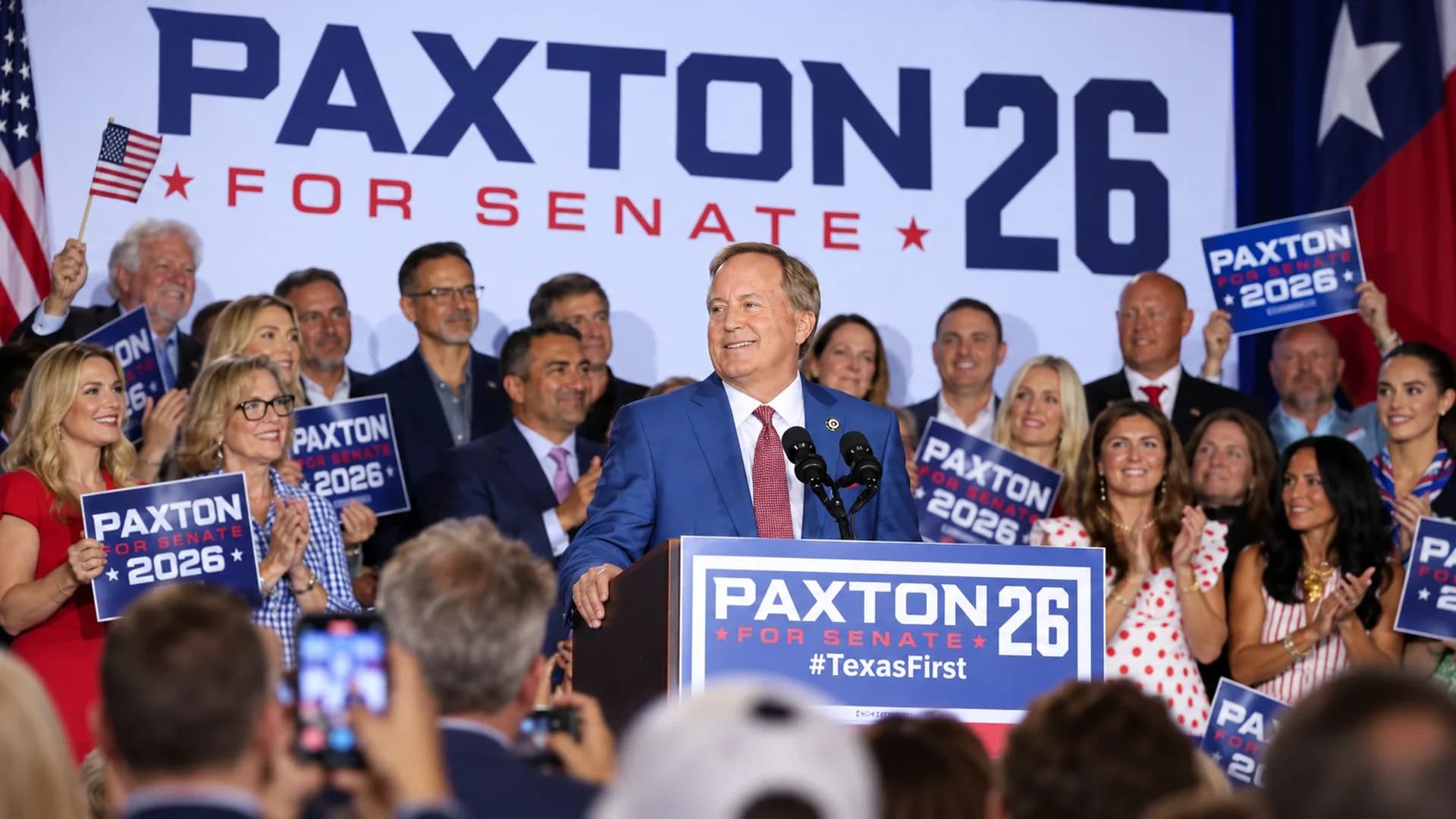
James Talarico currently leads Ken Paxton in the recent nonpartisan public surveys collected by the University of Texas Texas Politics Project.
But the margins range considerably.
Texas Southern University/YouGov had Talarico ahead for 6 points and now is at 47%-46%.
Fox News had Talarico ahead with 5 points and now at 51%-49% among likely voters.
Nobody can honestly take those surveys and announce that Talarico is winning. Actually he must be very worried.
But neither does a one- or two-point race in multiple likely-voter surveys resemble an electorate that has stopped considering Republicans.
It resembles a fight.
Trump’s Republican Base Has Not Disappeared
There is another piece CNN’s collapse narrative can obscure.
Trump still maintains extremely strong loyalty among the Republicans who identify most closely with MAGA.
An Economist/YouGov poll found 95% approval of Trump among MAGA Republicans, while 80% of Republicans overall approved of his performance at the time of the survey.
More recently, CBS’s Battleground Tracker found that most MAGA Republicans said they remained as interested in the 2026 election as they had been during the presidential election two years earlier.
That does not eliminate the Republican challenge they are facing.
But it does complicate the suggestion that Republican voters have simply abandoned Trump or his candidates.
They have not.
And they are having a come back mobilizing elders.
The real Republican challenge is converting that loyalty into midterm turnout while persuading less ideological Republicans and independents who are much less satisfied.
That is a very different story from political collapse.
CNN Has One Part of the Story
Republican strategists are worried.
They should be.
Democrats lead nationally in most generic-ballot polling.
They currently hold the enthusiasm advantage.
Economic dissatisfaction is hurting the party controlling Washington.
Those are facts.
But another set of facts exists beside them.
Republican candidates are outperforming Trump’s approval ratings greatly in numerous races.
Several Senate contests remain within a few points in recent surveys.
Republicans maintain a major financial operation.
And the cherry top is Trump himself is now campaigning aggressively to activate the voters who normally participate more heavily when his own name is on the ballot.
And some supposed Democratic opportunities remain far more competitive than a “wave” narrative suggests. There is no blue wave, the numbers suggest is NOT going to happen.
Maybe Republicans ultimately lose the House. Maybe.
Maybe they do not.
The polling does not authorize us to write Election Night’s result on October 3.
What it does tell us is something less dramatic—and considerably more useful:
Democrats temporally have the better national environment, while Republicans remain very competitive in enough individual races that turnout over the next month could materially reshape Congress.
That is the story underneath the headlines.
CNN found Republicans who are afraid.
The voters have not finished speaking.
FPTN will tell you the story as is.
Share and Come back for more.