 3 min read
 10
10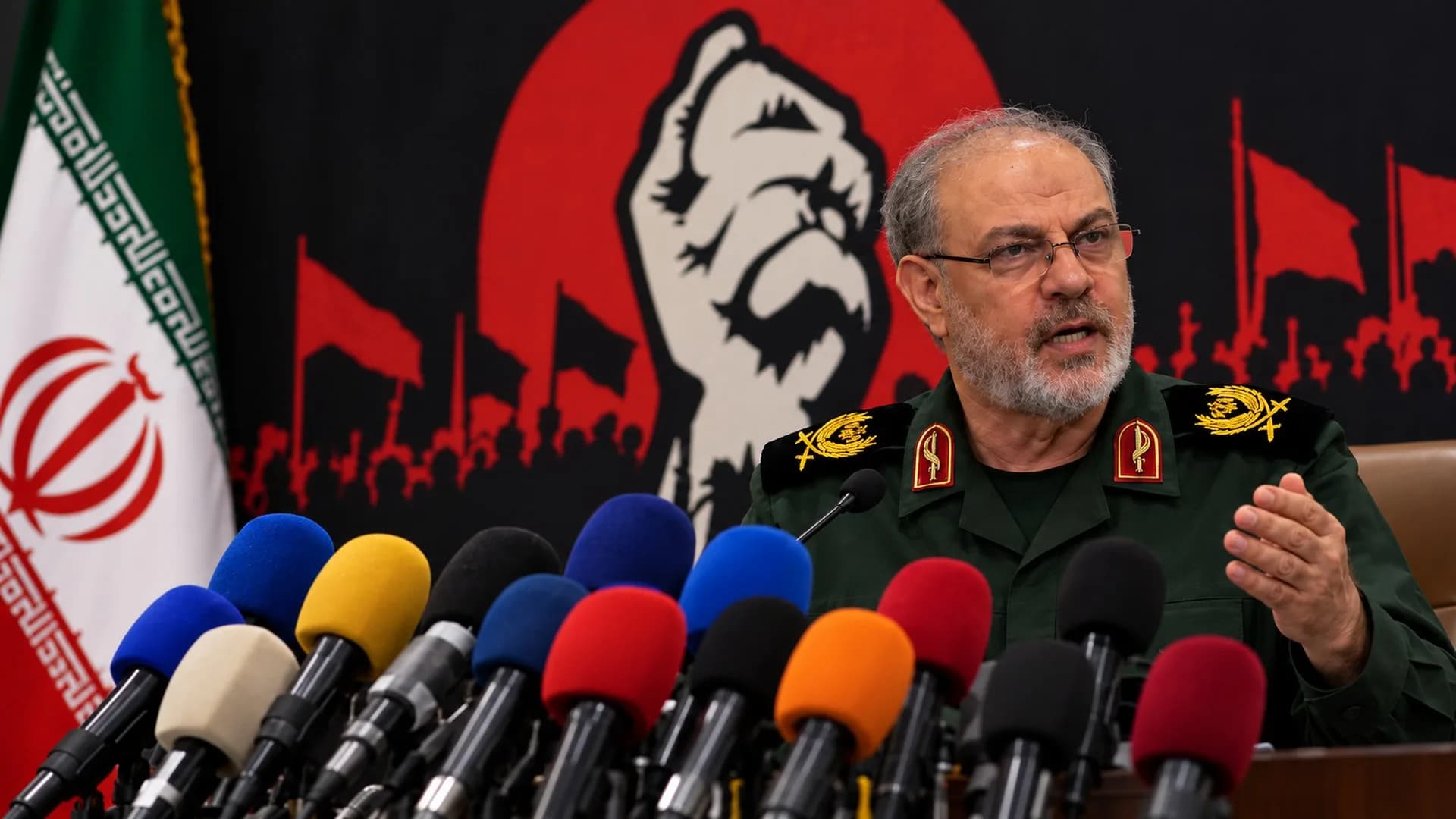
 Linkedin
 Threads
 Facebook
 X
X
Iran's Revolutionary Guard did something unusual Tuesday.
It did not simply threaten the Pentagon. It did not issue another warning to Israel. It did not announce another missile operation in the Strait of Hormuz.
Instead, Gen. Hossein Mohebbi, spokesman for the Islamic Revolutionary Guard Corps, stood before cameras in Tehran and read what he described as a “letter to the American people.”
His message was blunt: Americans should pressure their own government, protest President Donald Trump's policies, reconsider their political leadership and force Washington to end the war. Mohebbi argued that the United States had failed, accused Trump of lying and said Washington ultimately had “no choice” but to acknowledge defeat and leave the region.
But perhaps the most revealing question is not what Iran said.
It is this:
Why is the Revolutionary Guard suddenly trying to persuade Americans?
Because this letter did not emerge in isolation.
It arrived while Iran's currency was collapsing to another record low, negotiations with Washington were intensifying, Iranian oil exports remained squeezed by an American blockade, and—perhaps most surprisingly—China had just publicly agreed with Trump on one of the central issues Tehran has been attempting to leverage.
The pattern we have been following for several days is becoming increasingly difficult to ignore.
Tehran is fighting on a new battlefield: American public opinion
Iran's appeal arrives only weeks before the November 3 midterm elections.
That timing matters.
Mohebbi explicitly urged Americans to take to the streets against the war and “revise their decision” about their leaders, according to the Associated Press.
That does not mean Iran controls American political opposition to the war. Americans can oppose military policy for completely independent reasons, and there are legitimate debates about casualties, constitutional war powers, gasoline prices and the enormous economic costs of an eight-month conflict.
But Tehran's message should also be understood for what it is: strategic communication from a government currently at war with the United States.
Iran is attempting to create pressure where American presidents are most vulnerable—inside the American political system itself.
And that is an interesting evolution.
Weeks ago, Tehran's strongest message was essentially: We control Hormuz.
Then came negotiations.
Then came a seven-day proposal seeking relief from the American blockade, access to frozen assets and sanctions relief in exchange for reopening the waterway and restarting negotiations.
Trump rejected those terms.
Now the Revolutionary Guard is talking directly to American voters.
Those developments do not prove Iran is about to surrender. They do suggest that Tehran is searching for additional forms of leverage.
Look at what is happening behind the rhetoric
Iran continues to publicly insist that Washington is losing.
The numbers coming out of Iran's economy tell a different story.
The Iranian rial fell Tuesday beyond 2.5 million rials to one U.S. dollar, another record low. AP reports that Iran's economy, already damaged by years of sanctions, has deteriorated sharply under the naval blockade and restrictions targeting its oil exports.
Reuters reported earlier this month that the blockade had accomplished something years of sanctions never completely achieved: for roughly seven weeks, no meaningful fresh Iranian crude shipments successfully crossed Hormuz to China.
That matters because China has been Tehran's largest remaining major oil customer.
Iran therefore faces an unusual situation.
The Persian Gulf is moving oil again.
Saudi Arabia, the UAE and other producers are gradually restoring exports.
American-protected shipping corridors are operating.
But Iran's own ability to monetize its oil remains severely constrained. Independent shipping data now shows regional flows rebounding substantially even while Tehran's exports remain under pressure.
That changes the strategic equation.
Iran originally weaponized Hormuz because disrupting the world's energy artery gave Tehran enormous leverage over everybody.
But what happens if everybody else's oil gradually starts moving while Iranian oil does not?
The weapon begins cutting both ways.
Then Trump met Xi
This may be one of the most underappreciated developments of the entire week.
When Chinese President Xi Jinping visited Washington last week, Iran and the Strait of Hormuz were directly discussed.
According to both the White House and the Chinese government's published account of the meetings, Trump and Xi agreed on two remarkably specific principles:
Iran should not possess a nuclear weapon.
And no country or institution should be permitted to impose tolls on international waterways.
Read the second one carefully.
Iran has spent months trying to establish some mechanism through which it could extract payments or control passage through Hormuz.
China—Iran's strategic partner and most important major oil customer—has now publicly joined Washington in rejecting that principle.
That does not mean China has abandoned Iran.
Beijing still calls Tehran a “comprehensive strategic partner,” hosted Iranian Foreign Minister Abbas Araghchi this month and continues urging negotiations rather than escalation.
But China is not publicly riding to Tehran's rescue either.
Beijing wants Iranian oil.
It also wants cheap energy, uninterrupted shipping and predictable global commerce.
Those interests are not always the same thing.
China's message appears increasingly pragmatic: negotiate, reopen Hormuz and stop threatening the commercial artery that China itself depends upon.
That leaves Tehran with fewer comfortable options.
There is another problem with Iran's letter
The Revolutionary Guard is asking Americans to protest their government in the name of peace and political accountability.
Americans should also remember who is delivering that message.
Only days ago, a United Nations fact-finding mission released findings on Iran's suppression of demonstrations beginning in late 2025.
Investigators concluded that Iranian authorities committed serious human-rights violations during the crackdown and that many—including murder, imprisonment, torture and other inhumane acts—amounted to crimes against humanity as part of a widespread and systematic attack on civilians.
The same investigation documented mass arrests, lethal force against demonstrators, severe restrictions on communications and protest-related executions.
There is an extraordinary contradiction here.
Iran's security establishment is now telling Americans to take to the streets against their government while the Iranian state has been internationally investigated for violently suppressing Iranians who took to their own streets.
That history should not disappear simply because Tehran has adopted the language of antiwar activism.
Nor should Iran's decades-long use of Hezbollah, the Houthis, Palestinian Islamic Jihad and other regional armed groups disappear from the discussion simply because today's messaging presents Iran exclusively as the victim of Western aggression.
Civilian suffering inside Iran is real.
American casualties are real.
The economic damage caused by the conflict is real.
But so is the history that preceded February.
All of it belongs in the story.
The letter may tell us more than the threats
Tehran still possesses weapons.
It can still attack shipping.
It can still inflict casualties.
It can still threaten escalation across the Gulf and through allied forces elsewhere in the region.
This is not a defeated government signing surrender papers.
But weakness does not always announce itself with a white flag.
Sometimes it appears in changing negotiating positions.
Sometimes it appears when demands become negotiable.
Sometimes it appears when a country desperately needs its oil revenue restored.
And sometimes it appears when the Revolutionary Guard stops speaking only to its enemy's military leadership and begins pleading its case directly to the enemy's voters.
Iran says America must leave because Washington has lost.
Perhaps.
But if Tehran believes the American strategy has completely failed, another question becomes unavoidable:
Why is Iran negotiating, seeking economic relief, watching its currency collapse—and now asking the American people to help change Washington's policy?
That is the contradiction beneath today's headline.
And increasingly, it may be the real story of this stage of the war.