

 2 min read
 33
 Linkedin
 Threads
 Facebook
 X

President Donald Trump has secured a significant diplomatic and economic breakthrough with Thailand, bringing the two countries closer to a comprehensive reciprocal trade agreement.
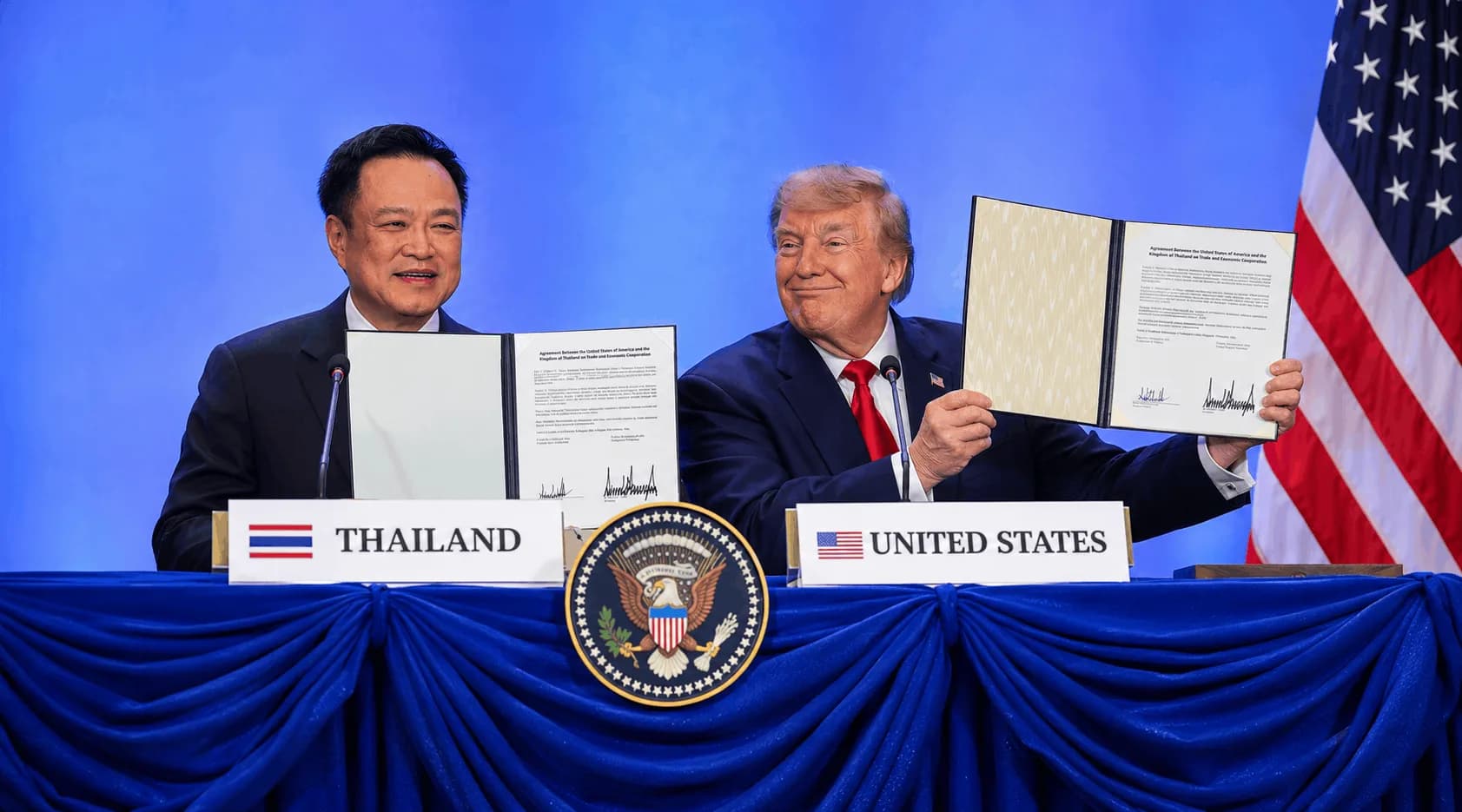
Trump and Thai Prime Minister Anutin Charnvirakul signed a joint statement in Manila, Philippines, confirming that negotiations have reached a substantial conclusion.
The announcement advances an agreement intended to strengthen bilateral trade, expand commercial opportunities, and improve cooperation between two longstanding economic partners.
Both governments must now complete their respective internal procedures before the final agreement can be signed and enter into force.
For American businesses, the opportunity is substantial: greater access to a major Southeast Asian market, stronger demand for U.S. products, and a more predictable environment for international investment.
A Breakthrough Built on Previous Negotiations
The latest announcement builds on a trade framework established in October 2025.
Under that earlier framework, Thailand committed to eliminating tariffs on approximately 99% of goods, including a wide range of American agricultural and industrial products.
The United States outlined a 19% reciprocal tariff rate on imports from Thailand, with certain qualifying products potentially receiving a zero-percent rate.
These provisions were negotiating commitments, not confirmation that every tariff adjustment has already taken effect.
The November 2026 announcement indicates that both governments have substantially completed negotiations on the agreement.
For manufacturers and exporters, completing the remaining legal steps could provide greater certainty when making long-term production and investment decisions.
New Opportunities for American Farmers
Agriculture stands to benefit significantly from the proposed trade relationship.
The 2025 framework outlined measures to improve access for American meat, poultry, and other agricultural products.
Thailand also agreed to address regulatory barriers affecting American exports and facilitate trade based on recognized food-safety standards.
The framework identified prospective agricultural purchases valued at approximately $2.6 billion annually.
These include feed corn, soybean meal, and other agricultural products.
For American farmers, stronger export demand can support rural businesses, agricultural processors, transportation providers, and surrounding communities.
Expanded access to overseas customers also helps producers diversify their markets and reduce dependence on domestic demand.
Billions in Energy and Aircraft Purchases
The agreement could create significant opportunities for American energy producers and aerospace manufacturers.
Earlier negotiations identified prospective Thai purchases of U.S. energy products worth approximately $5.4 billion annually.
Those products include liquefied natural gas, crude oil, and ethane.
The framework also referenced the procurement of 80 American aircraft, valued at approximately $18.8 billion.
Such purchases could support activity across American manufacturing, engineering, aviation services, and industrial supply chains.
However, these figures describe prospective commercial transactions identified in the earlier framework, not newly completed purchases announced on November 17.
Their economic impact will depend on final contracts, delivery schedules, and actual implementation.
Addressing America's Trade Deficit
The United States maintains a substantial goods trade deficit with Thailand.
According to the Office of the U.S. Trade Representative, bilateral goods trade totaled approximately $110.8 billion in 2025.
American exports to Thailand reached approximately $19.6 billion, while imports from Thailand totaled $91.3 billion.
That produced a U.S. goods trade deficit of roughly $71.7 billion.
The Trump administration views reciprocal trade agreements as an opportunity to address unequal market access and strengthen American export competitiveness.
Reducing foreign tariffs and regulatory barriers can give U.S. businesses more opportunities to compete abroad.
A trade agreement alone, however, does not guarantee that the overall trade deficit will decline.
Technology and National Security
The proposed agreement extends beyond traditional goods.
The 2025 framework outlined cooperation on digital trade, intellectual property protection, telecommunications investment, and the movement of business data.
It also addressed supply-chain security, export controls, and efforts to combat unfair trade practices.
These measures are especially important as the United States seeks to strengthen its economic partnerships across the Indo-Pacific region.
Reliable commercial relationships can help American companies diversify supply chains while supporting national security and technological competitiveness.
A Stronger Foundation for American Growth
The latest joint statement represents meaningful progress toward a broader trade relationship built around market access, investment, and economic cooperation.
Its full benefits will depend on final signature, entry into force, and the successful implementation of the negotiated commitments.
For American farmers, energy producers, manufacturers, and technology companies, the agreement offers a promising opportunity to reach new customers and expand commercial activity.
President Trump's trade initiative reflects a broader strategy: use America's economic influence to negotiate better access for American products, strengthen international partnerships, and create new opportunities for domestic industries. Turning those commitments into lasting commercial results could support American jobs, strengthen supply chains, and reinforce the nation's economic leadership.