
 3 min read
 129
 Linkedin
 Threads
 Facebook
 X

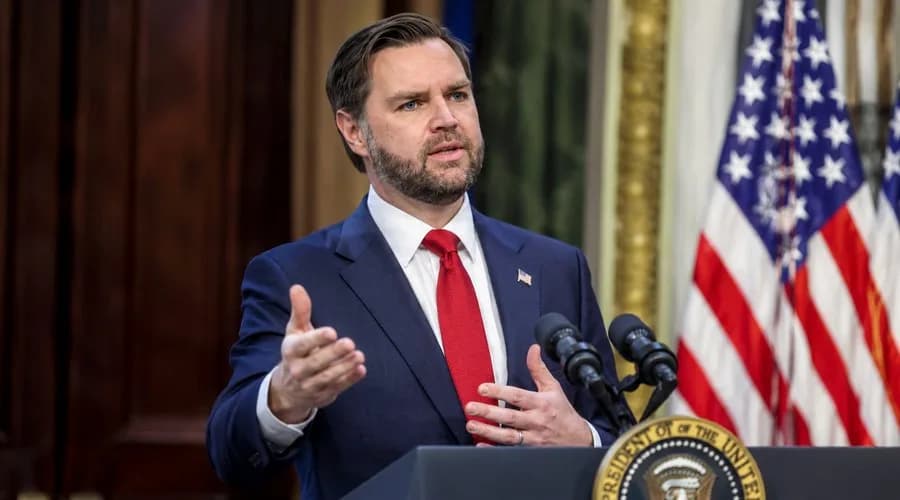
WASHINGTON, D.C. — Vice President JD Vance, long regarded as a possible successor to President Donald Trump, is seriously considering whether to sit out the 2028 presidential election following Republican defeats in the November midterms.
The development marks a significant moment in the emerging contest over the future of Trump's political movement.
According to reporting from CNN and The Washington Post, Vance has not made a final decision. Several allies still believe he will ultimately seek the Republican nomination, but people familiar with his thinking acknowledge that the political environment has become considerably more complicated.
At 42, Vance has time to pursue the presidency in a later election. But the decision confronting him is about more than political timing.
It involves his young family, his relationship with Trump, the continuing war with Iran, and the direction Republicans intend to take after their midterm losses.
The Iran War Has Become a Major Political Obstacle
The war with Iran has emerged as one of the most consequential disagreements within the Republican coalition.
Following the November 3 elections, Vance publicly argued that the conflict contributed directly to Republican losses.
“The reason we lost is the war,” he wrote in a post-election assessment.
The statement reflected a position Vance has expressed throughout his political career: skepticism toward prolonged American military intervention overseas.
Although he has defended the administration's stated objective of preventing Iran from acquiring nuclear weapons, Vance has also acknowledged public frustration with the conflict and its economic consequences.
For a potential presidential candidate, that creates a difficult political balance.
Vance must navigate his loyalty to the president while establishing what his own foreign-policy agenda would look like.
The question becomes especially important if the conflict remains unresolved as the 2028 campaign approaches.
Trump Redirects Vance Away From Iran Negotiations
Another development came Thursday when Trump publicly instructed his vice president to shift his attention away from negotiations with Iran.
In a Truth Social statement, Trump said he wanted Vance concentrating on investigations involving alleged corruption and crime in Democratic-led cities and states.
The president also declared that he no longer considered a negotiated agreement with Iran necessary.
The announcement followed Vance's participation in diplomatic efforts aimed at resolving the conflict.
While the president retains authority over the administration's foreign policy, the reassignment highlighted a difference in emphasis between the two leaders.
Whether that difference becomes a lasting political disagreement remains unclear.
For now, Vance continues serving as vice president while considering his political future.
A Fourth Child and the Personal Cost of Public Office
The decision is also deeply personal.
Vance and his wife, Usha, welcomed their fourth child in July.
People familiar with the family told The Washington Post that the vice president has expressed frustration with the restrictions imposed by Secret Service protection, particularly when raising young children.
A presidential campaign would bring additional travel, public scrutiny, security requirements, and time away from home.
Those considerations are reportedly part of Vance's discussions with his wife and advisers.
He is expected to use the holiday season, and potentially the first months of 2027, to evaluate his options.
No formal announcement date has been established.
Rubio, DeSantis, Cruz and Kemp Enter the Conversation
The uncertainty surrounding Vance has encouraged discussion of other potential Republican presidential candidates.
Secretary of State Marco Rubio remains a prominent figure in the administration and has previously indicated that he would support Vance if the vice president runs.
Florida Governor Ron DeSantis, Texas Senator Ted Cruz, and Georgia Governor Brian Kemp are also being discussed as possible contenders.
None of those discussions establishes that the candidates have formally entered the race.
But the November election results have prompted Republican officials and donors to reconsider the party's future leadership.
The Republican nomination contest could involve competing visions of foreign policy, economic priorities, and the relationship between the party and Trump's political legacy.
What the Latest Reuters/Ipsos Poll Actually Shows
A Reuters/Ipsos survey released November 12 measured early impressions of possible presidential candidates.
Among Republican voters surveyed, 45% described Rubio as an excellent potential presidential candidate, compared with 43% for Vance and 32% for DeSantis.
The differences between Rubio and Vance were within the survey's margin of error.
The results do not represent a direct presidential primary vote or establish which candidate would win the nomination.
They do show that both Vance and Rubio have substantial recognition and positive assessments among Republican respondents.
The poll surveyed 1,705 American adults nationwide and included approximately 500 registered voters from each major party.
Major Donors Are Watching Closely
Vance may also face financial and organizational challenges.
Republican fundraiser Eric Levine told The Washington Post that several major donors with whom he had spoken were not currently supporting a Vance presidential campaign.
That assessment does not necessarily represent the broader Republican donor community.
Vance has developed fundraising relationships through his work with the Republican National Committee and remains closely connected to influential figures within Trump's political network.
Still, a competitive presidential primary would require substantial financial resources, state-level organization, and sustained donor support.
The vice president would have to demonstrate that his candidacy could attract support beyond those already committed to Trump's political movement.
Is the Republican Party Preparing for a Post-Trump Era?
The emerging debate goes beyond Vance's individual ambitions.
Trump remains the central figure in Republican politics, but the 2028 election will require the party to nominate someone other than the sitting president.
That raises several unresolved questions.
Should the next Republican nominee continue Trump's governing approach with relatively few changes?
Should the party adopt a different position on military intervention, particularly in the Middle East?
And how should Republicans respond to voters concerned about inflation, housing costs, and the broader economy?
Vance's political identity places him directly inside those debates.
His public skepticism toward extended military intervention could distinguish him from some Republicans, while his close association with the administration could make it difficult to separate his record from Trump's.
Other prospective candidates will face their own versions of those challenges.
The Decision Could Come in 2027
Despite speculation that Vance might withdraw from consideration, people close to him caution against interpreting his deliberations as a decision not to run.
Several allies told The Washington Post that the political landscape could change substantially before the first presidential primaries.
Others suggested he could reach a decision during the first quarter of 2027.
The vice president has not publicly committed to that timetable.
For now, his potential candidacy remains one of the central unresolved questions surrounding the Republican Party's future.
The most important development is not that JD Vance has abandoned his presidential ambitions. He has not. It is that the man once widely viewed as Trump's natural successor is now openly weighing whether 2028 is the right moment to pursue the White House.
And as Republicans examine the consequences of the midterms, the Iran war, and the administration's economic record, that decision could influence the direction of the party's next presidential nomination contest.