

 3 min read
 20
 Linkedin
 Threads
 Facebook
 X

A new approach to concussion prevention could change how doctors and sports organizations evaluate the risks athletes face during competition.
Researchers are investigating whether a person's natural head and eye movements can reveal how vulnerable the brain may be to injury.
The work focuses on a technology known as the Head Impact and Trauma Sensor (HITS) and the possibility of identifying neurological characteristics associated with concussion susceptibility.
The research was highlighted, bringing attention to a growing field of sports medicine focused on detecting injury risk before serious damage occurs.
Concussions have long presented a challenge for athletes, coaches, and healthcare professionals because symptoms are not always immediately obvious.
An athlete may appear physically capable of continuing a game even when the brain has experienced an injury.
The potential breakthrough is moving concussion protection beyond simply identifying injuries after they happen and toward understanding which athletes may be more vulnerable beforehand.
Understanding How the Brain Responds to Movement
The human brain continuously coordinates information from the eyes, inner ear, and nervous system to maintain balance and stabilize vision.
When the head moves, the eyes automatically adjust to keep objects in focus.
This process is known as the vestibulo-ocular reflex.
Researchers are interested in whether differences in this response can reveal characteristics associated with concussion susceptibility.
HITS technology measures aspects of head movement and eye response, providing information about how the neurological system processes physical motion.
By examining these measurements, scientists hope to identify patterns that could help distinguish athletes with different levels of neurological vulnerability.
This is particularly important in contact sports, where repeated impacts can place stress on the brain even when an athlete does not experience an immediately recognizable concussion.
Why Predicting Risk Could Change Sports Medicine
Most current concussion protocols focus on identifying symptoms after a suspected injury.
Athletes are evaluated for headaches, dizziness, confusion, memory problems, balance difficulties, and sensitivity to light or noise.
If a concussion is suspected, medical professionals determine whether the athlete should be removed from competition and undergo further evaluation.
A predictive assessment could add another layer of information.
For example, if testing identifies an athlete with characteristics associated with greater concussion susceptibility, medical professionals could use that information when developing individualized prevention and monitoring strategies.
This could be particularly valuable in football, soccer, hockey, rugby, and other sports involving repeated head impacts.
The objective would not be to automatically exclude athletes from competition.
It would be to give medical teams better information when evaluating individual risks.
The Importance of Early Detection
One of the biggest challenges in concussion medicine is that symptoms can develop gradually.
Some athletes initially dismiss headaches, dizziness, or confusion because they want to continue competing.
Others may not recognize that their symptoms are related to a head injury.
Repeated head impacts are also receiving increased attention because research has linked certain patterns of exposure to long-term neurological concerns.
Chronic traumatic encephalopathy (CTE), for example, is a progressive brain disease associated with repeated head impacts.
Researchers have identified CTE in individuals with extensive histories of repetitive head trauma, including former professional athletes.
There is currently no established method for diagnosing CTE in living individuals with definitive certainty.
That makes prevention, exposure reduction, and careful medical monitoring particularly important.
What This Could Mean for Young Athletes
The potential applications extend beyond professional sports.
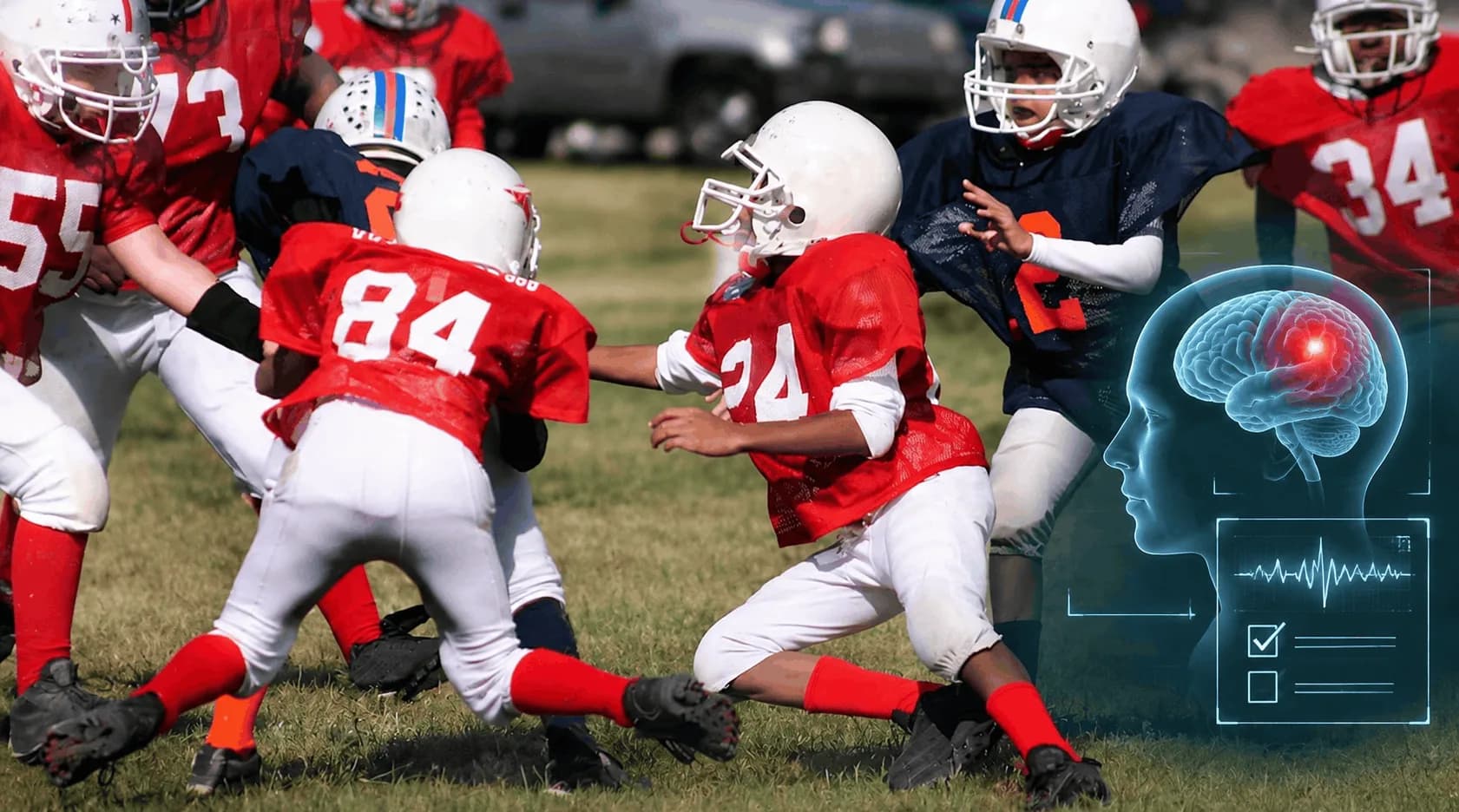
Millions of American children and teenagers participate in organized athletics, including football, soccer, basketball, and other competitive activities.
Parents and coaches often face difficult decisions when a young athlete experiences a possible concussion.
A reliable neurological assessment could eventually provide additional information to help medical professionals evaluate injury risk and recovery.
It could also support more individualized approaches to training, contact exposure, and return-to-play decisions.
However, a predictive measurement should never replace a clinical concussion evaluation or established medical protocols.
The technology must undergo further testing to determine its accuracy, reliability, and usefulness across different ages, sports, and populations.
A New Direction for Brain Injury Prevention
The development of predictive concussion assessments reflects a broader transformation in medicine.
Instead of waiting for symptoms to appear, researchers are increasingly investigating ways to identify biological signals associated with future health risks.
Similar approaches are being explored in cardiovascular medicine, cancer screening, and neurological research.
For sports organizations, better brain-health assessments could eventually support more informed decisions about athlete safety.
For families, the possibility of identifying vulnerability before repeated injuries occur could provide another layer of protection for children participating in competitive sports.
The future of sports medicine should not be measured only by how quickly athletes recover from injuries. It should also be measured by how effectively science helps prevent those injuries in the first place. If predictive neurological testing proves reliable, it could become an important tool in protecting the brains of athletes at every level of competition.