
 3 min read
 210
 Linkedin
 Threads
 Facebook
 X

U.S. Security Confiscates Reporters’ Phones Aboard Air Force One After Trump's China Visit
Journalists traveling with President Trump were ordered to surrender their electronic devices for security inspections as Air Force One departed China. The unusual precaution raises questions about foreign surveillance and the vulnerability of modern communications.
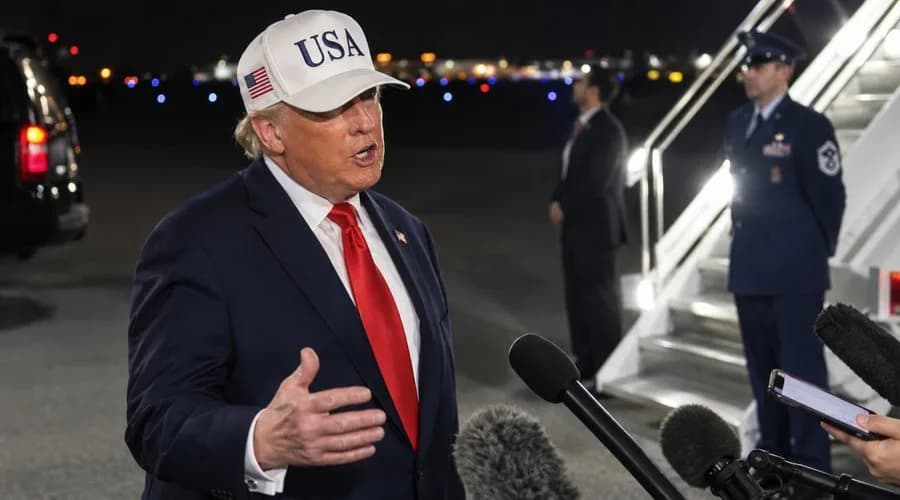
ABOARD AIR FORCE ONE — November 19, 2026. Reporters traveling with President Donald Trump received an unexpected security instruction Thursday as Air Force One prepared to leave China: surrender their smartphones and other electronic devices to U.S. security personnel.
The unusual procedure reportedly took place shortly after journalists boarded the presidential aircraft following Trump's visit to Shenzhen for meetings connected to the Asia-Pacific Economic Cooperation summit.
According to accounts from the traveling press corps, security personnel temporarily collected electronic devices from journalists representing multiple news organizations.
Reporters received numbered tickets corresponding to their devices while inspections were conducted.
The phones were subsequently returned.
The reported reason was not censorship or an attempt to prevent coverage of the president's visit.
U.S. authorities were checking whether the devices might have been compromised by surveillance technology while their owners were in China.
No evidence has been publicly presented indicating that malware, spyware or other unauthorized surveillance tools were discovered.
Why Would U.S. Security Inspect Reporters' Phones?
The incident highlights a longstanding concern within American national security circles: electronic devices used in foreign countries can become targets for intelligence collection.
Smartphones contain far more than telephone numbers and text messages.
They can hold private correspondence, location histories, professional contacts, authentication credentials, photographs and access to sensitive cloud-based accounts.
For journalists traveling with the president, those devices may also contain confidential sources, unpublished reporting and communications with senior government officials.
Even temporary unauthorized access could expose valuable information.
Security specialists therefore recommend additional precautions when traveling to countries where digital surveillance and state-sponsored cyberespionage are significant concerns.
Government employees sometimes travel with temporary devices configured to limit the information potentially exposed.
The Air Force One inspection appears to have extended similar precautions to members of the independent press.
China Remains a Major U.S. Cybersecurity Concern
American intelligence and cybersecurity agencies have repeatedly identified Chinese state-linked cyber operations as a significant national security challenge.
U.S. officials have warned about campaigns targeting telecommunications providers, government networks, critical infrastructure and sensitive information.
China denies American accusations of widespread cyberespionage and has accused the United States of conducting surveillance operations of its own.
The distinction matters in this case.
The reported inspection does not establish that Chinese authorities accessed the journalists' phones.
Rather, it reflects the precautions American security personnel reportedly considered necessary after a high-profile presidential visit.
No confirmed compromise involving the reporters' devices had been disclosed as of Thursday.
Why the White House Press Corps Matters
The White House press pool performs a distinctive role in American journalism.
Because space aboard Air Force One is limited, a rotating group of journalists travels with the president and distributes reports to news organizations that cannot be represented on the aircraft.
These reporters document presidential movements, official statements and developments that may occur outside scheduled press conferences.
Their work provides the broader public with information about presidential activities.
That makes the temporary collection of their devices unusual.
Security precautions must protect sensitive information while preserving journalists' ability to report independently.
According to the account of Thursday's incident, the devices were returned following inspection, and the procedure did not appear to prevent journalists from continuing their work.
Are the Recent U.S. Technology Outages Connected?
The inspection also occurred during a week of heightened concern over disruptions affecting American technology infrastructure.
Microsoft services, aviation communications, banking platforms and other systems experienced significant interruptions.
The unusual sequence prompted questions about whether foreign governments might be involved.
However, Secretary of State Marco Rubio said federal officials had found no evidence that the incidents were connected or caused by a coordinated hostile operation.
President Trump also addressed concerns about foreign interference during his Asia trip.
The administration has maintained that the recent disruptions do not establish an ongoing coordinated cyberattack.
There is likewise no demonstrated connection between those outages and the security inspections aboard Air Force One.
A Warning About the Digital World
The incident illustrates a broader challenge facing the United States.
Government officials, journalists, executives and ordinary citizens increasingly depend on devices that contain substantial amounts of personal and professional information.
Protecting those devices is now an important part of protecting national security, economic activity and confidential communications.
The reported Air Force One inspection raises practical questions.
Should journalists traveling on sensitive international assignments routinely use dedicated devices?
What safeguards should protect confidential reporting materials during government security inspections?
And how can American institutions strengthen cybersecurity without compromising the independence of the press?
For now, the most important distinction is clear: U.S. security personnel reportedly took precautions against possible surveillance, but no successful compromise of the journalists' devices has been established.
The episode offers another reminder that international competition increasingly extends beyond military power and trade negotiations into the security of the devices Americans carry every day.
Stay connected with FPTN for the real news. As is.