

 3 min read
 749

 Linkedin
 Threads
 Facebook
 X

Texas is taking an unprecedented step to verify its election results, launching its first statewide risk-limiting audit of paper ballots from the November 3 midterm elections.
And for Texans wondering whether their state government is doing anything to protect election integrity, the answer is now visible.
Physical ballots are being randomly selected. Election officials are checking them against machine-recorded results. And the findings must be documented and made public.
The audit is focused on the closely watched U.S. Senate election between Democrat James Talarico and Republican Ken Paxton, in which Talarico leads by nearly 1.2 million votes according to the state's reported results.
The audit is a routine legal requirement, not evidence that the Senate results are fraudulent.
It represents the culmination of election security legislation enacted five years earlier.
The Lawmakers Who Made It Happen
The current audit traces directly to two laws passed by the Texas Legislature in 2021.
State Senator Lois Kolkhorst, a Republican from Brenham, authored Senate Bill 598, legislation requiring auditable voting systems and establishing the framework for statewide risk-limiting audits.
The bill's principal House sponsor was Republican Representative Jacey Jetton.
Other House lawmakers formally involved included joint sponsors Briscoe Cain, Travis Clardy, Greg Bonnen and Dustin Burrows.
State Senator Bryan Hughes, a Republican from Mineola, authored Senate Bill 1, the Election Integrity Protection Act of 2021.
That measure established additional election procedures and safeguards.
Its House sponsors included Representatives Andrew Murr, J.M. Lozano, Travis Clardy, James White and Jacey Jetton.
Republican Senator Paul Bettencourt was among SB 1's Senate coauthors, alongside other lawmakers.
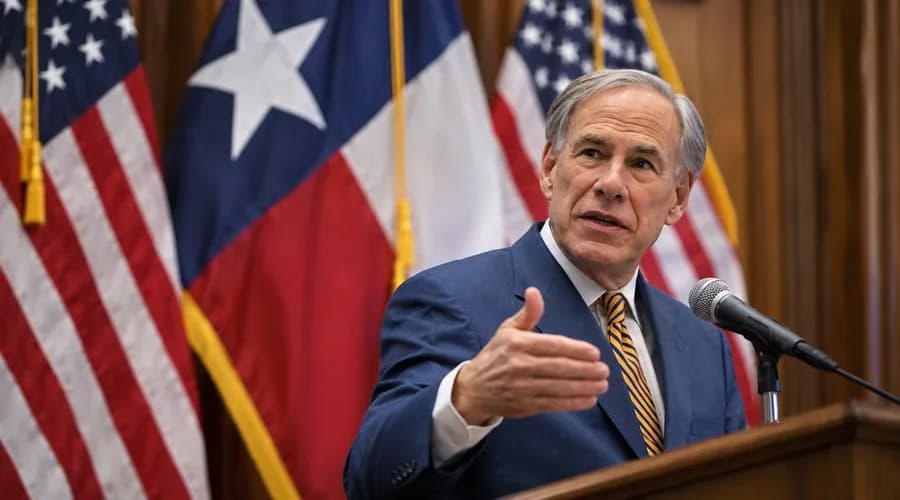
Governor Greg Abbott signed both measures into law.
The risk-limiting audit provisions were designed for statewide implementation beginning with elections held after August 31, 2026.
That timetable has now arrived.
Why Did the Secretary of State Roll Dice on Camera?
On November 18, Texas Secretary of State Robert S. Howden oversaw a public drawing using 10-sided dice.
The event was livestreamed.
The resulting 10-digit random number became the seed used by the audit software to select paper ballots for inspection.
Why use physical dice?
Because a publicly generated random seed helps demonstrate that the ballot sample was not secretly chosen to produce a preferred outcome.
County election officials must retrieve the selected ballots and compare their contents with the electronic tabulation records.
The process uses statistical methods to test whether the reported election outcome is consistent with the underlying paper ballots.
If the evidence is insufficient, additional ballots may need to be examined under the audit rules.
This is not a complete manual recount of every vote.
It is a statistical verification process designed to provide strong evidence about the accuracy of the reported outcome.
Texas Is Conducting a Second Audit, Too
The statewide risk-limiting audit is only one layer of verification.
Texas counties using electronic voting systems must also conduct a separate post-election partial manual count.
For the November 2026 election, that review covers three contests:
The U.S. Senate race.
The Chief Justice of the Texas Supreme Court race.
One additional contested race selected locally.
Officials compare hand-counted paper ballots with the corresponding machine totals.
The process is governed by Section 127.201 of the Texas Election Code.
County election administrators must follow state requirements for ballot selection, public notice, documentation and reporting.
Candidate-appointed poll watchers may observe qualifying audit proceedings under applicable rules.
The goal is straightforward: ensure that the recorded totals reflect the votes contained on the paper ballots.
Some Republicans Want Every Ballot Counted by Hand
Not everyone believes statistical sampling goes far enough.
In October, the Potter County Republican Party and its chairman, Daniel Rogers, filed a federal lawsuit seeking a complete manual count of Texas ballots before federal election results are certified.
The lawsuit raised concerns about possible hacking, artificial intelligence manipulation and vulnerabilities in electronic voting equipment.
However, the plaintiffs did not present evidence that Texas voting machines had actually been compromised or that previous results had been altered.
Their argument centered on the possibility of future interference and whether existing audits provide sufficient protection.
Election officials and voting-rights organizations opposed the proposed statewide hand count, warning that requiring millions of ballots to be manually recounted on short notice could delay certification and introduce additional human errors.
The dispute highlights a genuine policy question: how much verification is necessary to establish public confidence without undermining the timely administration of elections?
What About Reports of Voting Machines Switching Selections?
Reports of touchscreen selection problems also circulated before Election Day.
Such incidents deserve investigation, particularly when voters believe a machine displayed a selection different from the one they intended.
But a touchscreen error is not automatically evidence of intentional vote manipulation.
Texas' voter-verifiable paper systems allow voters to inspect a printed record before casting their ballots.
That physical record provides an important independent means of checking electronic results.
Voters who notice an incorrect selection should notify election officials and follow the applicable ballot-correction procedure before submitting the ballot.
The statewide audit adds another safeguard by examining the paper evidence after the election.
When Will Texans See the Results?
The statewide risk-limiting audit is scheduled to begin November 19 and continue as needed.
Texas law requires the Secretary of State to publish the audit results online within three days after completion.
The separate post-election hand-count process has its own schedule, which depends in part on the completion of the statewide audit.
The results will help establish whether the sampled paper ballots support the reported outcomes.
If discrepancies are identified, election officials must address them under the applicable audit procedures.
The audit is not proof that fraud occurred. It is a method for checking the accuracy of election results and detecting problems if they exist.
Texas Is Putting Election Security Laws Into Practice
For years, debates over election integrity have centered on voting machines, ballot security, transparency and public trust.
Now Texas is carrying out a system that allows election results to be checked against physical evidence.
The work began with legislation sponsored by identifiable lawmakers, continued through pilot programs and election administration planning, and has reached its first statewide implementation.
The next test is whether the audits are conducted thoroughly, discrepancies are explained and the public receives clear results.
Texans should not have to choose between trusting a machine without verification and assuming an election was stolen without evidence.
They should be able to examine a transparent process that checks the count, reports its findings and corrects documented errors.
That is what the new statewide audit is designed to provide.
Stay connected with FPTN for the real news. As is.