 5 min read
 78
78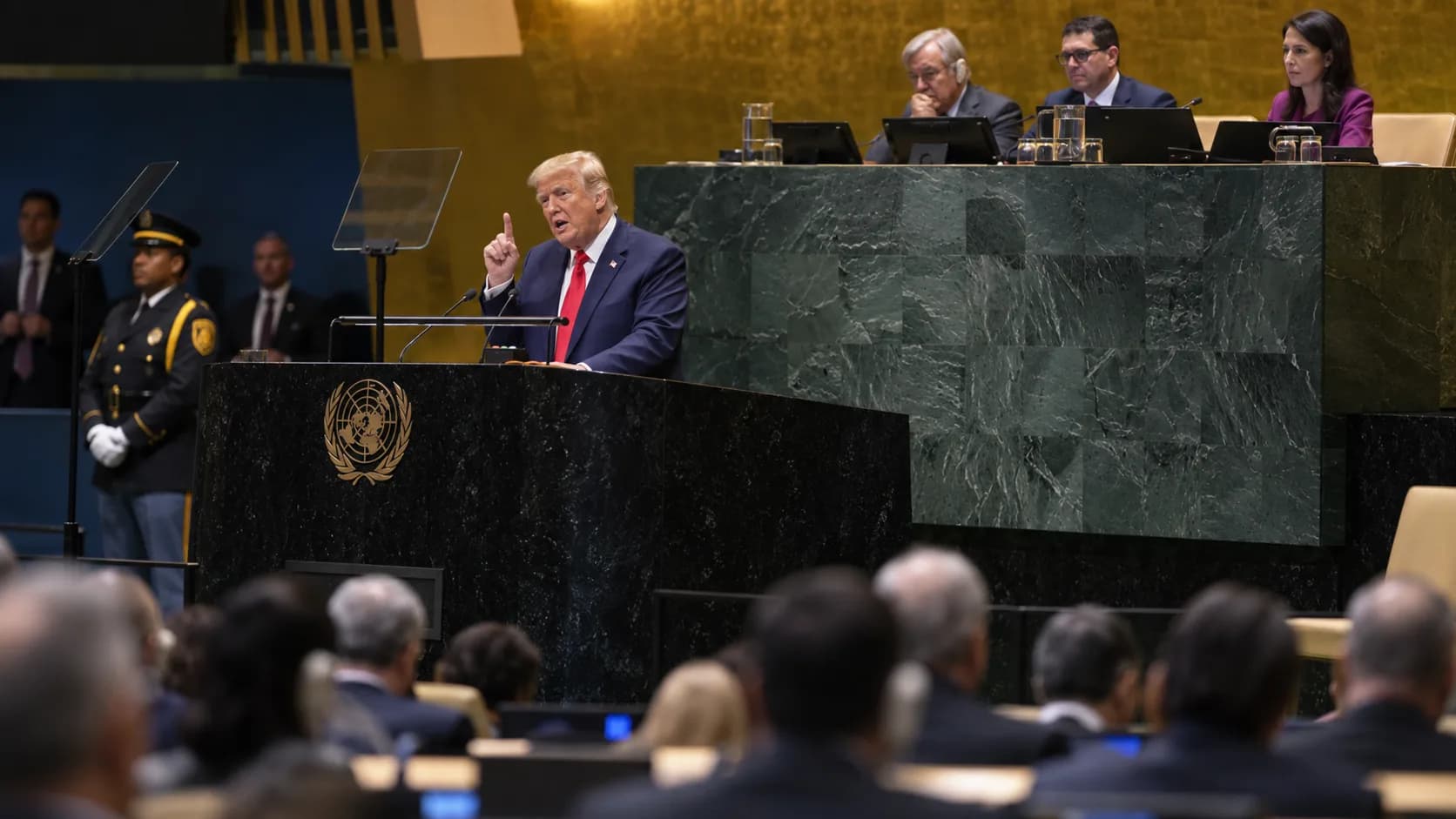
 Linkedin
 Threads
 Facebook
 X
XThe same speech produced remarkably different headlines.
The Washington Post emphasized Trump's warning that Iran could face destruction if its government refuses a nuclear agreement. A Fox News opinion analysis emphasized American strength, Greenland, Venezuela, cartels and artificial intelligence. Associated Press described a president defending military intervention while simultaneously leaving the door open to renewed diplomacy with Tehran.
All three descriptions capture pieces of what happened.
Trump's message at the 81st United Nations General Assembly was essentially this: the United States intends to use its economic, technological and military advantages more aggressively, but Washington still wants agreements when adversaries are willing to negotiate.
That tension ran through almost every subject he addressed.
Iran dominated the room
Iran was clearly the most consequential part of Trump's speech.
The president defended the U.S.-Israeli military campaign launched in February and again insisted that Iran would not be permitted to obtain a nuclear weapon. He told world leaders that Tehran could choose between reaching an agreement or facing renewed and potentially devastating military action. Iranian representatives walked out during portions of his remarks.
But something else happened that received less dramatic treatment.
Trump later revealed that senior American and Iranian officials had spent approximately three hours meeting in New York—the first known face-to-face negotiations between the sides in months.
He described the meeting positively and said he still believed an agreement was possible.
That produces an interesting contradiction.
How can a president threaten overwhelming military consequences while simultaneously negotiating?
That is precisely the strategy Trump has repeatedly described as peace through strength: create enough pressure that the alternative to negotiation becomes increasingly unattractive.
Whether that approach ultimately produces a durable settlement remains unresolved. The Iran war has lasted longer than Trump initially forecast, has contributed to disruption in global energy markets and remains politically controversial inside the United States.
Then came Greenland
Trump moved almost immediately from his U.N. appearance to a signing ceremony with Danish Prime Minister Mette Frederiksen and Greenland Prime Minister Jens-Frederik Nielsen.
The agreement expands America's security position in Greenland while explicitly preserving Danish sovereignty and Greenland's existing political status.
Trump presented it as the culmination of an American strategic interest extending across generations. Frederiksen emphasized that the agreement keeps sovereignty intact and said allied unity remains important.
Why does Greenland matter so much?
Because geography has not stopped mattering simply because warfare has become technological.
Greenland sits between North America, Europe and the Arctic, an increasingly contested region involving Russia, China, NATO, missile detection, space operations and future shipping routes.
Fox's opinion coverage emphasized the agreement's restrictions on Chinese investment and expansion of American military capabilities around Pituffik and other installations.
It is therefore less a story about acquiring territory than about who controls strategic access to the Arctic.
Venezuela and the Western Hemisphere
Trump also returned to Venezuela.
The United States captured Nicolás Maduro earlier this year, and Maduro remains imprisoned in Brooklyn awaiting federal proceedings. Trump highlighted subsequent U.S. access to Venezuelan petroleum resources and portrayed the operation as part of a broader restoration of American influence in the Western Hemisphere.
He then connected Venezuela to drug cartels operating throughout the region.
Trump compared major cartels to terrorist organizations and said the United States would not allow hostile forces to establish themselves in the hemisphere.
That represents an expansion of a longstanding American foreign-policy idea: events in Latin America are not merely regional issues when Washington believes they directly affect U.S. security.
Critics dispute the legality and consequences of some of these interventions. Supporters argue they reestablish deterrence in a region where Russia, China and Iran have expanded relationships over the previous two decades.
That debate will continue.
The policy shift itself is unmistakable.
Trump wants the AI race treated like a geopolitical contest
One of the more unusual moments arrived when Trump discussed artificial intelligence.
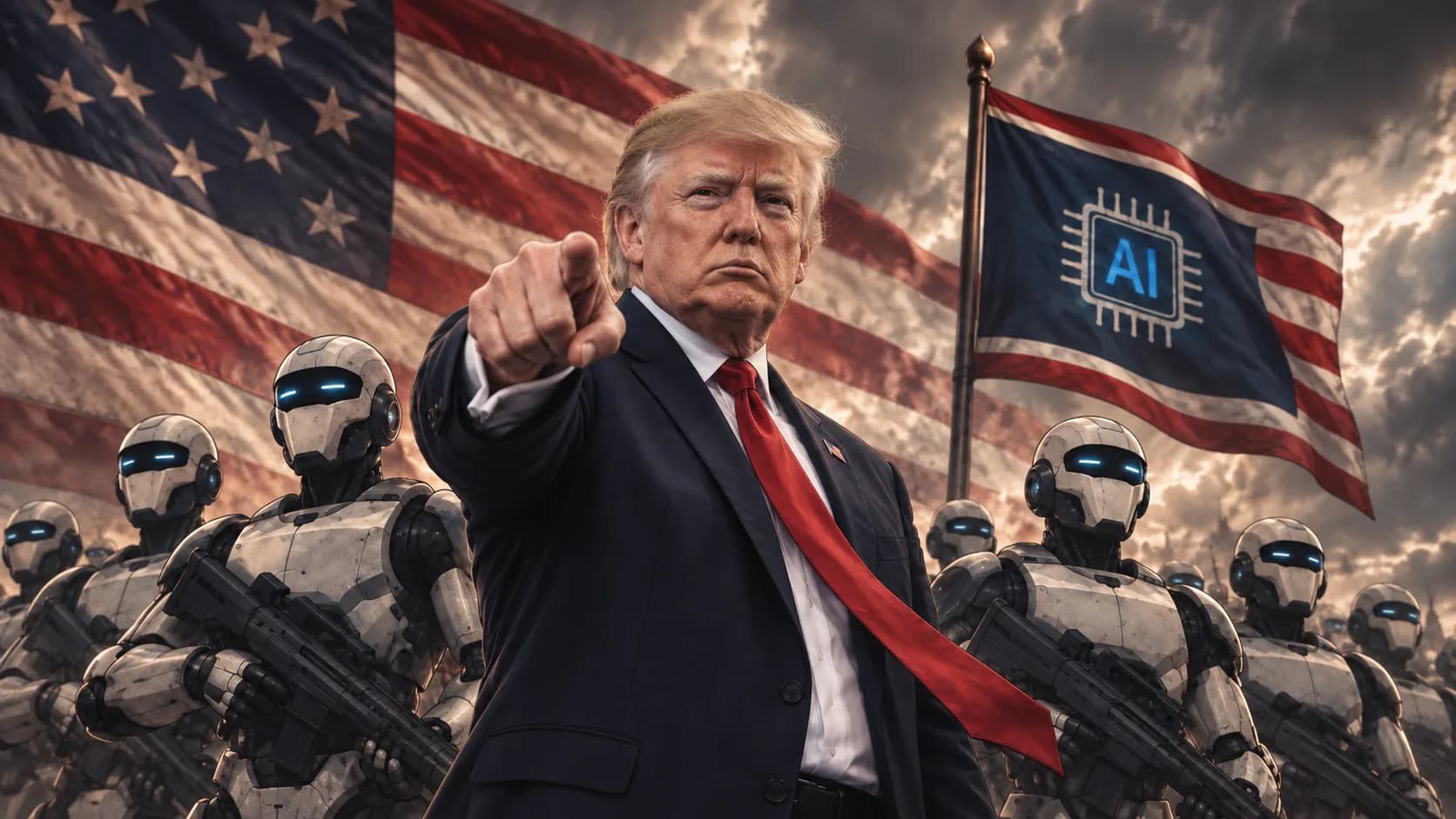
He suggested calling advanced AI “Super Intelligence,” or SI, and argued that leadership in the technology would have enormous consequences for national power.
His broader argument is already familiar from administration policy: America should accelerate AI development rather than adopt sweeping restrictions that could allow China to gain an advantage.
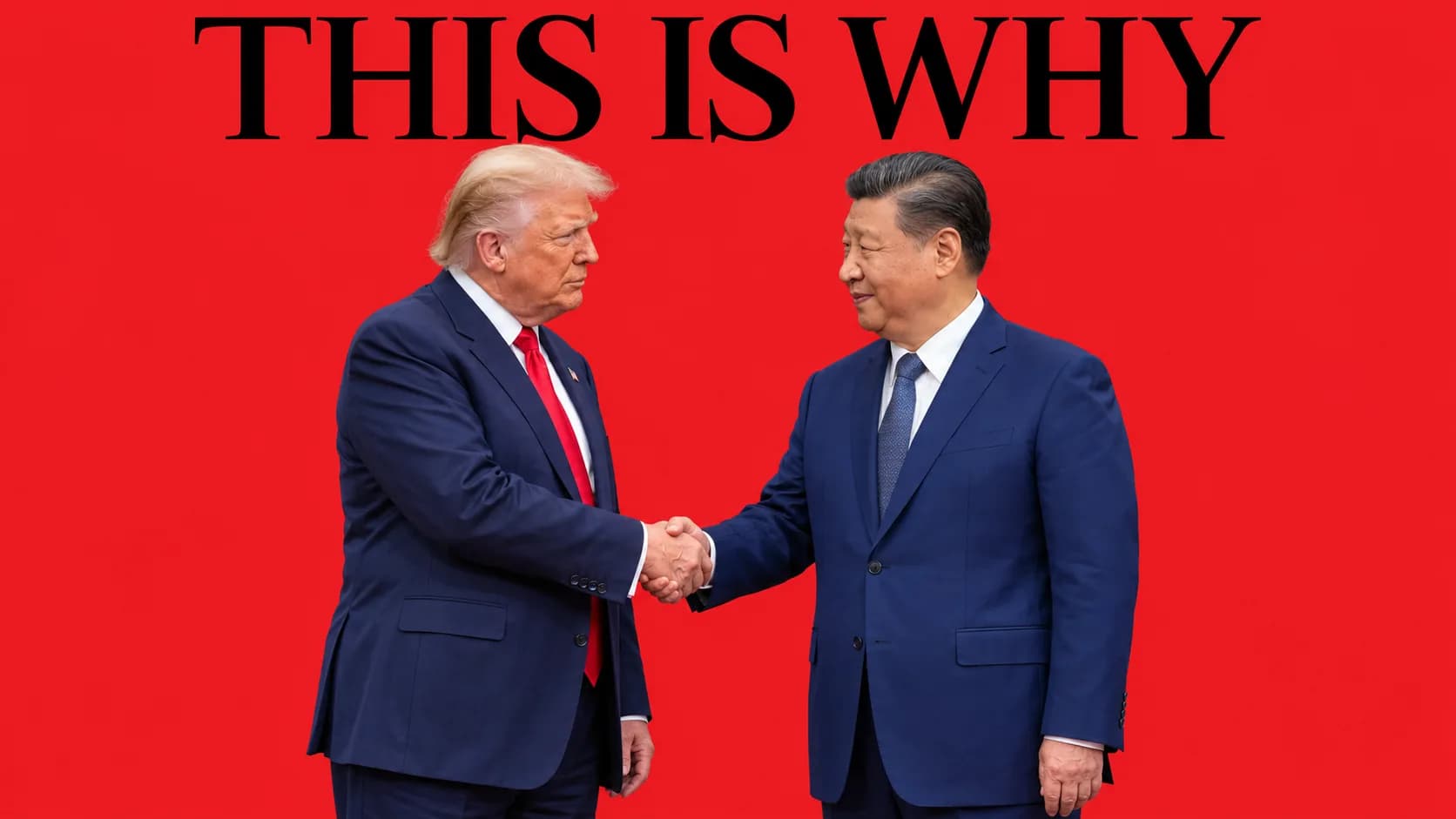
The timing matters because Chinese President Xi Jinping is expected in Washington later this week.
AI is therefore no longer being presented simply as another technology industry.
It sits alongside semiconductors, energy, manufacturing and military technology as part of the larger U.S.-China competition.
Ukraine remains unfinished
Trump also met Ukrainian President Volodymyr Zelensky after the address.
The two discussed attempts to halt attacks against energy infrastructure and the possibility of strengthening Ukraine's air-defense capabilities.
Trump said recent American contacts with Moscow and Kyiv had created conditions that could potentially support another attempt at negotiations. Zelensky expressed skepticism that Russia was prepared to reciprocate.
Unlike some of Trump's other foreign-policy subjects, Ukraine gave him little opportunity to declare a completed outcome.
The war continues.
That difference is important because Trump's address mixed achievements his administration says it has already secured with conflicts whose final outcomes remain deeply uncertain.
One speech, two interpretations
Fox's Rebecca Grant interpreted the address primarily through American leverage: Iran weakened, Greenland secured strategically, Maduro removed, cartels under pressure and America competing aggressively in AI.
The Washington Post emphasized another reality: the Iran conflict continues, energy prices remain under pressure, Ukraine remains unresolved, and Trump's confrontational language creates significant diplomatic risks.
Neither framing changes what Trump himself was attempting to communicate.
His foreign-policy philosophy was unusually visible.
America should possess overwhelming leverage.
Allies should contribute more.
Adversaries should understand the potential cost of confrontation.
Strategic geography still matters.
Economic access is power.
Technology is power.
Energy is power.
Military capability is power.
And diplomacy, in Trump's formulation, becomes most effective when those forms of leverage are sitting behind the negotiator.
The question following today's speech is therefore not whether Trump's approach is conventional.
It clearly is not.
The question world leaders now face is what happens when other governments adapt to it—and whether pressure produces durable agreements or additional confrontation.
For the moment, both possibilities remain visible.
The 81st General Assembly runs through September 28, and Trump's most consequential meeting may still be ahead: his Washington summit with China's Xi Jinping.