3 min read
 5
 Linkedin
 Threads
 Facebook
 X

Three major American cities.
Three democratic socialist mayors.
And one enormous economic question.
Can a city become more affordable by expanding government programs, regulating rents, and increasing taxes—or will some of those policies ultimately make life more expensive?
The November 3 elections delivered a major victory for the Democratic Socialists of America.
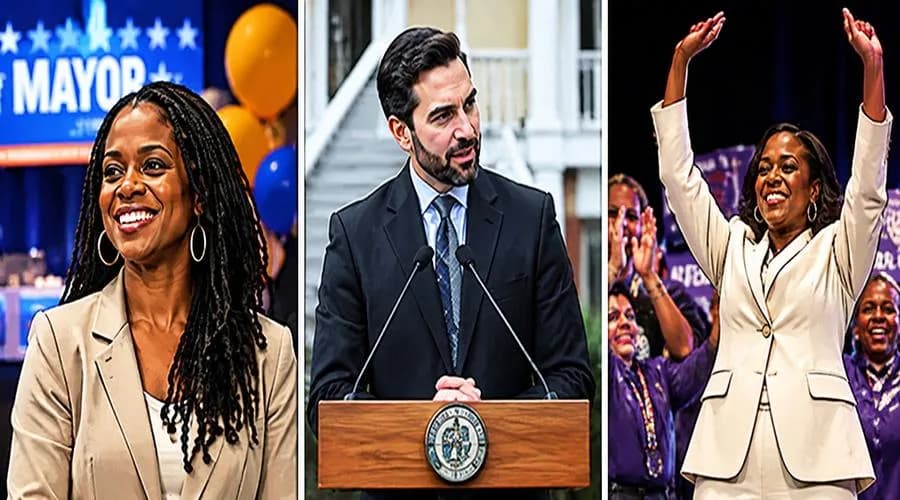
In Los Angeles, Nithya Raman a naturalized citizen from India defeated incumbent Democratic Mayor Karen Bass. In Washington, D.C., Janeese Lewis George won the mayoral election. And in New York City, Zohran Mamdani, elected in 2025, is already implementing parts of his progressive agenda.
Together, these victories represent a significant expansion of democratic socialism's influence over America's largest urban economies.
But winning elections is one thing.
Making an expensive city affordable is something entirely different.
Los Angeles: A New Mayor, the Same Economic Reality
On November 5, the Associated Press called the Los Angeles mayoral election for Nithya Raman.
With approximately 76% of ballots counted, Raman held 52.1% of the vote against Karen Bass's 47.9%.
Raman, a member of the Democratic Socialists of America, campaigned on housing affordability, homelessness, public transportation, and improving city services. Problems created for her own party.
She also promised to reduce street homelessness substantially before the 2028 Olympics.
Her victory followed widespread dissatisfaction with Bass's administration, particularly over the response to the devastating Palisades Fire, homelessness, and deteriorating public services.
The political explanation is not simply that voters embraced socialism. Many wanted a different administration after years of unresolved problems.
But Raman's proposals now face an economic test. Who will pay for free stuff.
Los Angeles needs more housing. Building it requires land, financing, construction labor, permits, infrastructure, and developers willing to invest.
Tenant protections can help existing renters avoid displacement. Yet restrictive rent policies can also discourage investment if they substantially reduce the expected return on new housing.
The details matter.
Will Los Angeles increase the number of homes available—or concentrate on controlling the prices of homes that already exist?
That distinction could determine whether the city's housing crisis improves.
New York: Free Childcare, Frozen Rents, and New Taxes
New York Mayor Zohran Mamdani has already begun pursuing policies central to his affordability agenda.
According to TIME, his administration has announced an expansion of free childcare, implemented a tax on high-end second homes, and secured approval for a rent freeze affecting rent-stabilized apartments.
Each policy raises a different economic question.
Expanded childcare can reduce household expenses and help parents participate in the workforce.
But the program still requires funding.
A rent freeze may provide immediate relief for covered tenants, but landlords continue facing maintenance, insurance, financing, and property-tax expenses.
If those costs rise while rental revenue remains fixed, property owners may reduce investment or seek other ways to recover expenses.
And taxes on high-end second homes could generate revenue, although their long-term effects depend on the tax design, property market, and behavior of affected owners.
None of these consequences can be assumed without examining the actual policy and its results.
The critical distinction is between reducing what a resident pays today and reducing the underlying cost of providing housing and services tomorrow.
Those are not always the same thing.
Washington, D.C.: Another Promise of Affordability
In the nation's capital, Janeese Lewis George campaigned on affordable housing and universal childcare.
She also pledged to oppose aspects of Trump's federal intervention in Washington while expressing willingness to cooperate with the administration when doing so benefits residents.
Her victory brings another Democratic Socialist mayor into a major urban government.
But Washington faces familiar challenges.
Housing construction is expensive. Public services require sustainable budgets. Childcare programs need providers, facilities, qualified workers, and long-term financing.
A mayor can promise affordability.
The more difficult question is whether the administration can deliver those services without creating fiscal pressures elsewhere.
The Economic Question Socialism Cannot Avoid
Democratic socialism is not a single economic policy.
Its American advocates generally favor a larger public role in housing, healthcare, childcare, labor protections, and redistribution. Some proposals expand public services; others regulate private markets.
Supporters argue that these policies reduce inequality and help households facing costs they cannot manage alone.
Critics warn that excessive regulation, higher taxes, and poorly designed subsidies can discourage investment, restrict supply, and shift costs to businesses and taxpayers.
Both arguments can be tested.
Consider a family paying $3,000 monthly in rent.
A rent freeze could prevent an immediate increase.
But if construction slows and available housing becomes scarcer, future renters may face an even more difficult market.
Now consider childcare.
A publicly funded program could save that family thousands of dollars annually.
But its success depends on reliable funding, sufficient childcare capacity, and whether the benefits outweigh the public expense.
Affordability is not determined by the popularity of a promise. It is determined by what households ultimately pay, what taxpayers finance, and what the local economy produces.
Is Opposition to Trump Becoming a Governing Philosophy?
The Democratic Socialists of America celebrated its election victories as a rejection of Donald Trump and Republican policies.
That political message was explicit.
Yet the election results cannot establish that every voter supported these candidates primarily because of opposition to Trump.
In Los Angeles, dissatisfaction with Karen Bass's management was a major factor. In New York and Washington, housing costs and affordability featured prominently.
The incoming mayors therefore face two separate responsibilities: responding to the political coalitions that elected them and delivering the practical improvements they promised.
Opposing the president may be part of their political identities.
But fixing potholes, building housing, reducing homelessness, and managing public budgets are municipal responsibilities.
A city cannot measure its success by how often its mayor confronts Washington. Residents will measure it by whether their neighborhoods become safer, their services improve, and their bills become manageable.
The Real Verdict Will Come From the Numbers
The next several years offer a significant test of democratic socialist municipal government.
The relevant measurements are straightforward:
Median rents and the number of new housing units completed.
Property-tax burdens and local government spending.
Childcare availability and costs to families.
Homelessness and public safety trends.
Business formation, employment, and population changes.
These indicators will help distinguish successful reforms from policies that merely redistribute or postpone expenses.
The new mayors have received an opportunity to demonstrate their economic approach.
Their opponents have an opportunity to scrutinize its results.
And residents have a right to demand transparent accounting.
Los Angeles, New York, and Washington did not elect slogans. They elected governments.
The defining question is whether those governments can make life genuinely more affordable—not merely promise to do so.
Because eventually, every economic promise encounters the same reality.
Someone must explain the cost. Someone must provide the funding. And someone must deliver the results.