3 min read
 19
 Linkedin
 Threads
 Facebook
 X

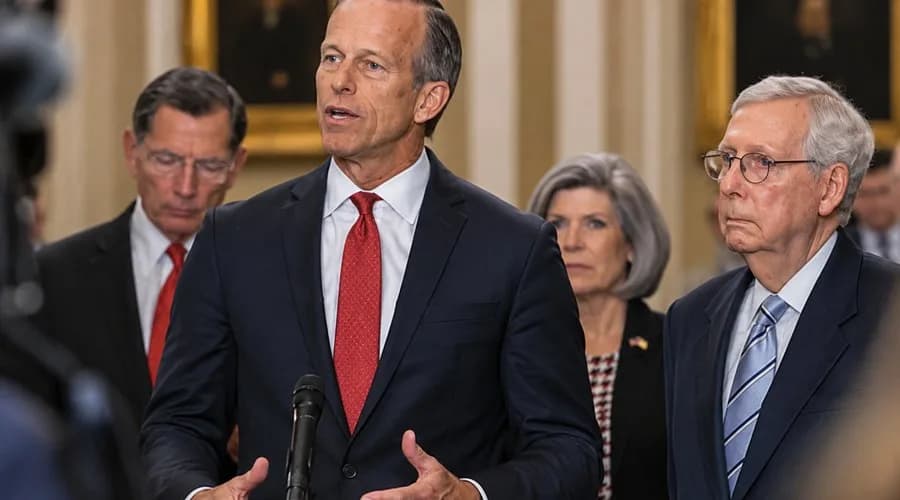
Senate Majority Leader John Thune is facing criticism for refusing to eliminate the legislative filibuster.
But perhaps his greatest mistake is not defending the 60-vote threshold.
Perhaps it is failing to demonstrate that he has exhausted every serious alternative to breaking the deadlock.
Before examining that second option, Americans should understand what is at stake.
If Republicans eliminate the 60-vote threshold to pass the SAVE America Act with a simple majority, what happens when Democrats regain control of Washington?
A future majority could use that same precedent to reverse the legislation with just 51 votes, assuming the necessary congressional and presidential approval.
Thune's institutional argument deserves consideration.
Protecting the Senate's rules is not necessarily protecting Democrats. It can mean protecting America from unchecked legislative power, regardless of which party governs.
But that raises another question.
What good is protecting an institution if its leadership cannot make it work?
Negotiation: The Power Nobody Should Ignore
The SAVE America Act proposes new federal requirements for documentary proof of citizenship during voter registration and identification when voting.
Thune supports the legislation but has argued that Republicans lack the votes to overcome a filibuster.
That is a genuine obstacle.
But leadership involves more than counting votes.
Could individual negotiations identify potential agreements? Could separate bipartisan legislative priorities create opportunities for cooperation without improper promises? Could federal assistance address concerns about obtaining citizenship documents?
None guarantees success.
But before the current Congress ends, the public deserves an accounting of the negotiations attempted, compromises considered, and obstacles encountered.
If Thune cannot demonstrate a credible legislative strategy, questions about his effectiveness as leader are legitimate.
Texas: The Numbers Deserve Examination
Consider Texas.
In the November 3 gubernatorial election, Democrat Gina Hinojosa received 5,230,789 votes—approximately 1.68 million more than Beto O'Rourke received in 2022.
Meanwhile, Greg Abbott received 4,524,527 votes, approximately 87,000 more than his 2022 total.
Where did the additional Democratic votes come from?
New voters? Higher turnout? Changing political preferences? Different campaign mobilization?
Those questions warrant analysis of registration records, county-level results, and turnout patterns. The increase alone does not establish fraud.
Texas already requires citizenship to register and identification for most in-person voting. But an ordinary driver's license or Social Security number does not independently prove citizenship.
Federal law prohibits noncitizens from voting in federal elections. The unresolved policy question is whether existing verification systems are sufficient.
Election security requires evidence. Public confidence requires transparency.
Both Parties Have Something at Stake
Supporters of documentary citizenship requirements argue that stronger verification would improve election security.
Opponents warn that eligible Americans without passports, readily available birth certificates, or matching legal names could encounter unnecessary barriers.
There is a practical policy question here.
Why not examine free or subsidized citizenship documentation, secure government database verification, and accessible procedures for correcting registration errors?
States could help eligible citizens obtain replacement birth certificates. Federal assistance could reduce the cost of other acceptable documents.
These proposals would require funding, administrative planning, and safeguards against mistaken rejection.
The objective should be straightforward: verify eligibility while protecting every eligible citizen's opportunity to vote.
Protect the Senate. Make It Work.
The filibuster debate is bigger than John Thune.
It concerns whether the Senate should continue requiring broader agreement on major legislation or permit narrow majorities to change national policy more easily.
But institutional preservation cannot replace legislative problem-solving.
What negotiations have occurred? What alternatives have been considered? Which objections remain unresolved?
And what can realistically be accomplished before this Congress adjourns?
Thune's leadership should be evaluated against those questions, not merely whether he refuses to change Senate rules.
Protecting an institution and making it work should never be competing responsibilities.
America deserves a serious answer to both.