3 min read
 5
 Linkedin
 Threads
 Facebook
 X

Not even 48 hours.
That is how quickly Washington returned to discussing investigations, blocking Trump, and political confrontation following the November 3 elections.
Millions of Americans, in good faith, went to the polls concerned about the cost of living. They wanted relief from expensive groceries, gasoline, housing, health insurance, and taxes.
Democrats campaigned on affordability. They won control of Congress.
Now they have raised the flag of disappointment.
Will they deliver economic relief, or will the next two years become another political war against Donald Trump?
Schumer's Warning: Legislative Razor Wire
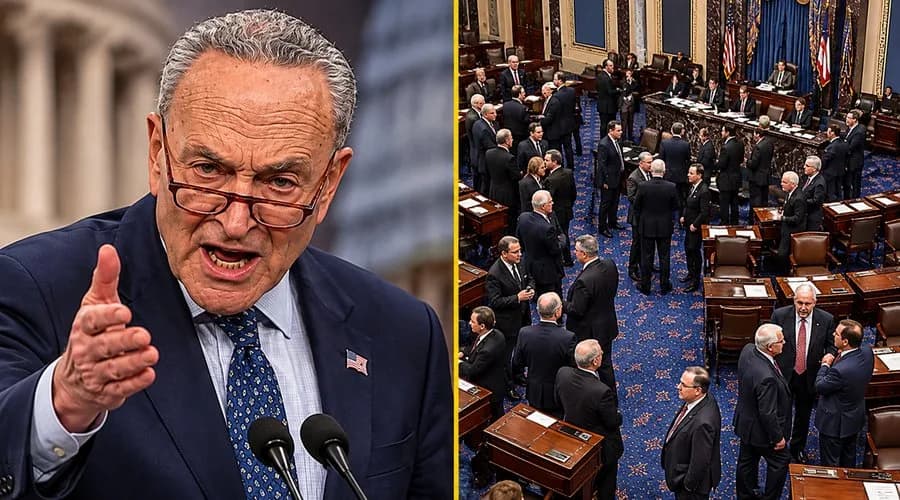
Yesterday, Senate Democratic Leader Chuck Schumer promised that Democrats would use their congressional powers to challenge Trump whenever they believe he violates federal law or disregards voters' wishes.
He warned of investigations, litigation, and legislative obstruction, using the striking expression legislative razor wire.
Those words deserve more than attention from every voter now.
Congress has legitimate oversight responsibilities. Investigating credible allegations of government misconduct is not inherently improper.
But there is an enormous difference between conducting necessary oversight and allowing political confrontation to consume the legislative calendar.
But the question remains: Which priority will dominate when the new Congress convenes on January 3?
Americans Cannot Pay Their Bills With Investigations
Consider gasoline.
The war involving Iran and disruptions around the Strait of Hormuz have contributed to higher energy prices.
On November 5, AAA reported that regular gasoline averaged approximately $4.10 nationally, down 12 cents from the previous week but more than a dollar above its level one year earlier.
That is the reality facing American families.
Meanwhile, Trump announced the arrival of approximately one million barrels of Venezuelan crude oil in Texas on October 27, following an agreement intended to expand access to energy supplies.
The shipment is real. Its eventual impact on consumer gasoline prices remains uncertain.
But this is precisely the kind of economic question Congress should be examining: energy production, supply chains, taxation, transportation, housing, and the policies that influence household expenses.
A congressional investigation does not lower the price at the pump. A workable economic policy might.
Immigration Reform: The Promises, the Deportations, and the Bill Already in Congress
Immigration is another issue Democrats have repeatedly promised to address.
But where is the comprehensive reform that will finally resolve the problem?
There is already a concrete proposal in Congress: the DIGNITY Act, introduced in July 2025 by Republican Congresswoman María Elvira Salazar of Florida and Democratic Congresswoman Veronica Escobar of Texas.
The legislation proposes stronger border security, mandatory employment verification, asylum reform, and a legal-status program for certain long-term undocumented immigrants. It would also protect eligible Dreamers.
Its principal legalization program would not provide a pathway to citizenship.
The proposal exists. It has bipartisan sponsors. So what is preventing Congress from seriously advancing it?
And before Americans accept another round of immigration promises, consider the historical record.
Federal immigration statistics show approximately 12.3 million removals and returns under Bill Clinton and 5.3 million under Barack Obama.
Combined, that is approximately 17.6 million immigration enforcement events.
Not 17.6 million unique people deported. The figures include formal removals and returns, which are different legal categories and can involve repeated encounters.
Nevertheless, they demonstrate something often overlooked in today's political arguments: Democratic administrations have also enforced immigration laws on a massive scale.
The Obama administration faced criticism over detention conditions, including facilities used to hold migrant children.
So the question is not whether Democrats have deported immigrants.
They have. The historical record establishes that.
The question is why comprehensive immigration reform remains unresolved after decades of promises from both political parties.
Some critics argue that unresolved immigration disputes have become politically useful during election campaigns. But claims that a party deliberately facilitates illegal reentry to manufacture votes require evidence, not merely historical deportation statistics.
Now, following the November 3 elections, the legislative question returns.
Will congressional leaders advance the DIGNITY Act, propose amendments, introduce competing legislation, or explain why they reject its provisions?
And would President Trump sign a negotiated immigration reform bill? That remains an open question—not a commitment the White House has made.
For voters who expected immigration reform, the next meaningful measure of accountability is not another campaign speech. It is a bill, a debate, a recorded vote, and an explanation of what Congress actually accomplished.
The Real Test Begins in January
Members of Congress earn a base salary of $174,000 annually.
Most American workers do not enjoy that compensation or the institutional resources available to federal lawmakers.
A construction worker, truck driver, nurse, small-business owner, or parent balancing multiple jobs cannot afford endless political theater.
And for Democrats to start talking about blocking Trump, impeachment, and so on and on is a betrayal of the voters who endorsed their voices.
If they don't deliver on their promises made before November 3, they will face genuine governing constraints. Trump retains presidential veto power, while most Senate legislation still requires 60 votes to overcome a filibuster.
Meaningful economic legislation will likely require negotiation.
There is nothing wrong with holding a president accountable when credible evidence warrants it.
There is something deeply troubling about allowing partisan conflict to replace the economic work voters expect and demand.
If Democrats spend the next two years prioritizing investigations over measurable affordability results, voters will have a record to examine in 2028 and say no to them once again.
If they deliver legislation that meaningfully lowers costs, that record will deserve examination too.
The question is not whether Congress should investigate wrongdoing. It is whether Congress can investigate wrongdoing and still govern.
Americans have already endured another expensive election, having to vote for radicals, Muslims, and transgender candidates in different states.
They deserve more than another expensive political fight that goes nowhere for two years.
They want solutions.