2 min read
 10
 Linkedin
 Threads
 Facebook
 X

The Oval Office is more than the workplace of the American president. It is one of the most recognizable rooms in the world, a setting for historic decisions, diplomatic meetings, national emergencies, and moments that have shaped the course of American history.
Now, it has received a new level of federal recognition.
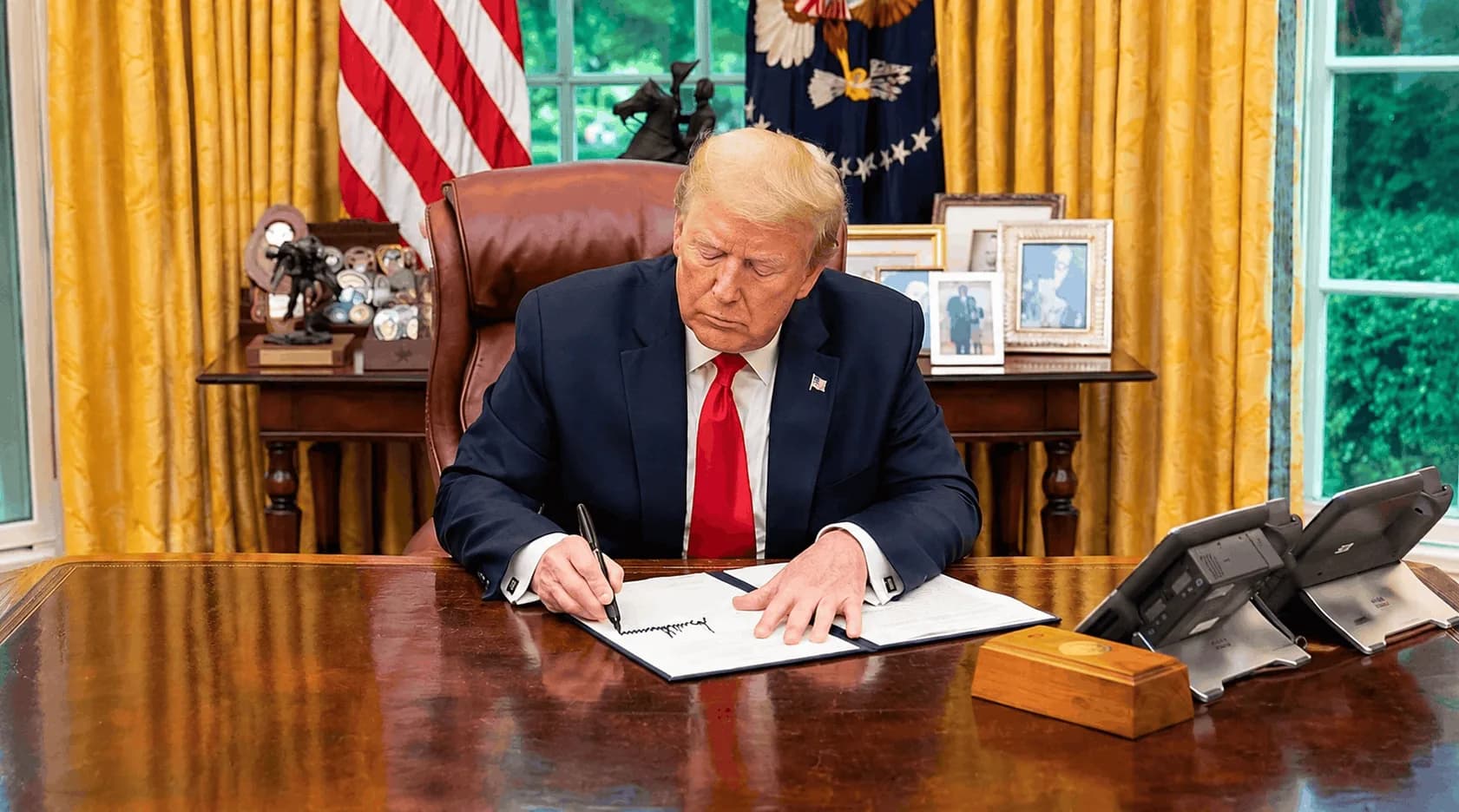
On November 5, President Donald Trump signed a proclamation establishing the Oval Office National Monument, placing the Oval Office, its adjoining outer offices, and the Cabinet Room under a dedicated preservation framework.
The designation uses authority granted under the Antiquities Act of 1906, a federal law that allows presidents to protect historically significant structures and objects on federal property.
The decision creates a formal management responsibility for the Department of the Interior and the National Park Service, with an emphasis on protecting the rooms' architectural integrity and historical association with the presidency.
Protecting Nearly a Century of Presidential History
The Oval Office, in its present location and general form, dates to the administration of Franklin D. Roosevelt in the early 1930s.
Its distinctive oval design has earlier roots, introduced in the West Wing during President William Howard Taft's administration.
Since Roosevelt's presidency, the room has served as the principal working office of the president.
It has hosted foreign leaders, military commanders, congressional delegations, and American citizens during some of the country's most consequential moments.
Decisions involving war, diplomacy, economic policy, civil rights, and national security have been made within its walls.
The proclamation argues that this continuous connection to American history gives the space exceptional national significance.
Although the White House and its grounds were already recognized as a National Historic Landmark, the new designation establishes specific protective management for these presidential rooms.
What Does the National Monument Designation Protect?
The monument includes four designated spaces:
Oval Office: Room 110, the president's principal working office.
Outer Oval Office: Rooms 106 and 108.
Cabinet Room: Room 105, where the president meets with Cabinet members and senior advisers.
Under the proclamation, the Secretary of the Interior, working through the National Park Service, must develop a management plan focused on preserving the rooms' historic structures and significant architectural features.
Major proposed alterations or demolition would require documentation, review, and consideration of alternatives.
Proposed changes affecting the rooms' historic character must also be evaluated against their national significance.
The Interior Department must coordinate with the White House Office of Administration and the Committee for the Preservation of the White House.
This establishes a more formal process for considering the long-term preservation of spaces associated with the presidency.
Can Future Presidents Still Change the Oval Office?
An important distinction in the proclamation concerns presidential authority.
The designation does not prohibit ordinary redecorating, changes to furniture, or routine operational and security modifications that do not substantially impair the rooms' historic structures or architectural character.
It also does not remove Congress's authority over federal property or change existing statutory exemptions applicable to the White House under the National Historic Preservation Act.
The practical legal effect of the designation on future presidents remains an important question.
The Antiquities Act authorizes presidential monument proclamations, but the new framework does not expressly establish that every future president would be permanently unable to reverse the designation.
Its immediate significance is the creation of a formal preservation process and a specific federal management responsibility.
Preserving America's History for Future Generations
Historic preservation is about more than maintaining walls, furniture, and architectural details.
It protects the physical settings that help future generations understand how their country developed.
The Oval Office represents the continuity of the American presidency across administrations, political parties, wars, economic transformations, and generations of national leadership.
Preserving its historic character helps ensure that students, historians, and future visitors can understand the institution beyond photographs and written records.
The designation also reflects a broader White House preservation initiative that includes attention to historic sites, public buildings, and America's architectural heritage.
The Oval Office has witnessed nearly a century of decisions that shaped America and influenced the world. Giving these historic rooms a dedicated preservation framework recognizes that their significance extends beyond any single president. They are part of the nation's inheritance, and protecting that history helps preserve it for generations still to come.