3 min read
 172
 Linkedin
 Threads
 Facebook
 X

It has begun in Houston.
Three days.
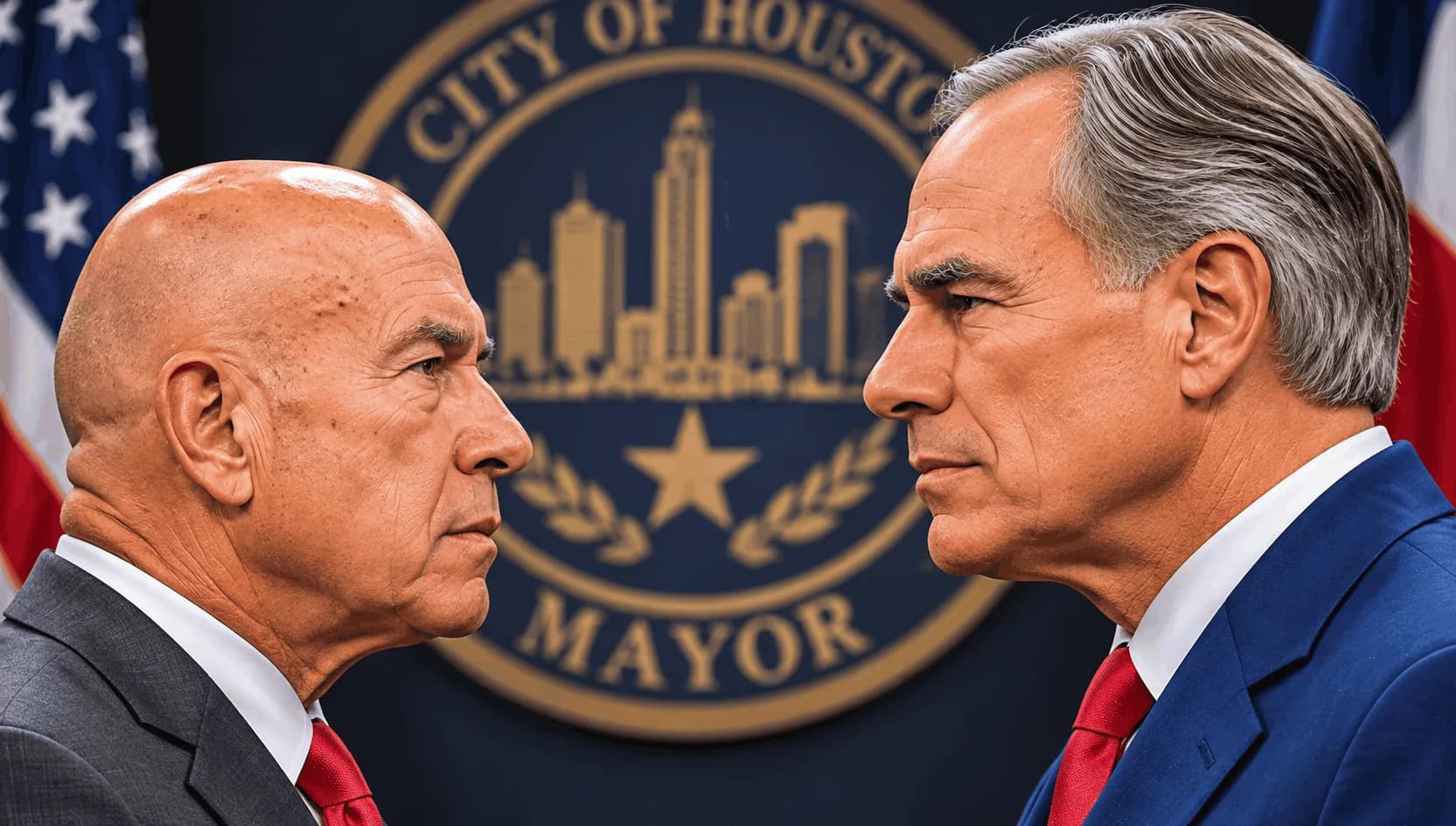
That is all it took after Governor Greg Abbott's electoral defeat for Houston Mayor John Whitmire to announce a major reversal in the city's cooperation with federal immigration authorities.
On November 6, Whitmire directed Houston police to stop routinely notifying Immigration and Customs Enforcement when officers encounter people suspected of lacking legal immigration status during traffic stops and other non-jailable incidents.
Houston has not formally been designated a sanctuary city. But the new policy moves the city toward a more restrictive approach to immigration cooperation.
And the timing is impossible to ignore.
Whitmire Changes Course After Abbott's Defeat
For months, Whitmire resisted efforts to limit Houston police cooperation with ICE.
Earlier this year, Governor Abbott threatened to withhold nearly $200 million in public-safety funding from Houston and other Texas cities over immigration-enforcement restrictions.
The governor's administration argued that local policies interfering with federal immigration cooperation violated Texas law.
Houston subsequently modified its ordinance.
Now Abbott has lost reelection to Democrat Gina Hinojosa, and Whitmire is changing direction.
The mayor told the press that his decision was consistent with the incoming Democratic leadership in Austin.
The question is straightforward: Why was a policy considered necessary under Abbott suddenly abandoned after an election?
Whitmire argues that police should prioritize dangerous offenders rather than routinely contacting ICE over traffic violations.
That argument deserves examination.
But so does the state's interest in ensuring that local governments comply with immigration-enforcement laws.
Houston's Immigration Debate Is Bigger Than City Hall
Houston and its surrounding communities—including Katy and Pasadena—have experienced substantial demographic and economic changes.
Residents regularly raise concerns about traffic, housing affordability, school capacity, public infrastructure, and immigration enforcement.
Some believe the region has absorbed hundreds of thousands of Venezuelan immigrants whose parole has expired or who are undocumented in recent years.
Undocumented immigration is also not synonymous with criminal violence. However, those who remain in the country without a valid permit or visa may be violating immigration law.
The legitimate policy question is how federal, state, and local governments should coordinate immigration enforcement while respecting constitutional protections.
Houston residents deserve accurate population data, transparent enforcement policies, and a clear accounting of the costs associated with population growth.
The Republican Voters Who Helped Elect Whitmire
There is another political irony.
Whitmire, a longtime Democrat, won Houston's 2023 mayoral runoff against Congresswoman Sheila Jackson Lee.
He presented himself as a pragmatic, public-safety-focused candidate and attracted support beyond the Democratic Party, including conservative and Republican voters.
Many voters regarded him as the more moderate alternative.
Now his decision to restrict ICE cooperation creates a significant test of that political coalition.
Was his earlier position based on a lasting commitment to cooperation with state and federal authorities?
Or was it shaped primarily by the political and financial pressure coming from Austin?
Whitmire should explain the reversal directly to the voters who elected him.
Why Brian Harrison's Warning Matters More Than Ever
Texas Representative Brian Harrison has been urging Abbott to call a special legislative session before Hinojosa takes office.
His proposal focuses on limiting the extraordinary emergency powers available to Texas governors.
Harrison argues that the Legislature should establish stronger checks before the next administration inherits those powers.
The Houston controversy illustrates how rapidly government policy can change after an election.
But there is an important distinction.
Harrison's proposed emergency-powers reforms would not automatically reverse Whitmire's ICE directive. Immigration cooperation is governed by separate state and federal laws, including Texas's anti-sanctuary provisions.
But Whitmire and other mayors in Texas could face pressure from legislation introduced by the House and Senate that would become law, requiring cities to cooperate in removing undocumented immigrants from the road, clubs, bars, in coordination with ICE and to facilitate lawful ICE access. Under such legislation, cities that refuse to cooperate could lose funding. Voters cannot allow sanctuary-city policies.
Nevertheless, both controversies raise the same constitutional question:
How much discretionary authority should elected executives possess, and what safeguards should prevent its misuse?
Harrison's petition asks Abbott to convene lawmakers before the transition.
Join Brian Harrison's petition calling for a special legislative session.
Abbott Still Has Time to Act
Governor Abbott remains in office until January, and many legislative measures, executive orders, and other actions can still be taken, including the immediate arrest of mayors or even a governor if they commit offenses warranting arrest by unlawfully keeping the border open and making the state unsafe for its citizens. This is the time to think responsibly about citizens, not about those who have no understanding of law and order and have certain interests in keeping the state unprotected.
His administration can review whether Houston's new directive complies with Texas law and pursue available enforcement remedies if violations are established.
In our opinion, this policy clearly demonstrates that Whitmire has violated the law, and with legislative modifications, he could face arrest if his conduct constitutes a criminal offense.
The precise language of the executive order, its implementation, and the requirements of Texas law will determine the legal outcome.
Meanwhile, the broader political implications are unmistakable.
We have the mayor of the largest city in Texas publicly disrespecting a governor who still has two more months to serve the entire state.
A mayor who previously defended cooperation with ICE has changed course immediately after a statewide electoral reversal. This is a very bad sign and deserves immediate attention from attorneys and action from Abbott to set an example against this behavior.
A new Democratic governor is preparing to assume office.
And Texas lawmakers are debating whether executive authority requires stronger legislative oversight.
The question facing Texas is no longer hypothetical: What happens when a change in political leadership produces an immediate change in the enforcement priorities of government?
Houston has provided an early example and needs attention because an undocumented immigrant stopped for a traffic violation could be a murderer in their own country, particularly if they entered without proper vetting.
Now Texans can examine the law, demand accountability, and decide what limits on executive power they believe their government should maintain.