


 2 min read
 4
4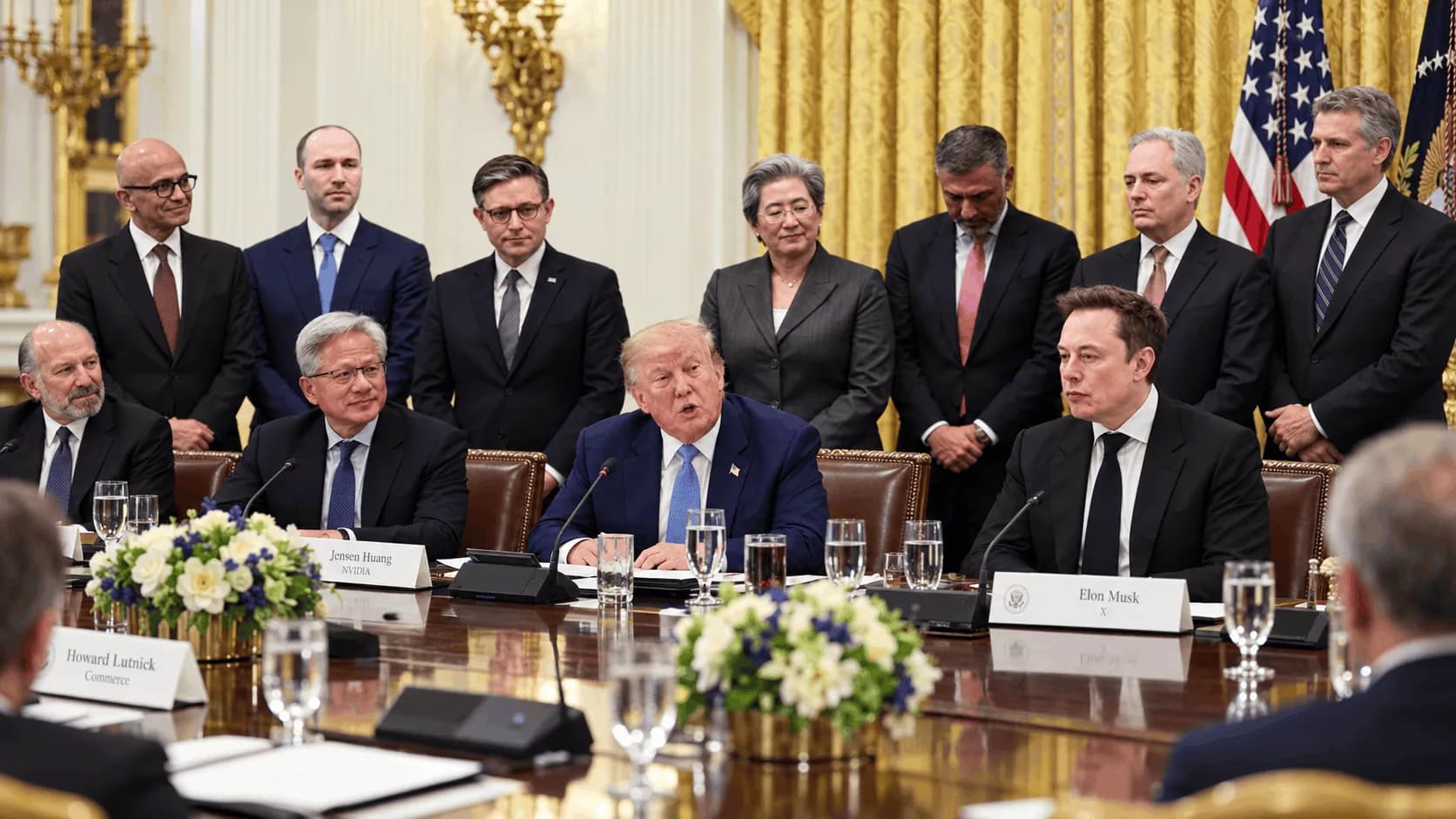
 Linkedin
 Threads
 Facebook
 X
X
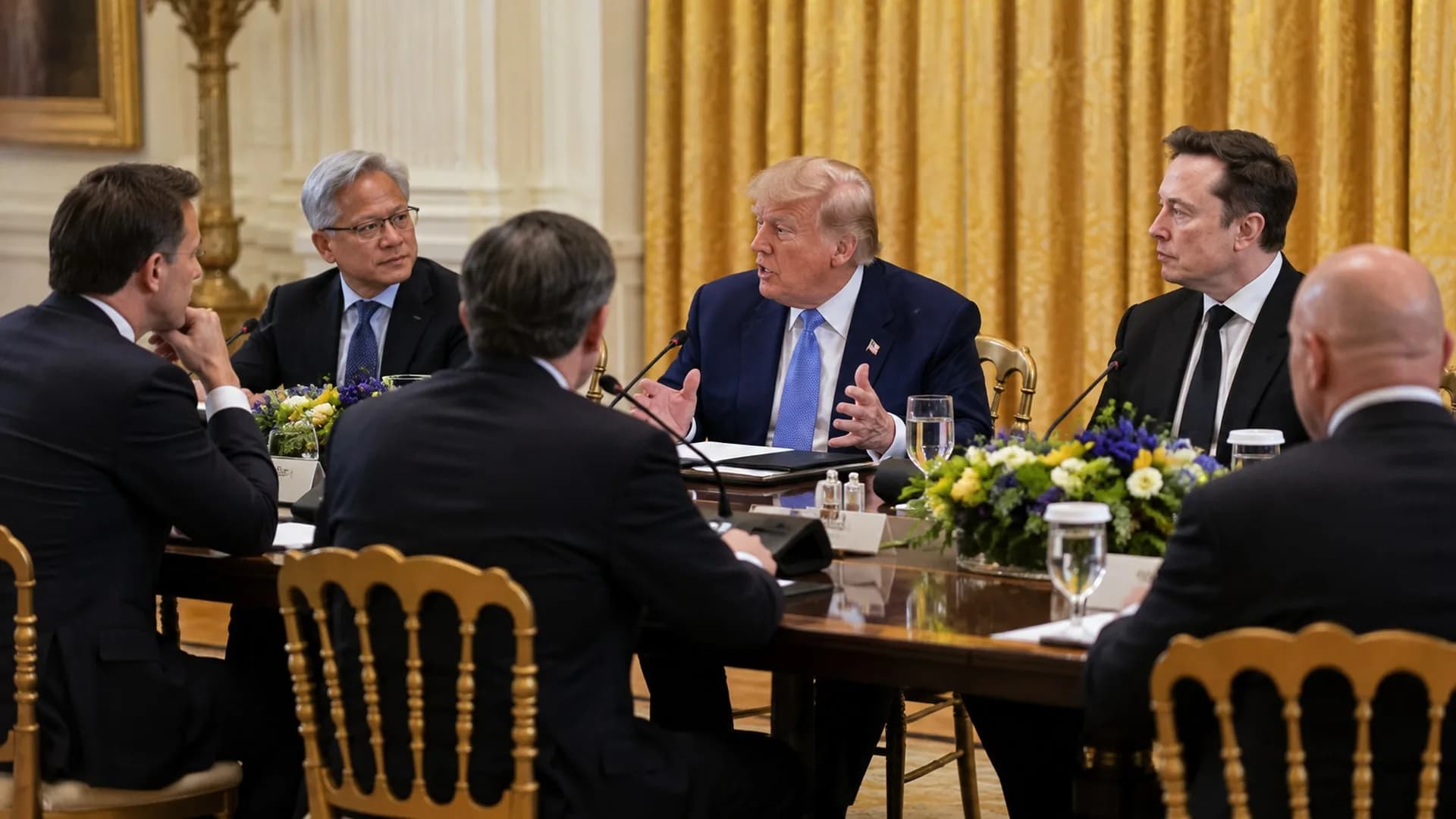
President Trump honored six technology pioneers Thursday during the White House Science: A New Golden Age Summit, recognizing individuals whose work helped create much of the technological infrastructure now powering the modern economy.
The administration awarded four National Medals of Science and two National Medals of Technology and Innovation.
These are not newly created presidential awards.
The National Medal of Science has been presented by U.S. presidents since 1963 for extraordinary contributions to American science. The National Medal of Technology and Innovation, first awarded in 1985, recognizes technological achievements that strengthen the economy and improve American life.
This year's recipients read almost like a map of the technologies shaping the next decade.
The People Behind the Infrastructure of the AI Age
Elon Musk received the National Medal of Science for engineering achievements spanning space exploration, communications, intelligent systems and advanced manufacturing.
Sergey Brin, Google's co-founder, was recognized for foundational algorithms in information retrieval and data processing that transformed how billions of people find and use information.
Jensen Huang, founder and CEO of Nvidia, was honored for helping transform the graphics processing unit from a specialized graphics chip into the parallel-computing architecture now sitting at the heart of the AI revolution.
Lisa Su, CEO of AMD, received the medal for her work in semiconductor engineering, processor architecture and high-performance computing—including technologies behind the world's first exascale supercomputer.
Then came two National Medals of Technology and Innovation.
Michael Dell was recognized for expanding access to personal and enterprise computing and building one of America's most significant technology companies.
Satya Nadella was honored for transforming Microsoft around cloud computing and building hyperscale infrastructure that today supports the development and deployment of advanced AI systems.
Put those six people in one room and something becomes obvious.
This is not simply a group of successful CEOs.
Together, their companies touch chips, AI computing, cloud infrastructure, search, data, personal computing, satellites, rockets and communications.
In other words, much of the infrastructure upon which the next technological era will be built.
The Ceremony Was Part of Something Bigger
The medals were presented as the Trump administration simultaneously announced more than $6 billion in new science initiatives and commitments involving government, industry, academia and philanthropy.
The White House says its broader strategy includes AI-powered scientific research, new computing infrastructure, support for American STEM students and early-career scientists, ambitious national research missions and new models for financing scientific discovery.
Only days earlier, the United States and 16 other countries endorsed the Kyoto Vision for a Golden Age of Science, including plans to use what the administration calls “super intelligence” to accelerate scientific experimentation and discovery.
That connection is important.
Washington is no longer discussing artificial intelligence only as another software industry.
It is increasingly being discussed as infrastructure for medicine, materials science, energy, defense, manufacturing and space exploration.
America Is Treating Technology as National Power Again
There is also a geopolitical reality behind Thursday's ceremony.
The country that controls advanced chips, computing capacity, AI models, energy infrastructure and scientific breakthroughs will possess enormous economic and strategic advantages.
That is why honoring Huang and Su is about more than Nvidia or AMD.
Semiconductors determine how quickly AI systems can be trained.
Recognizing Nadella and Dell highlights another layer: the data centers and computing infrastructure necessary to operate those systems at enormous scale.
Brin represents the algorithms and information architecture that helped create the modern digital economy.
And Musk represents what happens when software, manufacturing, communications and space infrastructure begin converging.
The six medals therefore tell their own story.
America's technological advantage was not created by one government program or one company. It emerged from scientists, entrepreneurs, engineers, capital, universities and a country that historically gave people room to build ambitious things.
Michael Kratsios, director of the White House Office of Science and Technology Policy, described the six recipients as “architects of the future.”
That may be the most important message from Thursday.
The AI race will not ultimately be decided by who builds the most entertaining chatbot.
It will be decided by who controls the chips, computing infrastructure, scientific talent, energy and research ecosystem capable of turning intelligence into real-world breakthroughs.
And this week, the White House made clear that it intends for the United States to remain at the center of that race.