

 3 min read
 11
 Linkedin
 Threads
 Facebook
 X

KYIV, UKRAINE — November 23, 2026. The Russia–Ukraine war has reached an unexpected new battlefield: the Mediterranean coast of North Africa.
Ukrainian President Volodymyr Zelenskyy announced Monday that his forces had launched a dramatic naval drone operation against a Russian warship docked in Benghazi, Libya, approximately 1,500 miles from the front lines in Ukraine.
The target was the Merkury, a modern Russian naval corvette commissioned in 2023.
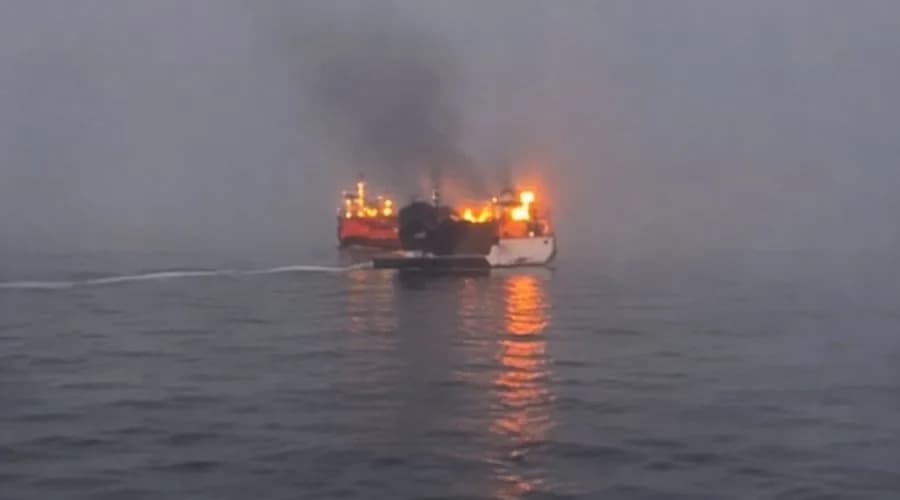
Zelenskyy claims Ukrainian drones sank the warship, destroyed a military helicopter aboard it and struck a second Russian vessel allegedly used to transport weapons.
Libyan officials confirmed the attack but disputed the claim that the warship sank, describing the vessel as severely damaged.
The operation raises a question extending far beyond the destruction of military equipment: Is Ukraine expanding its war against Russia into countries that are not formally participating in the conflict?
Seven Naval Drones, Two Russian Ships and a Surprise Attack
According to Zelenskyy, Ukrainian forces deployed seven maritime drones during Sunday's operation near Benghazi.
The drones targeted the Merkury, a Russian corvette equipped for coastal patrols and naval escort missions.
Ukraine also reported striking the MV Angara, a Russian cargo ship that Kyiv says has been used to transport military equipment.
A Russian Ka-27 military helicopter aboard the Merkury was reportedly destroyed.
Ukraine's Security Service released footage appearing to show unmanned vessels approaching the Russian warship before explosions erupted.
The Ukrainian president praised the mission as an exemplary military operation and said the objectives had been achieved.
But not every detail has been independently confirmed.
Libyan officials told the Associated Press that at least four drones were intercepted and two struck the corvette.
They also reported at least 10 injuries involving Russian and Libyan nationals.
Russia's Defense Ministry had not publicly confirmed the loss of the ship at the time of reporting.
Why Was a Russian Warship in Libya?
The presence of a Russian naval vessel in Benghazi reveals another important dimension of Moscow's international military relationships.
Libya has remained politically divided since the overthrow of Muammar Gaddafi in 2011.
The internationally recognized Government of National Unity operates from Tripoli in the west.
Eastern Libya is dominated by forces aligned with military commander Khalifa Haftar, whose organization maintains longstanding relationships with Russia.
According to eastern Libyan authorities, the Merkury had entered Benghazi to refuel and receive supplies under a maritime cooperation arrangement before returning to Russia.
That made the naval base an important logistical location.
Ukraine's operation demonstrates how Russian military assets may face threats even while operating far from Ukrainian territory.
Libya Demands an International Investigation
Eastern Libya's government condemned the attack and called for an investigation by the United Nations.
Prime Minister Osama Hamad raised concerns that Ukrainian forces may have launched the operation from territory controlled by Libya's western authorities.
Libyan officials have alleged that Ukrainian military personnel were operating in western Libya under arrangements involving local forces.
Those claims require further independent verification.
The United Nations Support Mission in Libya has called for an independent investigation and warned against allowing the country to become another battlefield in the Russia–Ukraine conflict.
The issue is particularly sensitive because Libya is not formally a party to the war.
An attack against Russian military assets on Libyan territory creates diplomatic and security consequences for a country already struggling with political division.
Ukraine's War Is No Longer Confined to Ukraine
The strike follows a series of increasingly ambitious Ukrainian operations against Russian military and economic infrastructure.
Ukraine has used drones to attack oil refineries, airfields, naval vessels and logistics facilities at considerable distances from its borders.
In June 2025, Operation Spiderweb demonstrated Ukraine's ability to strike Russian aircraft at multiple air bases using drones launched from concealed positions.
Now Kyiv has demonstrated an ability to threaten Russian naval assets in the Mediterranean.
The Libya operation also follows a separate attack on the Russian cargo ship Sparta II in the Gulf of Finland.
Finnish military officials said Ukraine was likely responsible for that incident, although Kyiv had not claimed responsibility.
Taken together, the attacks illustrate Ukraine's growing reliance on long-range unmanned weapons to challenge Russia's military advantages.
Russia Continues Its Own Attacks Against Ukraine
The naval operation comes amid continued Russian strikes against Ukrainian cities and infrastructure.
Over the weekend, a Russian attack on an apartment building near Kyiv killed 11 people, according to Ukrainian authorities.
Rescue workers recovered survivors from the rubble, including a child and an elderly woman.
Another Russian strike reportedly killed three people at a hospital in Zaporizhzhia.
Ukraine's energy infrastructure has also sustained extensive damage ahead of winter.
The continuing attacks on civilian areas underscore the human cost of a war that has entered its fifth year.
Both countries remain engaged in military operations despite repeated international efforts to negotiate an end to the fighting.
What Does This Mean for Trump's Peace Efforts?
President Donald Trump has repeatedly sought a negotiated settlement between Russia and Ukraine.
American-mediated discussions resumed earlier this month after a lengthy interruption.
Trump also met Russian President Vladimir Putin and Chinese President Xi Jinping during last week's Asia-Pacific Economic Cooperation summit.
However, those diplomatic contacts have not produced a comprehensive peace agreement.
Ukraine's strike in Libya adds another complication.
Kyiv is demonstrating that it can continue imposing military costs on Russia far beyond the immediate battlefield.
Moscow, meanwhile, continues targeting Ukrainian infrastructure.
The widening geographic reach of military operations could increase pressure for negotiations, but it also creates additional risks of escalation.
A New Warning for the International Community
The attack on the Merkury represents more than another episode in a prolonged war.
It demonstrates how relatively inexpensive unmanned systems can threaten sophisticated naval vessels thousands of miles from an active front line.
It also exposes the vulnerabilities of military supply networks operating through foreign ports.
For Libya, the incident raises concerns about sovereignty and the possibility of becoming entangled in a conflict it did not initiate.
For Russia, it raises questions about the security of its overseas military operations.
For Ukraine, it demonstrates an expanding capacity to reach Russian assets far beyond its borders.
The immediate question is whether the Merkury was actually sunk, as Zelenskyy claims, or severely damaged, as Libyan officials report.
The larger question is whether such operations will bring the warring parties closer to negotiations—or expand the conflict into additional regions.
As Washington continues pursuing a diplomatic settlement, the attack in Benghazi serves as a reminder that the Russia–Ukraine war now reaches well beyond the borders of either country.
Stay connected with FPTN for the real news. As is.