

 3 min read
 1
1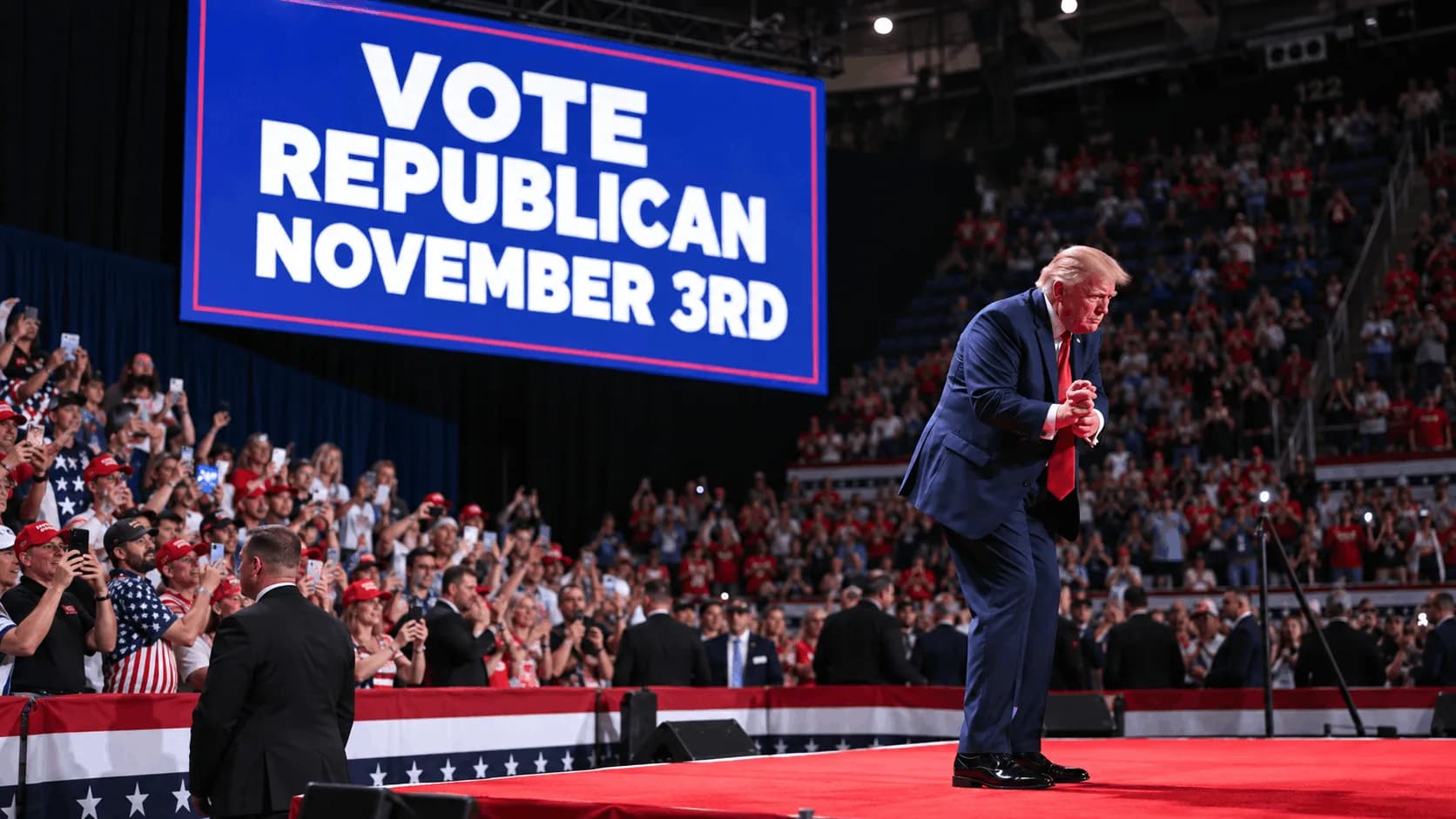
 Linkedin
 Threads
 Facebook
 X
X
Donald Trump is going somewhere Republican presidents usually do not spend precious campaign time in October:
New York.
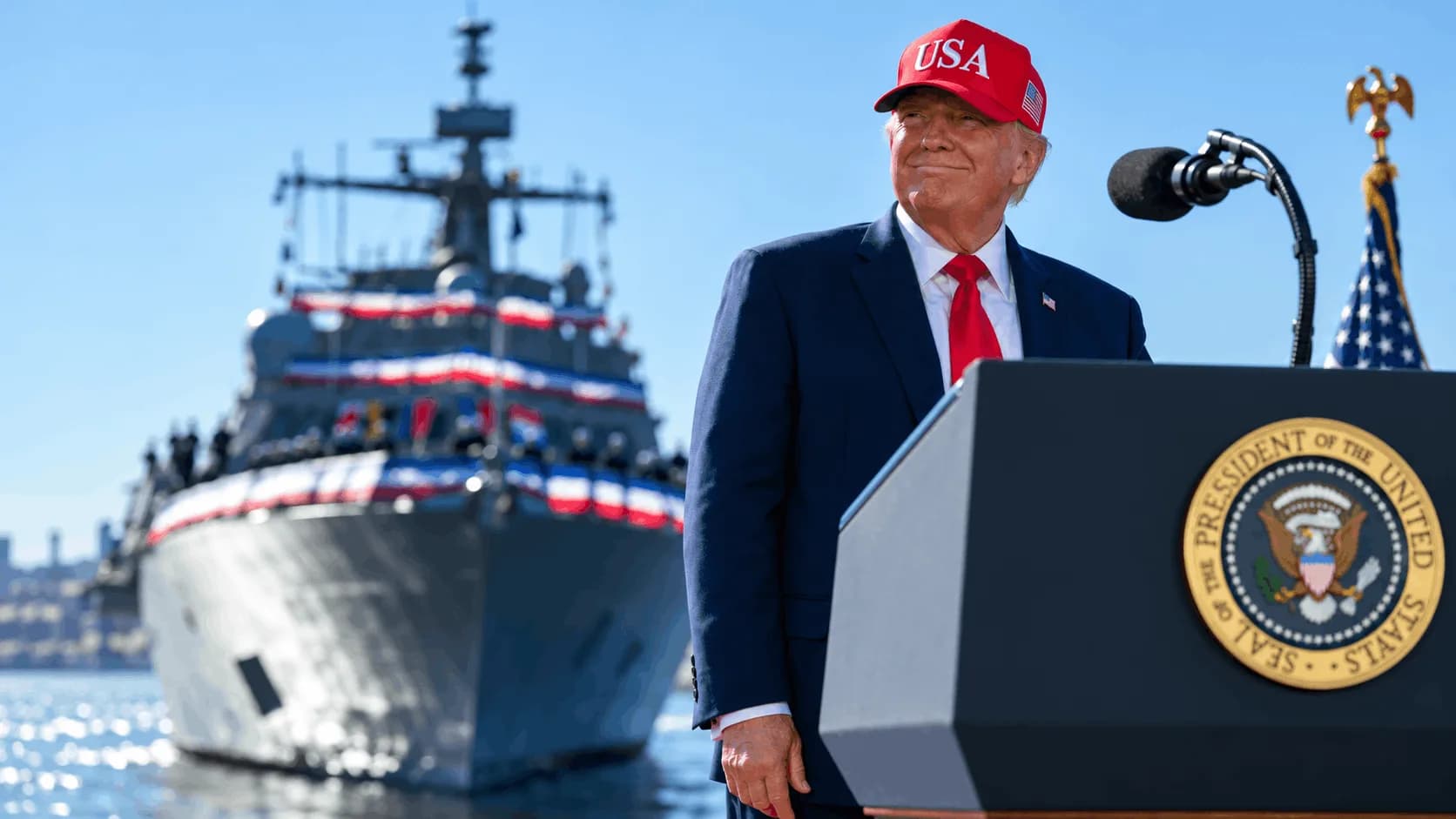
Trump is scheduled to appear with Republican gubernatorial candidate Bruce Blakeman in Syracuse as the race against Democratic Gov. Kathy Hochul enters its final weeks. The event also places Trump in a state containing several congressional races important to control of the House.
The simplest interpretation is obvious.
New York dislikes Trump overall.
A current Marist survey puts his statewide approval at only 38%, with 60% disapproving. Hochul leads Blakeman 53%-42% in that poll.
So why bring Trump?
Because statewide numbers conceal something more interesting.
Look at the Voters Between the Parties
Blakeman is not currently winning New York statewide.
But among independents, the picture looks dramatically different.
Marist found Blakeman ahead among independent voters 49%-42%. An Emerson College/PIX11 poll was even more pronounced, putting him ahead among independents 55%-34%, while Hochul still led the overall likely-voter contest 52%-40%.
That tells us where the opportunity—and the difficulty—lies.
Blakeman does not simply need more Republicans.
He needs voters who are politically movable.
And that brings us to one of the most misunderstood groups in American politics:
Latino voters.
New York Already Saw the Latino Shift Once
Trump did something important in New York City in 2024.
He still lost the city decisively, but his support increased sharply in immigrant-heavy sections of Queens and the Bronx.
An analysis of official New York City election results found some of Trump's largest improvements in Latino neighborhoods, particularly Queens, while Democrats still retained a majority of the Latino vote.
CUNY researchers likewise found Trump's improvement was especially pronounced in Latino and Asian immigrant communities in Queens and in sections of the Bronx.
Nationally, the movement was substantial.
Pew's validated-voter analysis found Trump received 48% of the Hispanic vote in 2024, up from 36% in 2020.
But Republicans should not misunderstand what happened.
Latinos did not suddenly become a permanently Republican electorate.
Current polling shows significant movement back toward Democrats nationally, while many Hispanic voters who supported Trump have become less satisfied with his administration.
That is precisely why this bloc is politically interesting.
They are moving.
Nearly Four in Ten Latino Voters Are in the “Movable Middle”
A September analysis from UnidosUS identified roughly 38% of Hispanic voters as part of a “movable middle”—independents, undecided voters or people who have recently crossed party lines.
Their defining characteristic is not ideological loyalty.
It is skepticism toward both parties.
And what are they worried about?
Money.
New York polling shows the same pattern.
A Siena survey found cost of living overwhelmingly dominates voters' concerns across Democrats, Republicans, independents, Black, white and Latino New Yorkers alike. At least 72% of every major demographic group named affordability among the state's two most important problems.
That matters for Blakeman because his argument is fundamentally being built around:
affordability,
taxes,
housing,
public safety,
energy,
and New York's direction under one-party Democratic government.
Those issues allow him to speak beyond the traditional Republican base.
Trump Is the Risk—and Also Part of the Strategy
There is no point pretending Trump carries no downside in New York.
He does.
Forty-four percent of registered voters told Marist their congressional vote is primarily a vote against Trump, compared with 22% saying theirs is a vote for him.
Hochul's campaign understands that perfectly and has repeatedly tried to connect Blakeman to Trump.
But Blakeman's campaign appears to be making a different calculation.
Trump also brings voters who historically did not behave like traditional Republicans.
Working-class voters.
Non-college voters.
Some Latino voters.
Some immigrant communities.
Voters who may ignore ordinary Republican politicians but will show up to see Trump.
The question is whether Blakeman can benefit from that energy while still presenting himself as his own candidate.
He has already emphasized differences with Trump on issues including abortion and legal guest-worker programs.
That makes the Syracuse appearance more strategically interesting than simply calling it a Trump rally.
The Real Test Comes After the Rally
A rally fills a building.
It does not automatically fill ballot boxes.
For Blakeman, the arithmetic remains difficult.
Recent major public polls still place Hochul ahead by roughly 9 to 19 points, with Marist currently showing an 11-point race and Emerson showing 12.
But elections are not decided by statewide averages alone.
They are constructed neighborhood by neighborhood.
Can Blakeman maintain his advantage with independents?
Can he improve in the suburbs?
Can he reduce Democratic margins inside New York City?
And can Republicans retain some of the working-class and Latino voters who moved toward Trump in 2024 without assuming those voters now permanently belong to them?
Those are the real questions.
Because the most consequential Latino political development of the last several years may not be that Hispanics became Republican.
It may be that millions stopped considering themselves automatically Democratic.
That makes politicians compete for their vote again.
And Trump's trip to New York is one more test of whether the political movement visible in the Bronx, Queens and other working-class communities in 2024 was a one-election event—or the beginning of something deeper.