 5 min read
 49
49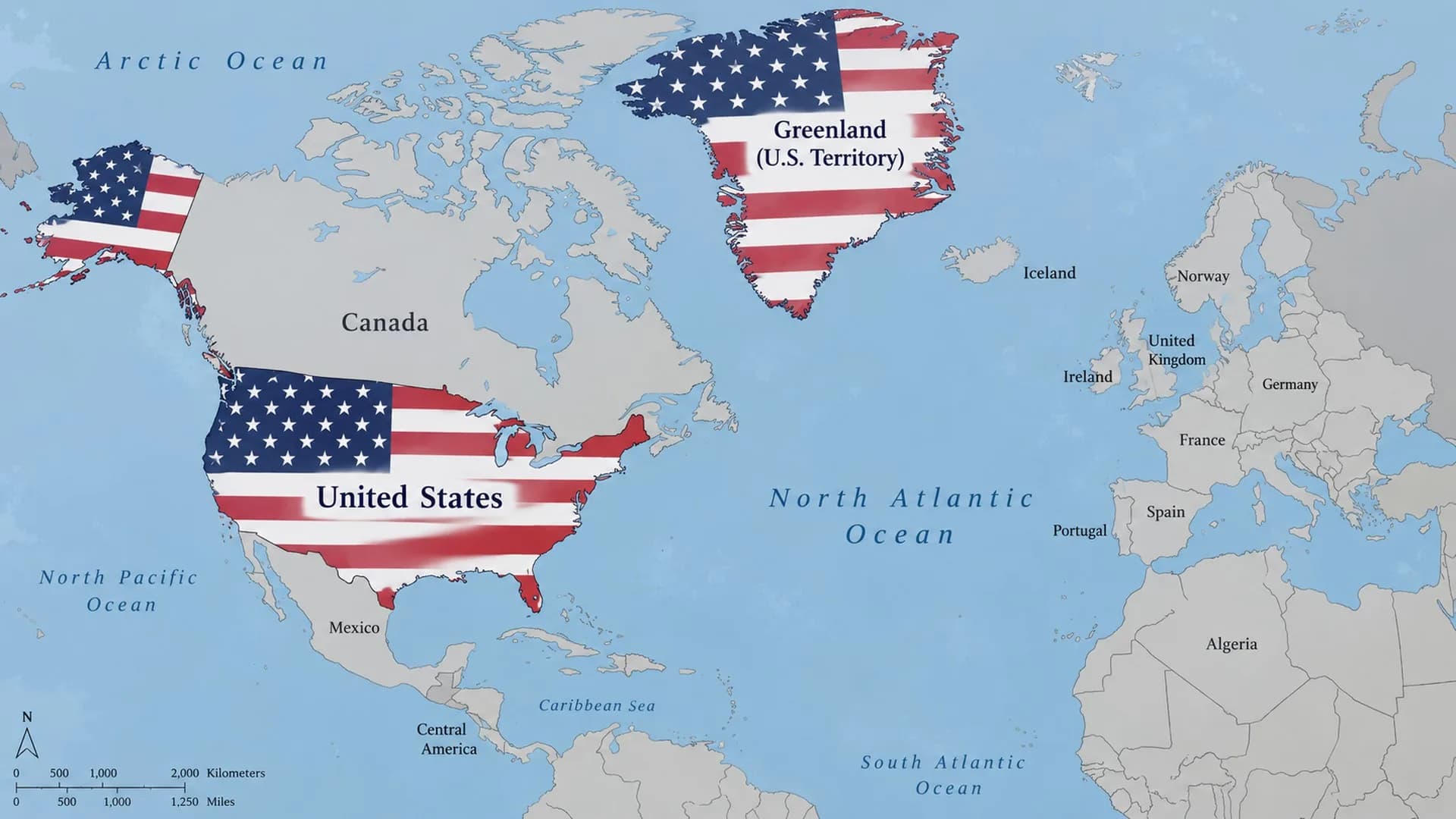
 Linkedin
 Threads
 Facebook
 X
XTrump has just announced an agreement between the United States, Denmark, and Greenland that would allow for a significant expansion of the U.S. military presence in the Arctic while preventing adversaries of NATO from establishing bases in Greenland. Denmark and Greenland would retain their sovereignty, and the agreement still has to complete its formal approval process.
But look at the map before you look at the headline.
Greenland sits between North America, Europe, and the Arctic. Russia is on the other side. China has spent years trying to expand its economic and strategic presence in critical regions around the world. From this area run routes, surveillance systems, and strategic infrastructure that are vital to North American security.
That is why this moment makes me think about other periods in history when leaders understood that territory, routes, and geographic position meant power: Pachacútec expanding the Tahuantinsuyo across much of western South America, Alexander the Great extending his empire, Trajan and Julius Caesar expanding Roman power, Spain projecting its influence across the Americas, and Great Britain building a global network.
I am not saying Trump is conquering Greenland. He is not.
What is interesting is precisely that Washington can expand its strategic position through negotiation, military access, alliances, bases, and agreements without formally changing national borders.
And Greenland is only one piece.
At the same time, we are seeing competition with China over technology, critical minerals, ports, semiconductors, and supply chains; increasing pressure on Iran and its regional networks; and a broader debate over how dependent the United States, Canada, and Europe should be on one another.
Is it improvisation? Vision? Excessive pressure? A strategy that will work, or one that will create new tensions?
Everyone will draw their own conclusion.
But there is one thing I find difficult to deny: the global map of power is shifting in front of our eyes, and decisions that only a few years ago seemed politically impossible are now becoming real agreements.
That is what is worth watching.