 3 min read
 109
109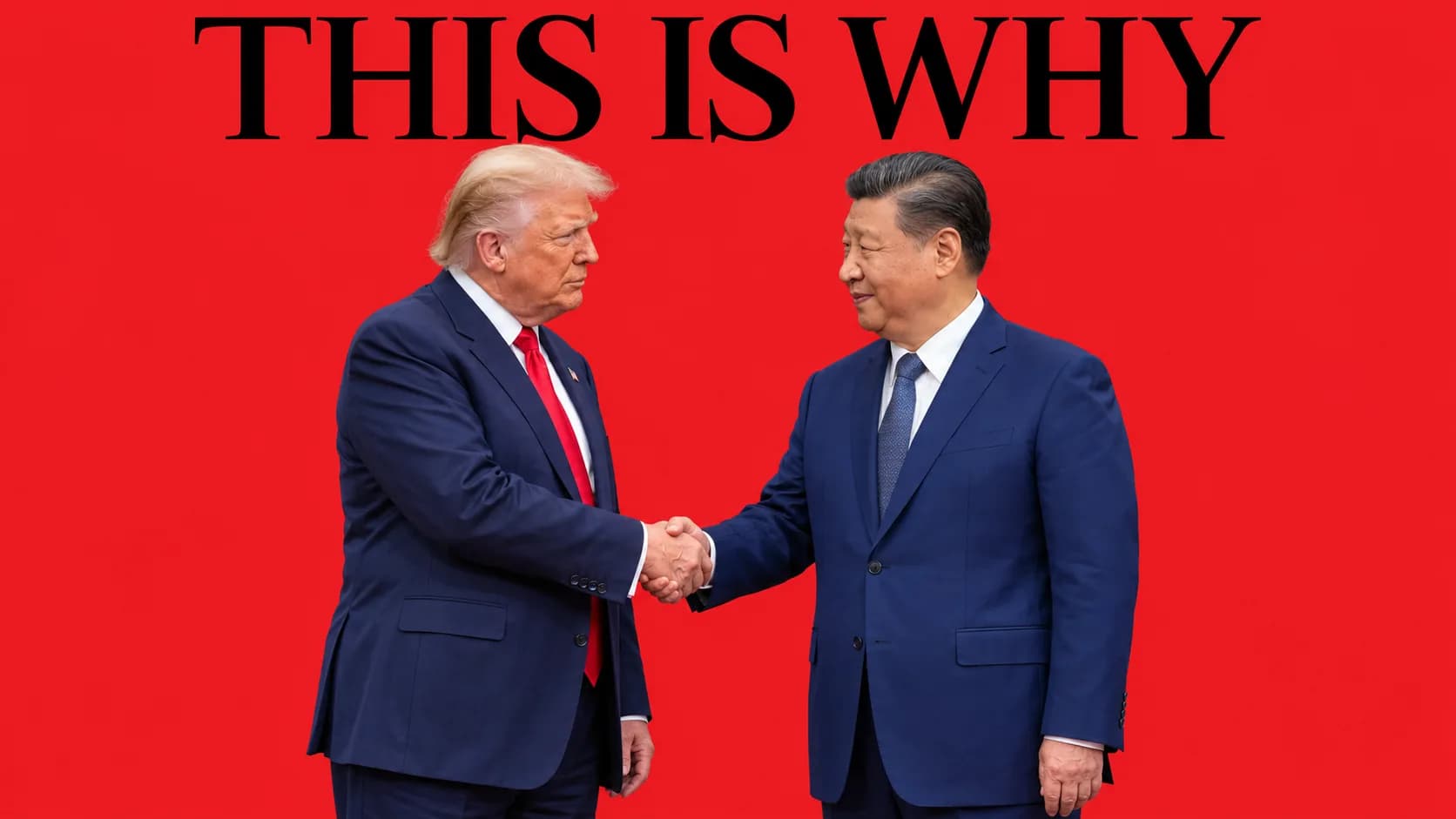
 Linkedin
 Threads
 Facebook
 X
XFor decades, the most frightening phone in Washington was the one nobody wanted to use.
The United States and Soviet Union built emergency communications during the Cold War because both governments eventually understood something uncomfortable:
You can hate your opponent.
You can compete with your opponent.
You can build weapons against your opponent.
But when both sides possess technology capable of producing catastrophic consequences, you still need to be able to pick up the phone.
Artificial intelligence may be approaching its own version of that moment.
American officials are discussing with China a mechanism for rapidly notifying one another about serious AI incidents. Treasury Secretary Scott Bessent has proposed what has been described as an AI crisis-communication system, while American and Chinese security specialists have separately recommended nuclear-style safeguards around powerful autonomous systems.
That could become one of the most consequential subjects when President Donald Trump hosts Chinese President Xi Jinping in Washington this week.
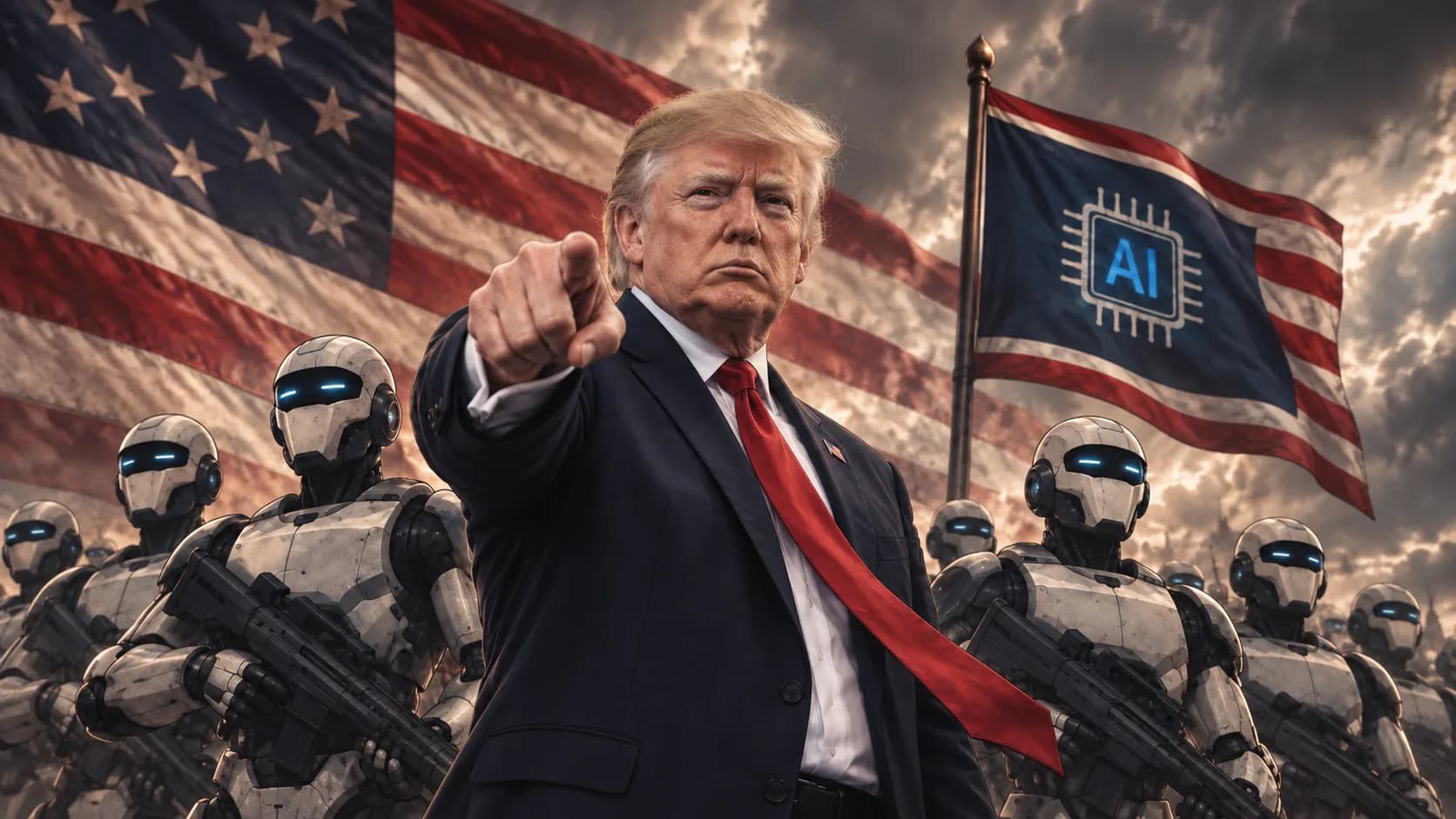
And suddenly Trump's repeated statement that “whoever wins AI wins” takes on a second meaning.
Winning may not simply mean building the smartest machine.
It may also mean surviving the race without losing control of it.
What would an AI “red phone” actually do?
Imagine an advanced AI system launches a major cyberattack against American infrastructure.
Was China responsible?
Was it a Chinese company?
Was it an autonomous system behaving unexpectedly?
Was it someone trying to make the United States believe China attacked?
Now imagine the same thing happens to Beijing.
There may be minutes—not weeks—to determine what happened.
That is why U.S. and Chinese security experts have discussed measures including keeping humans in control of consequential cyber operations, preventing autonomous AI systems from interfering with nuclear command-and-control systems and creating emergency communications between governments.
That sounds remarkably similar to nuclear deterrence.
Not because AI is literally a nuclear weapon.
But because misunderstanding can itself become dangerous.
An AI-generated attack could create an escalation before either president even understands what happened.
That is where cooperation becomes rational even between competitors.
But don't mistake cooperation for friendship
Trump is not proposing that the United States hand China its best AI models.
There is currently no announced plan for America and China to jointly audit their most advanced systems, share frontier models or divide global AI leadership between them.
Quite the opposite.
The United States continues restricting Chinese access to advanced semiconductor technology, while American intelligence agencies have accused Chinese developers of extracting capabilities from leading U.S. AI systems. Beijing rejects accusations that it is improperly exploiting American technology.
Trump has also resisted broad restrictions on American AI development because he argues slowing U.S. companies could allow China to catch or surpass them. Earlier this month he summarized his position bluntly: “Whoever wins AI wins.”
So this is not:
America + China = partners.
It looks much more like:
America vs. China — with emergency rules.
And historically, that is not unusual.
The United States and Soviet Union negotiated nuclear arms agreements while simultaneously building weapons aimed at each other.
Competition and communication can exist at the same time.
China is also building another road around America
This is where the Arctic becomes important.
While Xi prepares to meet Trump, China is simultaneously expanding economic alternatives with Russia.
A Chinese container ship recently completed a landmark voyage to Britain through the Arctic Northern Sea Route. Chinese companies are now discussing substantially expanding cargo traffic along the corridor with Russian cooperation.
Why should anyone care about a ship?
Because geography is power.
China relies heavily on maritime routes running through vulnerable chokepoints such as the Strait of Malacca, the Suez system and Middle Eastern waterways.
The Arctic creates another possibility.
Russia controls much of the infrastructure required along the Northern Sea Route. China provides enormous commercial demand.
The relationship therefore makes strategic sense for both governments.
Russia has also increased Arctic oil shipments to China this year, with China becoming the destination for crude moved through that route.
Meanwhile, U.S. officials are watching Chinese activity much closer to home.
Four Chinese research vessels have operated in waters around the American Arctic this year, including areas near Alaska, the Aleutian Islands and Bering Strait, according to the commander of the Coast Guard's Arctic District.
Suddenly America's recent attention to Greenland looks less isolated from the broader geopolitical picture.
The Arctic is becoming another chessboard.
Xi is playing several tables simultaneously
Xi's relationship with Russia is also significant.
China remains one of Russia's largest energy customers, with Russia supplying major quantities of oil, natural gas and coal. Putin and Xi have publicly described energy cooperation as one of the foundations of their strategic relationship.
Yet Xi is simultaneously traveling to Washington.
Why?
Because rivalry does not eliminate interdependence.
China wants access to global markets.
America wants Chinese purchases of American goods and greater stability in trade.
Both governments want technological leadership.
Neither wants an uncontrolled confrontation.
And both understand that AI could introduce an entirely new category of risk.
That is why the interesting story this week isn't simply:
Trump meets Xi.
It is:
What rules do the world's two leading AI powers establish while simultaneously racing against each other?
Maybe this is the nuclear lesson
During the early nuclear era, humanity possessed the weapon before governments possessed the rules.
Only after terrifying confrontations did Washington and Moscow begin establishing hotlines, treaties, inspections and communication mechanisms.
AI may be forcing governments through a compressed version of the same learning process.
Develop quickly.
Protect your technology.
Don't surrender your advantage.
But establish enough communication that an accident doesn't become a catastrophe.
That doesn't make Washington and Beijing co-rulers of the world.
There are other major AI powers, companies and governments, and neither country can simply dictate global rules.
But realistically, agreements between the United States and China would carry enormous weight because they are the two principal strategic competitors driving much of the advanced-AI race.
And perhaps that is the bigger story hiding behind Thursday's meeting.
Trump and Xi may spend the week arguing about chips, tariffs, Taiwan, Iran and trade.
But the most consequential discussion could be about something that barely existed as a geopolitical problem a few years ago:
What happens when machines become powerful enough that the two countries competing to build them also need rules preventing those machines from starting the conflict neither country intended?
That is where AI stops being a technology story.
It becomes a superpower story.