 3 min read
 38
38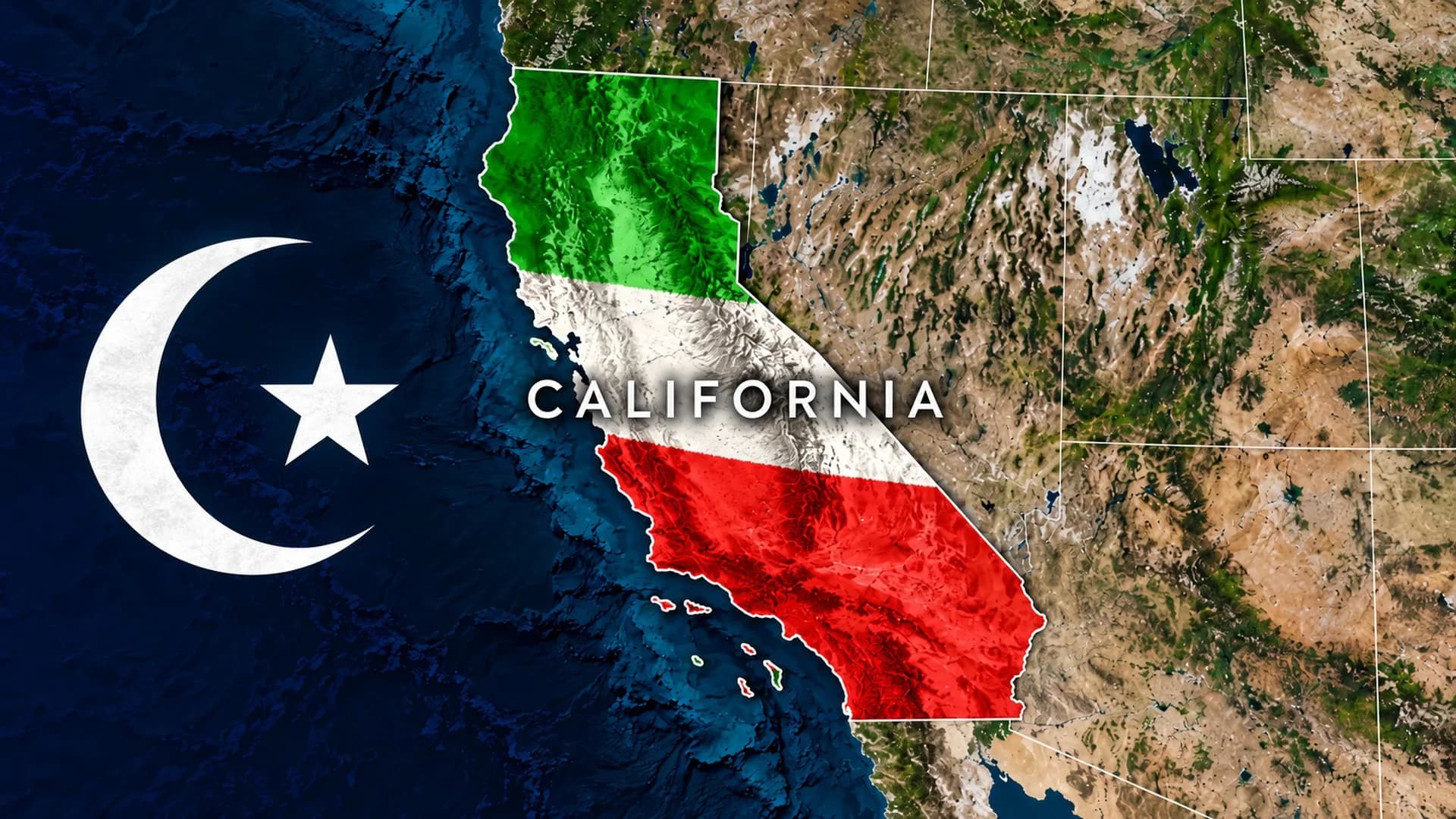
 Linkedin
 Threads
 Facebook
 X
X
California Governor Gavin Newsom has signed AB 2017, adding Eid al-Fitr and Eid al-Adha to California’s list of recognized state holidays. The governor officially announced the signing on September 27.
That is the news.
But Americans should understand exactly what California did—and what it did not do.
The legislation recognizes the two major Islamic holidays in state law. Public schools and community colleges may close for Eid through existing locally negotiated procedures, and eligible state and school employees can use existing holiday credit or leave to observe them.
The law specifically excludes the Eid holidays from California’s judicial holidays.
Rabbi Michael Barclay described California’s move as “effectively Sharia law,” arguing that the state was elevating Islamic observances in ways he believes it has not done equally for other faith traditions.
FlashPoint Has Been Having This Conversation for Months
Viewers of FlashPoint, hosted by Gene Bailey and airing weekdays on FPTN at 8 p.m. ET / 7 p.m. CT, will recognize the subject immediately.
Throughout 2025 and 2026, broadcasts involving figures such as Lance Wallnau, Rick Green, Hank Kunneman, members of the Sedra family, Bishop Wendell Hutchins, Alan DiDio, Joseph Z and others have repeatedly addressed Islam, Sharia, constitutional government and religious liberty.
Bailey summarized part of the philosophy behind these conversations during a January program when he told viewers:
“We are living through crucial hours. We need to defend Christ no matter what.”
His point was larger than one religion or one political bill: Christians should examine what is happening around them instead of outsourcing their understanding of culture and government to somebody else.
That is where the California story becomes relevant to the FlashPoint audience.
Recognizing Eid does not mean America has adopted Sharia.
It hasn’t.
But citizens should understand the difference between religious freedom, which the Constitution protects, and religious government, where a religious legal code acquires political authority over civil law.
Those are two entirely different concepts.
What Exactly Is Sharia?
Sharia is not one American-style statute book.
The term broadly refers to Islamic principles and jurisprudence derived from sources including the Quran, traditions associated with Muhammad and centuries of legal interpretation. Its application differs substantially among Muslim communities and governments.
For many Muslims, Sharia concerns personal religious practices such as prayer, fasting, charity, diet, marriage and moral conduct.
In some countries, however, interpretations of Islamic law have also been incorporated into criminal, family and political systems.
That second category is where the constitutional question becomes relevant to Americans.
Under the American system, a Christian may follow biblical convictions.
A Muslim may follow Islamic religious practices.
A Jew may follow Jewish religious law.
But American civil government must remain governed by the Constitution and American law.
That is the line worth protecting.
If America Adopts Sharia, Iran Is The Warning.
FlashPoint discussions have frequently used Iran as a warning about what happens when political and religious authority become fused.
There is an important historical lesson there, although Iran before 1979 should not be romanticized.
Under Shah Mohammad Reza Pahlavi, Iran experienced substantial modernization, innovation, fashion, industrial development, and Westernization. The development of the country, combined with media and global attention and the influence of Muslim religious leaders, helped produce the upheaval that eventually brought Ayatollah Ruhollah Khomeini to power.
The 1979 revolution then established the Islamic Republic, creating a political system on top of the country’s previous development in which clerical authority became authoritarian and tyrannical, embedding Islamic religious interpretations deeply into the government and its laws.
The consequences of the Islamic Republic’s rise to power extended far beyond Iran’s borders. The U.S. State Department has designated Iran a State Sponsor of Terrorism since 1984 and has documented Iranian support for Hezbollah, Hamas, Palestinian Islamic Jihad, the Houthis, and other armed groups through the Islamic Revolutionary Guard Corps and related networks.
That history is worth studying because it raises questions about what could happen here in America if Christians are not engaged in the next midterm and presidential elections.
The reason? Democrats are now replacing the LGBT and transgender flag with the Islamic flag. They know they can be funded by Islamic countries and gain influence, just as some RINOs can, by using a microphone on YouTube.
The lesson from Iran is fundamental: Americans should understand why constitutional limits exist before a genuine challenge to them arrives.
Why This Is Different
California did not simply approve a cultural festival or ethnic celebration.
It formally recognized two religious observances belonging to Islam.
That naturally raises another question.
If the state is moving toward recognizing major religious observances, why not Pentecost?
Why not Ascension Day, commemorating Christ’s ascension 40 days after the Resurrection?
Why should one religious tradition receive additional statutory recognition while others must continually argue for equivalent consideration?
The historical context of America matters here.
The founding generation lived in a society overwhelmingly shaped by Christianity, and many of the religious-liberty controversies surrounding the creation of the First Amendment involved disagreements only between Christians such Protestant denominations, established Catholic churches and Christian dissenters.
The Library of Congress notes, for example, that Baptists were among James Madison’s constituents pressing strongly for protections of religious liberty. At the same time, the historical record also shows that the Founders debated broader ideas of liberty of conscience.
That context should not simply disappear from the conversation.
Modern constitutional discussions too often focus exclusively on the words without giving enough attention to the religious and cultural world in which those words were written.
The Founders were not drafting the Bill of Rights while imagining twenty-first-century California going pink and light blue on weekdays and Islamic Extremist with No Borders on the weekends.
They were building a republic deeply influenced by Christian thought while attempting to prevent government from coercing conscience or creating the kinds of religious establishments many colonists had experienced in Europe.
That history matters today more than ever before.
America Is a Christian Country
This country has been profoundly shaped by Christian ideas about forgiveness, freedom, love, human dignity, moral responsibility, and the relationship between the individual and the one and only God.
Islam makes theological claims that differ fundamentally from Christianity. In fact, in many respects, they are the opposite. Some interpretations allow lying under certain circumstances, condemn particular conduct as sinful, and, in some countries today, people can face severe punishment for beliefs or lifestyles that differ from accepted religious norms.
Christians believe in life, forgiveness, and that Jesus Christ is the Son of God, crucified and resurrected.
Islam categorically rejects that Christ is the Son of God or God Himself, so why should we ignore these contradictions when they enter the government of a country that was founded on Christian principles?
That theological disagreement is real not only in America, but around the world.
Critics ask: If Muslims in America are pushing for greater recognition of their religion within our government, why not ask Saudi Arabia, Egypt, Oman, and other Muslim-majority countries to establish Christian holidays by law and give Christians the same freedom to practice openly?
Would that not be fair as well?
That is why Americans should take this issue seriously and be able to examine Sharia without treating every Muslim American as an enemy.
The issue is not whether someone is Muslim.
The issue is which law governs America.
California has not adopted Sharia law, but it has adopted two religious observances belonging to a faith that fundamentally rejects central Christian teachings about Jesus Christ and His work to save the world.
Their actions over the past few years are also showing us that California is continuing a political and cultural movement that gives Islamic religious observances greater public recognition. Americans are entitled to ask where that process leads and what principles are being used to determine government recognition.
California Has Not Adopted Sharia Law, but It Is Opening the Door to Greater Islamic Religious Influence Within the Democratic Political System
That is the debate worth having: Are we a Christian country or a Muslim country?
And if this country was founded by Christians and shaped by Christian principles, why are we allowing those foundations to be changed?
If people decide to come here and pursue the American Dream, they should also understand the Christian heritage that shaped this nation—the God of Abraham, David, Peter, and the Christian faith professed by generations of Americans. For Christians, that God is revealed through Jesus Christ.
For the biblical citizen of this country, this is much bigger than two holidays on California’s calendar.
Do You Want to Know More About the Risks of Sharia Law?
FlashPoint Army is offering a free digital report titled Why Not Sharia Law?: Is Sharia Law Compatible with the U.S. Constitution?
The report is designed to examine the relationship between Islamic law and American constitutional government, with an emphasis on preserving constitutional supremacy and understanding where religious freedom ends and civil authority begins.