 5 min read
 66
66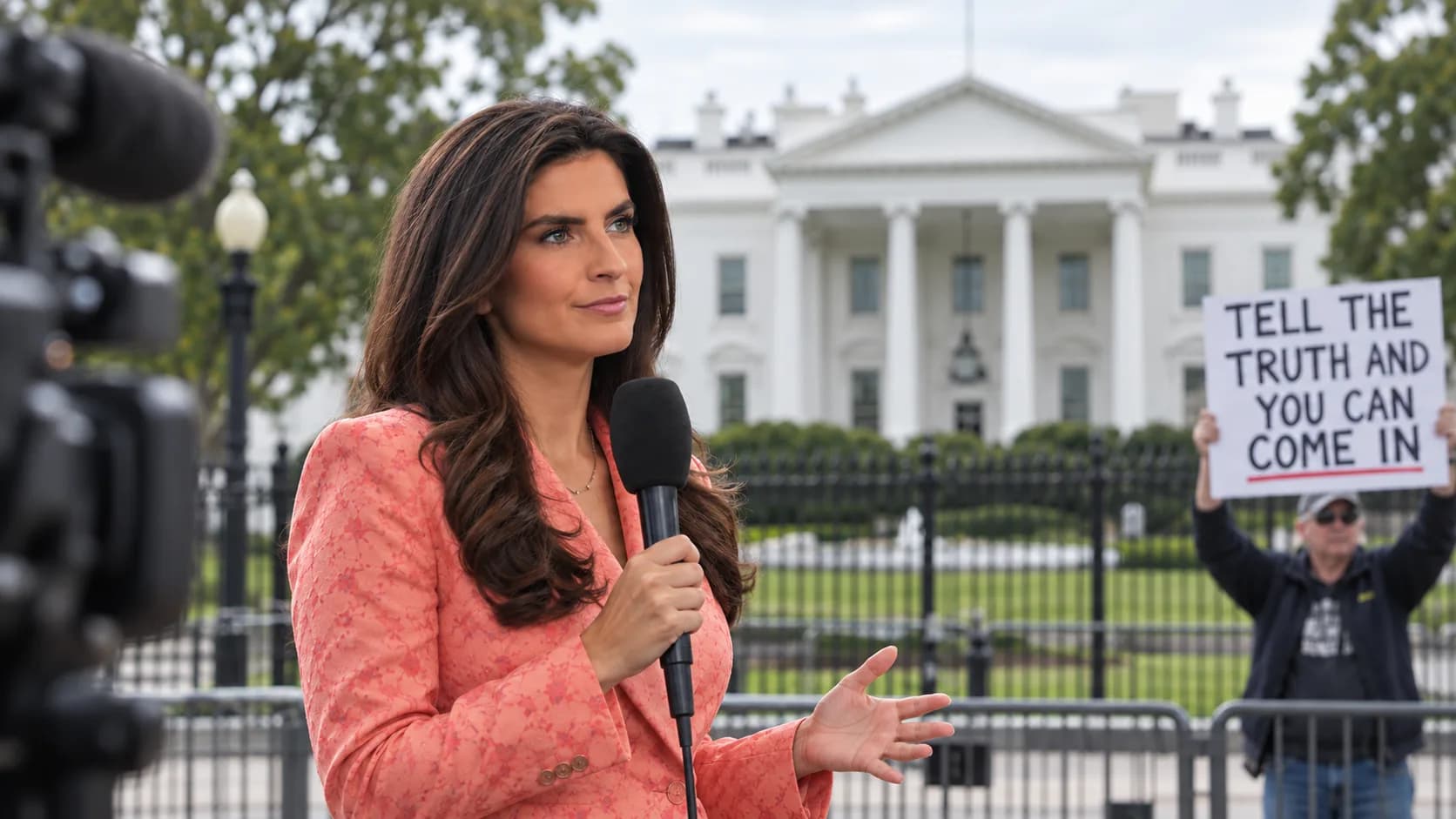
 Linkedin
 Threads
 Facebook
 X
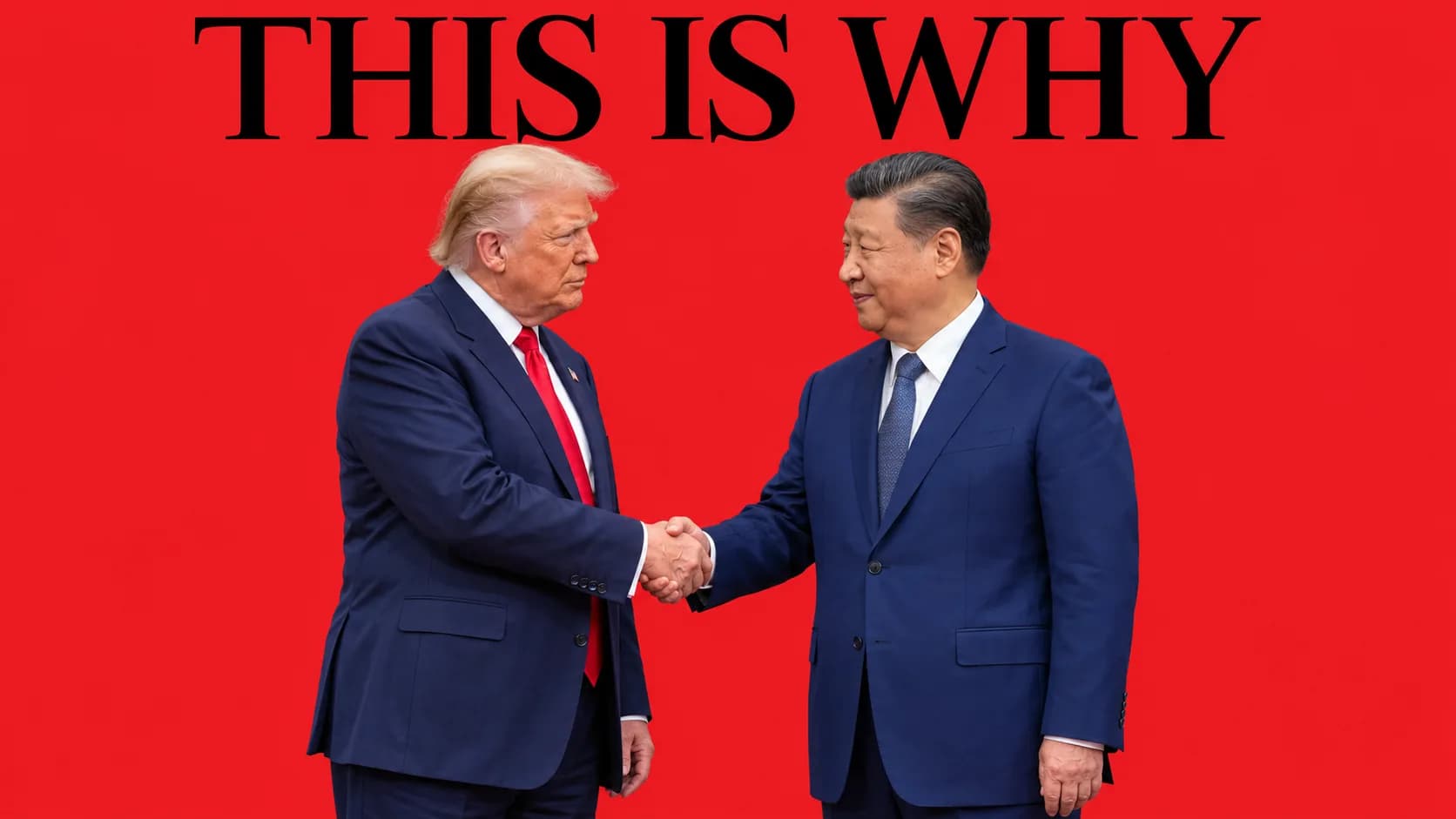
XCNN, MS NOW and Politico have now taken their fight with President Donald Trump to federal court.
After the White House revoked access for reporters from the three organizations, they filed a joint lawsuit alleging that the administration punished them because officials disliked their coverage and therefore violated the First Amendment. Trump says he is not attacking a free press; he says he is denying privileged White House access to organizations he considers dishonest.
That is the legal fight.
But it is not the entire story.
There is another experiment almost anybody can perform.
Open Google. Type one word:
Trump.
Then look—not merely at one article, but at the emotional direction of the page.
Depending on the hour, the results will change. Search results are personalized to some degree, and Google says rankings consider relevance, freshness, usability, source expertise and other signals. A Google page is therefore not a public-opinion poll, nor is a negative search page by itself proof of political manipulation.
But the exercise raises a legitimate question.
If the organizations with the greatest publishing volume, backlinks, reputation and digital authority repeatedly approach the same administration through similar negative frames, what will an ordinary citizen encounter when an algorithm organizes those sources?
You do not need a secret meeting between editors to create convergence.
You only need the largest institutions repeatedly deciding that conflict, controversy and failure are more newsworthy than outcomes their audiences may consider achievements.
And that is where the media's credibility problem begins.
What disappears between the headlines?
Consider what has actually happened during Trump's second term.
On immigration, DHS and Customs and Border Protection reported this month that the border had recorded 16 consecutive months with no releases into the United States, while daily apprehensions were down 94% from levels under the previous administration. Those figures come from the administration itself, so its interpretation should be identified as such—but they are nevertheless government operational data worth reporting and examining.
Trump also signed an executive order directing federal policy toward preserving women's sports for biological females, using Title IX as the administration's legal basis. Whether one agrees with the policy or not, it addressed an issue that millions of parents and female athletes had been debating for years.
His administration has separately ordered federally funded education programs to comply with its policies concerning sex, gender ideology and DEI. Those measures remain politically and legally contested, but they are substantive policy actions—not merely rhetoric.
Then there is investment.
The White House has published a long list of announced commitments involving semiconductors, pharmaceuticals, AI infrastructure, automobiles and manufacturing. These are announced investments, not all completed factories or realized jobs, an important distinction. But some are enormous: projects involving TSMC, Micron, IBM, drug manufacturers and other companies run into tens or hundreds of billions of dollars.
Actual labor data also show movement. The Bureau of Labor Statistics reported 162,000 additional payroll jobs in August, including 16,000 manufacturing jobs, with manufacturing employment up 58,000 from its December 2025 low.
Energy is another measurable example. The independent Energy Information Administration says the United States set another all-time energy-production record in 2025 and is on track in 2026 for record crude-oil and natural-gas production.
Those facts do not prove every Trump policy is successful.
They do prove that there is more happening than controversy.
And foreign policy has changed dramatically
Look overseas.
Nicolás Maduro was captured by U.S. forces in January and brought to New York, where he pleaded not guilty to federal narcotics charges and is awaiting trial. The legality of the military operation remains fiercely disputed internationally, but the event itself was one of the most extraordinary U.S. foreign-policy actions in decades, that millions around the globe, especially Venezuelans celebrated because they achieved the freedom they wanted.
In Iran, Supreme Leader Ayatollah Ali Khamenei was killed during the opening U.S.-Israeli strikes in February. His death did not eliminate the Islamic Republic, and the subsequent war has produced enormous costs and continuing instability. But it removed a leader who had ruled Iran since 1989 and whose government had spent decades supporting armed terrorist in the region.
In Gaza, Trump's diplomatic framework received an endorsement from an especially unlikely source: Hillary Clinton. Writing in the Financial Times, she argued that Trump's 20-point plan, although imperfect, had become the only framework backed by sufficient leverage and resources to move negotiations forward.
On trade, the administration has pursued reciprocal agreements and tariffs intended to pressure countries to reduce barriers against American exports. USTR says its new reciprocal trade agreements are removing some longstanding foreign barriers, although economists continue debating the costs tariffs impose on American consumers and businesses.
These are not small stories.
So the media question is fair:
If a presidency produces developments that supporters regard as significant achievements, why do so many of those citizens feel they rarely encounter that interpretation in the dominant national news stream?
This is where “the Fourth Estate” becomes uncomfortable
A free press is essential precisely because government should not decide what citizens are allowed to know.
But concentrated media power deserves scrutiny too.
Pew found this month that 79% of Americans believe news organizations at least sometimes keep important information from reaching the public. Among Republicans and Republican-leaning independents, 59% said news organizations do this often or extremely often.
The Reuters Institute found something even more severe: only 25% of Americans say they trust news overall, falling to just 15% among politically right-leaning Americans.
That collapse cannot automatically be blamed entirely on journalists. Politicians attack the media, audiences increasingly self-select ideological information, and social platforms reward outrage.
But news organizations cannot simply exempt themselves from examining their own role.
Pew also found that most Americans believe corporate and political interests substantially influence what stories get covered and how political perspectives are balanced.
That is the deeper issue behind today's protest by CNN, MS NOW and Politico.
Their First Amendment arguments will be judged by a court.
Their credibility, however, will be judged by the public.
And those are two completely different trials.
The constitutional freedom of the press protects journalists from government retaliation. It does not guarantee that citizens must trust them.
Nor does it answer the emerging question of the digital era:
What happens when a handful of extremely powerful news organizations can dominate the information layer that search engines then amplify?
That question goes beyond Trump.
It goes beyond CNN.
It even goes beyond traditional arguments about freedom of speech.
It is about whether Americans are receiving a sufficiently broad picture of reality—or merely the portion of reality that the most powerful information institutions have decided deserves the largest headline.
The lawsuit will ask whether Trump has gone too far in restricting the press.
The public should be allowed to ask the reverse question too:
Has the press gone so far in one direction that millions of Americans no longer believe it can see them—or the country they live in—clearly?