
 2 min read
 67
 Linkedin
 Threads
 Facebook
 X

One of the most influential figures in the artificial intelligence revolution is stepping away from the company he helped build.
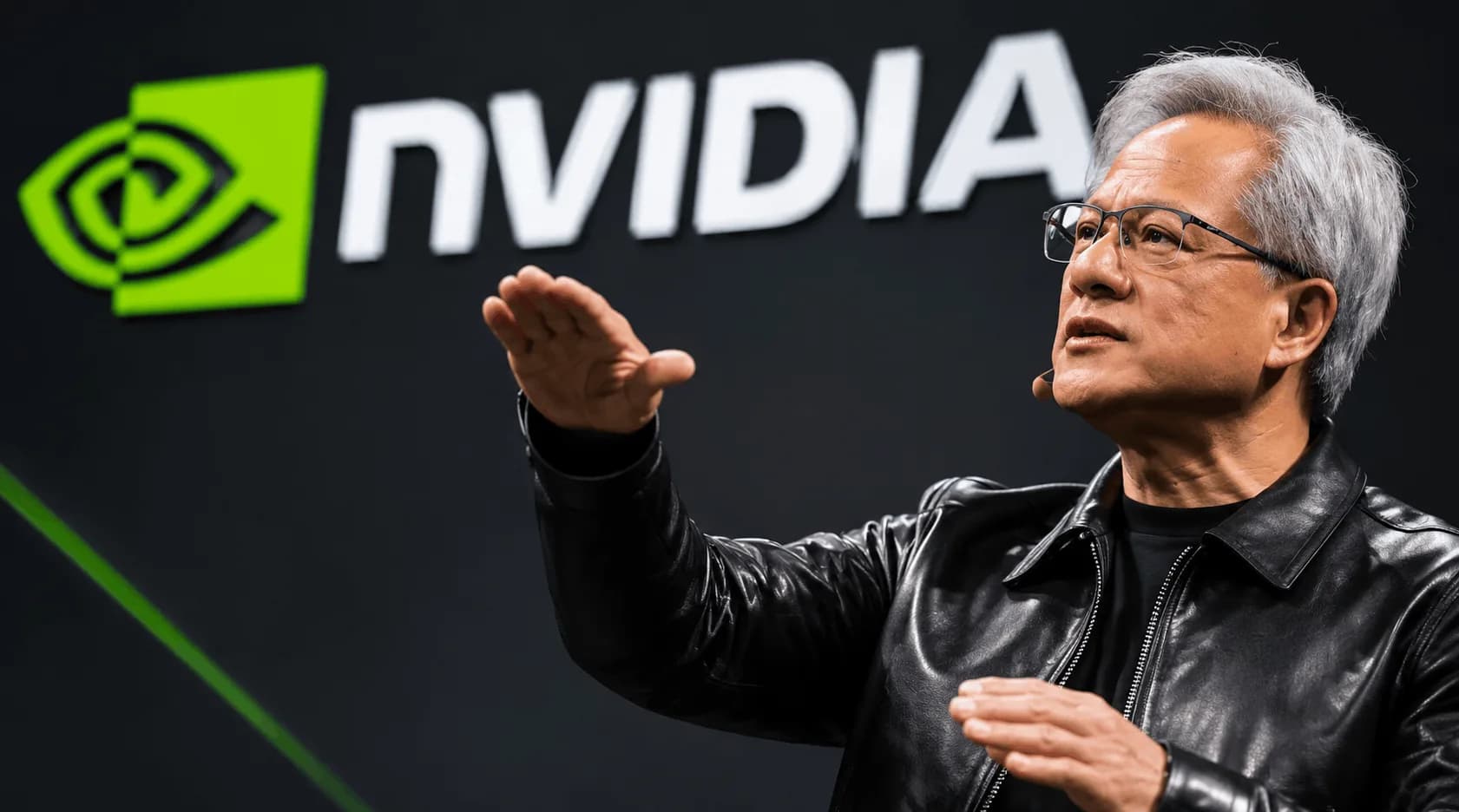
Nvidia announced, that Jensen Huang had resigned immediately as president, CEO, and member of the company's board of directors.
The announcement sent shockwaves through financial markets. Nvidia shares dropped more than 13% in early trading before recovering some of their losses as investors assessed the leadership transition.
The company appointed longtime Chief Financial Officer Colette Kress as interim CEO while beginning a search for a permanent replacement.
The departure comes during a particularly sensitive moment for Nvidia. Its processors power much of the world's AI infrastructure, making the company central to America's technological competitiveness and the global expansion of artificial intelligence.
The immediate challenge is ensuring that a leadership crisis does not disrupt the company responsible for supplying the computing power behind one of the most important technological transformations in modern history.
Why Jensen Huang Resigned
Huang's resignation follows several days of intense scrutiny surrounding reports of alleged extramarital relationships, including one involving Alice Huang, a Singapore-based businesswoman whom U.S. intelligence officials reportedly suspect of having connections to Chinese intelligence.
Additional reporting identified another alleged relationship involving an Nvidia executive.
These reports prompted questions about potential national security implications, particularly because Nvidia operates at the intersection of advanced computing, semiconductor exports, and U.S.-China technological competition.
On November 8, Nvidia's board announced an independent investigation into reports that Huang had been targeted by a foreign intelligence effort.
The investigation was assigned to a committee of independent directors working with outside legal counsel.
At the time, the board stated that it had no reason to believe national security or Nvidia's confidential information had been compromised.
Huang had agreed to cooperate with the investigation.
His resignation now marks a dramatic change in the company's response to the controversy.
The allegations involving foreign intelligence remain allegations, not established findings of espionage or corporate misconduct.
Who Will Lead Nvidia?
Nvidia's board appointed Colette Kress as interim chief executive.
Kress has served as the company's executive vice president and chief financial officer since 2013, giving her more than a decade of experience overseeing its financial operations during an extraordinary period of expansion.
Importantly, she will retain her CFO responsibilities while serving as interim CEO.
The board also appointed Harvey C. Jones as its first-ever chairman.
Jones has served on Nvidia's board since 1993 and brings more than three decades of experience as an entrepreneur, technology executive, and investor.
The company confirmed that it will consider both internal and external candidates for the permanent CEO position.
Board Chairman Jones expressed confidence in Kress and the existing leadership team, stating that Nvidia expects its operations, customer commitments, and product roadmap to continue without interruption.
The transition is particularly important because Huang was deeply involved in the company's strategy and operations.
His departure creates an immediate challenge for a business whose identity and public leadership have been closely associated with its founder.
Trump Recommends Tim Cook as Nvidia's Next CEO: Could It Be a Strategic Move?
President Donald Trump has entered the conversation over Nvidia's future leadership, publicly recommending former Apple CEO Tim Cook as the person to replace Jensen Huang.
On Thursday, November 12, Trump praised Huang's accomplishments while suggesting that Cook, who led Apple for 15 years before stepping down as CEO in September, could be the right person to guide Nvidia through its next chapter.
The recommendation raises an intriguing possibility for one of America's most strategically important technology companies.
Cook is widely recognized for transforming Apple's global operations, strengthening its supply chains, expanding its services business, and overseeing extraordinary growth in the company's market value.
Although his background differs considerably from Huang's engineering-driven leadership, his experience managing complex international manufacturing relationships and navigating geopolitical tensions could prove valuable.
Nvidia is entering a period in which artificial intelligence, semiconductor production, export restrictions, and competition with China are becoming increasingly interconnected.
A leader with Cook's operational experience and established relationships in Washington could potentially strengthen Nvidia's position as it navigates those challenges.
However, there are important questions about whether a leadership transition of this magnitude would make sense.
Nvidia's competitive advantage depends heavily on its engineering expertise, advanced chip architecture, CUDA software ecosystem, and relationships with major AI developers. Cook would need a strong technical leadership team capable of maintaining that momentum.
There is also no indication that Cook has expressed interest in the position or that Nvidia's board is considering him.
The decision belongs to Nvidia's board of directors, not the White House.
Nevertheless, Trump's recommendation introduces an interesting strategic possibility: pairing the operational leadership that helped make Apple a global powerhouse with the technological infrastructure that has positioned Nvidia at the center of the artificial intelligence revolution.
Whether Cook becomes a serious candidate remains uncertain, but the suggestion highlights how closely Nvidia's future is now connected to America's broader technological and economic interests.
Why Nvidia Matters to America's AI Future
Nvidia is not simply another semiconductor manufacturer.
Its graphics processing units (GPUs) have become essential components of the infrastructure used to train and operate advanced artificial intelligence systems.
Major technology companies, cloud providers, research institutions, and AI developers depend on Nvidia hardware to process enormous amounts of information.
Its CUDA software ecosystem also gives developers tools to build applications that operate on Nvidia processors.
This combination of hardware and software has helped establish the company as a dominant force in the AI industry.
The company's influence extends into data centers, autonomous systems, scientific research, robotics, advanced manufacturing, and national security.
For the United States, maintaining a strong domestic semiconductor industry is strategically important as competition with China intensifies.
Nvidia's leadership transition therefore carries implications beyond its shareholders.
It touches the broader ecosystem of American technology companies, semiconductor suppliers, data center operators, and businesses investing in AI infrastructure.
Investors React to Leadership Uncertainty
The immediate market reaction reflected concerns about how Nvidia will operate without its founder.
Shares dropped more than 13% at the opening of Thursday's trading session, although the decline narrowed as the day progressed.
By early afternoon, the stock was down approximately 5%.
The reaction demonstrated how heavily investors associate Nvidia's success with Huang's leadership.
Analysts have pointed to succession planning and customer relationships as important issues for the company.
Nvidia's technology remains deeply integrated into the AI industry, making an immediate loss of demand less likely simply because its CEO has changed.
Nevertheless, maintaining confidence among major customers and investors will be an important responsibility for the new leadership.
Competitors including AMD and Broadcom could also benefit if customers begin reconsidering their semiconductor strategies.
Meanwhile, companies operating AI data centers could face additional uncertainty as financial markets reassess the future of the industry.
Nvidia's Next Earnings Report Could Be Critical
Investors will receive another important indication of Nvidia's business performance when the company reports its third-quarter fiscal 2027 results on November 17.
The earnings announcement will provide information about revenue, demand for AI processors, operating performance, and the company's financial outlook.
It will also offer an opportunity for investors to hear directly from the new interim leadership.
The most important questions will concern whether Nvidia can maintain its product roadmap, fulfill existing customer commitments, and preserve the relationships that helped establish its position in the AI market.
The company has already indicated that its operations and strategic commitments are expected to continue.
Now the market will be looking for evidence that the transition can deliver that continuity.
A Defining Moment for the AI Industry
Jensen Huang transformed Nvidia from a graphics-chip company into one of the most consequential businesses in modern technology.
His departure creates an extraordinary leadership challenge, but it does not erase the engineering, manufacturing capabilities, software ecosystem, or customer relationships built over decades.
For America, the priority is maintaining the industrial and technological foundations that make continued AI innovation possible.
The semiconductor industry supports millions of dollars in investment, highly skilled employment, research partnerships, and infrastructure development.
Its long-term success depends on strong institutions and leadership that can withstand individual controversies.
Nvidia now faces the task of proving that its future is bigger than one executive. America's position in the AI revolution depends on the strength of its engineers, manufacturing capabilities, research institutions, and technology companies. The next chapter will test whether Nvidia can preserve its leadership and continue powering the innovations shaping the future.