
 3 min read
 88
 Linkedin
 Threads
 Facebook
 X

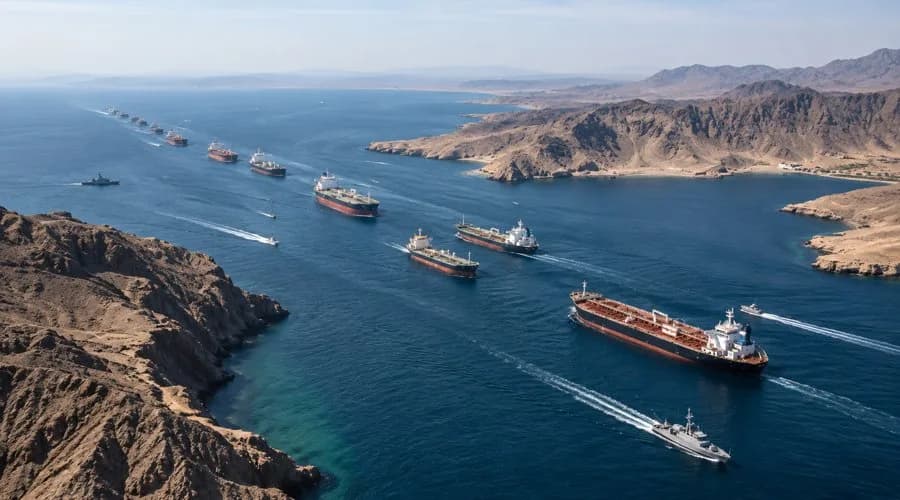
WASHINGTON, D.C. — November 24, 2026. Iran is once again placing conditions on the security of the Strait of Hormuz, demanding that the Trump administration lift economic sanctions and end its naval blockade before normal maritime operations can resume.
Meanwhile, three more commercial vessels have reportedly come under attack in the strategic waterway, according to the United Kingdom Maritime Trade Operations Centre (UKMTO).
All three vessels reportedly continued their journeys, with every crew member accounted for.
The developments expose a fundamental contradiction in the ongoing negotiations: Iran is offering to restore maritime security while continuing to assert control over an international shipping corridor essential to the global economy.
Nearly nine months after the United States and Israel launched military operations against Iran, a permanent resolution remains elusive.
Iran Wants Trump to Accept Its Conditions
Iranian Foreign Ministry spokesperson Esmaeil Baqaei said Monday that maritime security could be restored rapidly if Washington accepted Tehran's demands.
Among Iran's principal conditions are:
The removal of American economic sanctions.
The termination of the U.S. naval blockade.
The release of frozen Iranian financial assets.
An agreement ending hostilities across multiple fronts.
Implementation of the remaining provisions established in June's memorandum of understanding.
Iran maintains that American sanctions and the naval blockade constitute aggression against its sovereignty.
Washington, meanwhile, has imposed those restrictions in response to the ongoing conflict and Iran's attempts to control commercial navigation through the Strait of Hormuz.
The dispute has effectively transformed one of the world's most important shipping corridors into a negotiating instrument.
For international businesses, oil producers and commercial shipping operators, the consequences extend far beyond Washington and Tehran.
Three More Tankers Attacked as Tensions Intensify
British maritime authorities confirmed Tuesday that three vessels had reportedly been struck while navigating the Strait of Hormuz on Monday.
Separately, Iran's Islamic Revolutionary Guard Corps claimed that commercial tankers had encountered naval mines while traveling through routes Tehran considers unauthorized.
Those claims have not been independently established. U.S. Central Command has previously rejected similar Iranian assertions.
Another commercial vessel reportedly caught fire following an incident off the United Arab Emirates.
The continuing attacks demonstrate that the June memorandum of understanding has not produced lasting maritime security.
A diplomatic agreement means little to commercial shipping operators if their vessels remain exposed to military threats.
Trump Wants a Permanent Solution to Iran's Nuclear Ambitions
President Donald Trump has made clear that his objective extends beyond securing another temporary agreement with Tehran.
Speaking to Fox News on Saturday, Trump emphasized his intention to establish a permanent arrangement preventing Iran from developing a nuclear weapon, including under future American administrations.
The president also expressed frustration with the difficulty of negotiating with Iranian authorities, accusing them of failing to honor previous commitments.
On Sunday, Trump acknowledged that Iran had substantially intensified its missile and drone activity during the previous week, while maintaining that American defenses had successfully neutralized the threats he referenced.
His statements highlight the administration's central challenge: securing an agreement that remains effective after the immediate military confrontation ends.
A permanent settlement would require credible verification mechanisms, enforceable commitments and a clear understanding of what happens if either party violates the agreement.
Washington Targets Iran's Financial Lifeline
While Tehran demands economic relief, the Trump administration is moving in the opposite direction.
On Monday, the U.S. Treasury Department announced additional sanctions targeting Iranian financial intermediaries, currency exchange businesses, individuals and companies allegedly involved in circumventing American restrictions.
Treasury Secretary Scott Bessent described the network as an essential financial lifeline for the Iranian government.
The sanctions are intended to restrict Tehran's access to international currencies and disrupt financial channels that American authorities say facilitate prohibited transactions.
Iran's currency subsequently weakened in unofficial markets.
The strategy illustrates how Washington is combining diplomatic engagement with financial pressure rather than relying exclusively on renewed large-scale military operations.
Whether that pressure will produce meaningful concessions remains uncertain.
The Conflict Is Spreading Across the Middle East
The confrontation is no longer limited to American and Iranian military forces.
Saudi Arabia, Kuwait and Qatar have condemned a recent Iranian attack against Bahrain that reportedly injured two people and damaged civilian infrastructure.
Meanwhile, fighting between Saudi-backed forces and Iran-backed Houthis in Yemen continues to intensify.
On Tuesday, Saudi military spokesperson Major General Turki al-Maliki reported another attack targeting a tower in Riyadh's financial district.
Responsibility and the precise circumstances of that latest incident remain under examination.
The developments illustrate the interconnected nature of the conflict. Military escalation involving Iran can create consequences for neighboring governments, commercial infrastructure and international transportation networks.
Can Washington Secure a Lasting Agreement?
Qatar continues mediating between Washington and Tehran.
On Monday, Secretary of State Marco Rubio met with Qatari Prime Minister Mohammed bin Abdulrahman Al Thani in Washington as diplomatic efforts continued.
Nevertheless, Iranian officials are simultaneously warning of further retaliation should American and Israeli forces resume attacks against Iranian infrastructure.
The competing messages reveal the difficulty of the negotiations.
Iran says it is prepared for diplomacy while maintaining its military threats. Trump says he wants a permanent agreement while preserving economic and military pressure.
The immediate challenge is reopening and securing international shipping routes. The larger challenge is establishing conditions under which those routes cannot repeatedly become instruments of geopolitical confrontation.
A lasting agreement must ultimately be measured not simply by the promises made at the negotiating table, but by whether those commitments are honored after the agreement is signed.
For now, negotiations remain stalled, economic sanctions are expanding, and commercial vessels continue operating under considerable uncertainty.
Stay connected with FPTN for the real news. As is.