
 3 min read
 97
 Linkedin
 Threads
 Facebook
 X

The sweeping resignation offer under CIA Director John Ratcliffe raised questions about bureaucracy, intelligence failures, political trust and whether America's most secretive agency needed a fundamental overhaul.
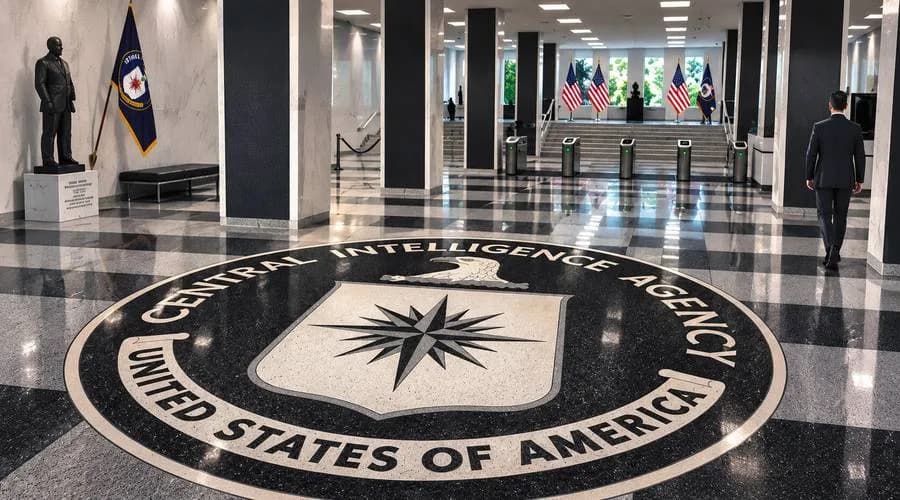
WASHINGTON, D.C. The Central Intelligence Agency offered its workforce an extraordinary proposition: voluntarily leave government service and receive approximately eight months of pay and benefits.
The announcement, first reported by The Wall Street Journal on February 4, 2025, was part of President Donald Trump's effort to restructure the federal government.
But the decision to extend such an offer to America's premier foreign intelligence agency raised a much larger question.
Why would a government confronting threats from China, Russia, Iran and international terrorist organizations encourage experienced intelligence professionals to leave?
Was the CIA carrying unnecessary bureaucracy? Had its leadership become dissatisfied with the agency's efficiency? Or was the administration attempting to fundamentally change how intelligence was collected, analyzed and delivered to the president?
The answer involves several overlapping issues—and an institutional debate that extends well beyond the size of the federal workforce.
The CIA Offered Its Entire Workforce an Exit
According to Reuters, the CIA extended voluntary resignation offers across its workforce in February 2025.
The arrangement was similar to the deferred resignation program offered to employees at other federal agencies.
Participants could resign while continuing to receive pay and benefits for a specified period, generally described as approximately eight months.
However, the offer did not mean every CIA employee was eligible to leave immediately.
Certain sensitive positions and critical operational assignments could be excluded.
The agency also began reviewing hiring decisions, including conditional employment offers that had already been extended.
CIA Director John Ratcliffe described the initiative as part of a broader effort to align the agency with the administration's national security priorities.
The announcement was remarkable because intelligence agencies had initially been excluded from the government's broader resignation program.
Ratcliffe made the decision to bring the CIA into the restructuring effort.
Why Would the CIA Need Such a Dramatic Overhaul?
Ratcliffe had already made his priorities clear during his confirmation process.
He wanted the CIA to become more aggressive in collecting foreign intelligence, more effective at identifying threats and more capable of confronting America's principal adversaries.
China was a particular concern.
The administration also emphasized transnational drug cartels, advanced technologies and emerging security threats.
Ratcliffe argued that the agency needed to refocus on its core intelligence mission.
This provides one documented explanation for the restructuring: the administration wanted to change the CIA's priorities, workforce composition and operational culture.
But that leaves an important management question.
Was the agency employing too many people, or was it allocating its personnel inefficiently?
Those are different problems.
A large intelligence workforce is not necessarily inefficient. Intelligence operations require analysts, linguists, technical specialists, cybersecurity professionals and experienced officers working across multiple regions.
Yet even highly specialized organizations can develop administrative layers, overlapping responsibilities and internal processes that slow decision-making.
The administration's approach suggested a desire to create opportunities for new leadership while reducing organizational resistance to change.
Whether the buyouts ultimately improved operational efficiency has not been established by publicly available performance data.
Was This Also About Political Trust?
Another possible motivation involves the longstanding tension between Trump and elements of the American intelligence establishment.
Trump has repeatedly criticized intelligence officials over investigations involving his political campaigns and administration.
Those disputes created deep disagreements about intelligence oversight, political neutrality and the proper relationship between intelligence agencies and elected leadership.
Ratcliffe entered office promising to restore focus and confidence in the agency's mission.
That history makes institutional trust an important part of understanding the restructuring.
However, there is no verified evidence that the February 2025 buyout program was specifically designed to conceal misconduct, obstruct investigations or remove employees involved in particular cases.
Those possibilities should not be presented as established explanations without documents or credible testimony.
The documented purpose was a workforce and mission realignment.
The unresolved question is whether political considerations influenced which personnel were encouraged to depart and how the agency evaluated its future staffing needs.
Could Artificial Intelligence Make the CIA More Efficient?
The CIA's restructuring also coincided with rapid advances in artificial intelligence.
Modern intelligence agencies process enormous volumes of information, including satellite imagery, intercepted communications, financial records and publicly available digital material.
AI systems can assist analysts by identifying patterns, translating documents, processing images and prioritizing information for human review.
Ratcliffe emphasized the importance of advanced technologies, including artificial intelligence and quantum computing.
That creates an opportunity to rethink how intelligence organizations operate.
But technology does not automatically replace human expertise.
An AI system cannot independently reproduce the judgment of an experienced officer who has spent years developing sources, understanding foreign governments or assessing the credibility of sensitive information.
AI can also generate inaccurate conclusions, creating additional risks when intelligence assessments influence military or diplomatic decisions.
The most effective intelligence organization may not be the one with the fewest employees, but the one that combines experienced personnel with better technology and faster decision-making.
Former Intelligence Officials Warned of Serious Risks
The restructuring was not universally welcomed.
Former intelligence officials warned that encouraging experienced officers to leave could weaken America's intelligence capabilities.
Andrew McCabe, a former deputy FBI director, argued in a February 2025 CNN interview that large-scale departures could strip the CIA of specialized knowledge accumulated over decades.
Other former officials raised concerns about losing personnel with rare language skills, technical expertise and relationships with foreign intelligence sources.
Those warnings highlight a potential unintended consequence.
A government may save money by reducing payroll, but replacing experienced intelligence officers can require years of recruitment, training and operational development.
The CIA must also maintain continuity during international crises.
A poorly managed restructuring could create gaps that adversaries might exploit.
What We Still Do Not Know
The CIA does not publicly disclose its complete workforce figures or detailed operational staffing arrangements.
The original announcement did not establish how many employees would accept the offer.
It also did not provide a comprehensive public accounting of the program's long-term savings or operational effects.
Consequently, several questions remain open.
Did the program eliminate unnecessary administrative positions?
Did it encourage experienced operational personnel to retire prematurely?
Did it improve intelligence reporting and coordination?
And did the agency develop stronger capabilities against China, Iran and other national security threats?
Answering those questions requires more than political statements or viral social media posts.
It requires credible oversight, financial analysis and operational assessments that protect classified information while allowing appropriate congressional scrutiny.
A Necessary Reform—or a Dangerous Gamble?
The CIA's buyout program reflected the Trump administration's determination to change how the federal government operates.
Its stated objective was to create a more responsive intelligence agency focused on national security priorities.
That objective can be evaluated separately from the methods used to achieve it.
Reducing bureaucracy may improve efficiency.
Replacing outdated procedures may accelerate intelligence analysis.
Investing in advanced technology may strengthen America's ability to identify emerging threats.
But losing experienced officers or weakening institutional independence could create vulnerabilities.
The fundamental question is not simply how many people work at the CIA. It is whether the agency can deliver accurate, timely and independent intelligence when the country needs it most.
The February 2025 announcement was real.
The broader consequences of the restructuring deserve continued examination.
And for an agency whose work is largely hidden from public view, meaningful oversight remains essential to determining whether the changes made America safer.
Stay connected with FPTN for the real news. As is.