


 2 min read
 5
5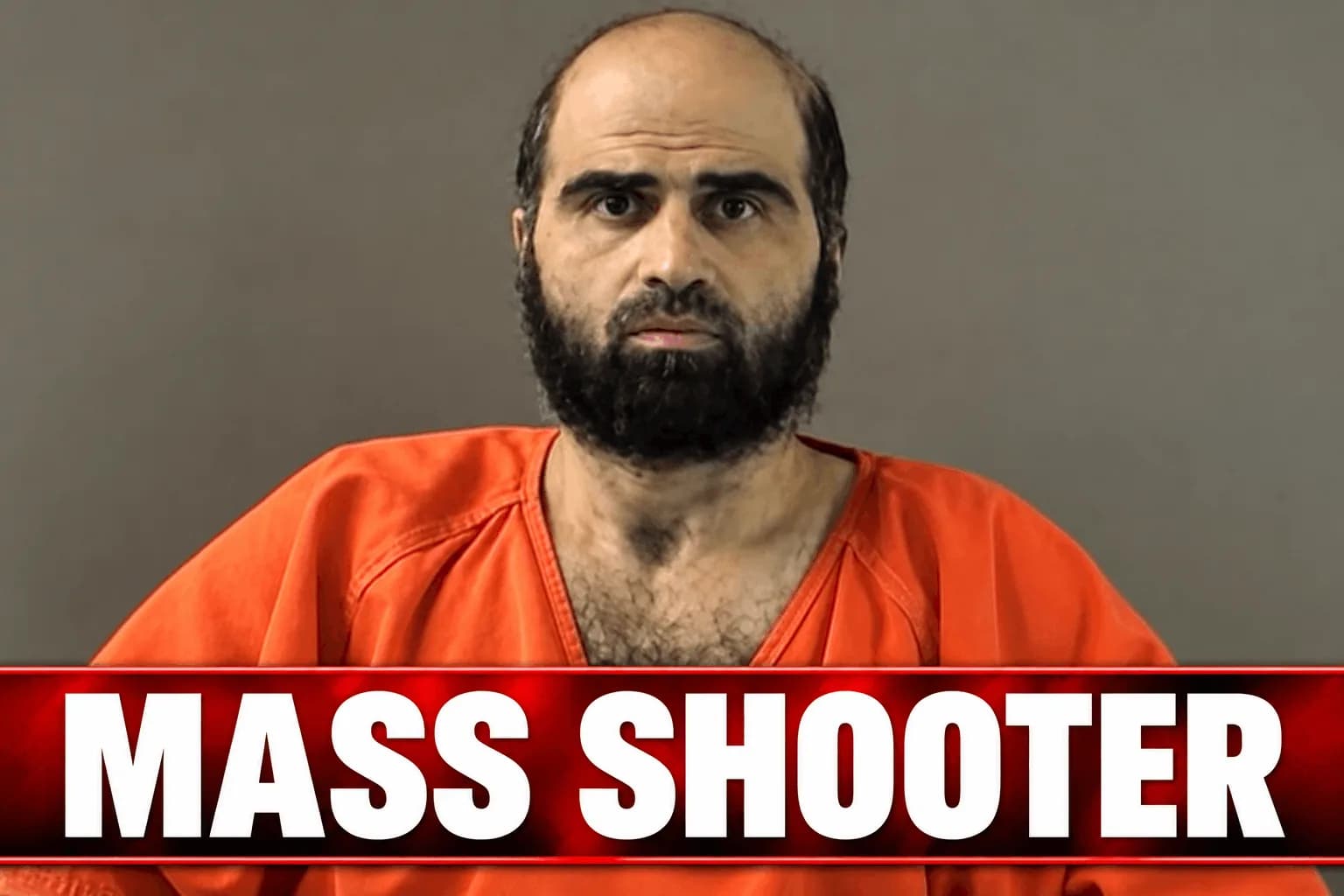
 Linkedin
 Threads
 Facebook
 X
X
Americans have seen executions discussed on television.
They have watched protesters gather outside prisons.
They have heard announcements when condemned prisoners were pronounced dead.
But Americans have not been able to watch an execution unfold publicly for generations.
On December 3, that could change.
The Pentagon says the execution of former Army Maj. Nidal Malik Hasan—the man convicted of murdering 13 people and attempting to murder 32 others during the 2009 Fort Hood shooting—will be livestreamed.
Defense Secretary Pete Hegseth said the administration intends to make sure the execution is public and that people are able to watch it.
That makes this about more than one death sentence.
America may be about to witness something it has not experienced in modern times.
December 3. Fort Hood. 1 P.M.
President Donald Trump approved Hasan's death sentence on October 2 after the military appellate process was completed.
Four days later, Acting Secretary of the Army Adam Telle directed that Hasan be executed by firing squad at Fort Hood, Texas, at 1 p.m. Central Time on December 3.
Even the location and timing carry symbolism.
According to ABC News, Hegseth said Fort Hood was selected because it is where Hasan committed the attack, while the 1 p.m. execution time roughly corresponds with the time the shooting began on November 5, 2009.
Hasan was an Army psychiatrist when he opened fire inside the Soldier Readiness Processing Center.
A military jury ultimately convicted him of 13 counts of premeditated murder and 32 counts of attempted premeditated murder and sentenced him to death in 2013.
Hasan himself described the attack in religious and wartime terms and acknowledged at trial that he was the shooter. AP reports that he characterized himself as a soldier who had “switched sides.”
America Stopped Doing This Publicly Decades Ago
This is where the story becomes historically unusual.
Public executions were once common in the United States.
They eventually disappeared as states moved executions behind prison walls. The last widely recognized public execution in America occurred in Kentucky in 1936, when Rainey Bethea was hanged before thousands of spectators.
That was 90 years ago.
The U.S. military itself has not carried out any execution since 1961, when Army Pvt. John Bennett was hanged at Fort Leavenworth.
And the military has not used a firing squad since 1945, according to ABC News.
So December 3 could combine three extraordinary events:
America's first military execution in 65 years.
A return to a military firing squad after more than eight decades.
And public access through livestreaming after generations in which executions were deliberately kept out of public view.
There Is Still One Major Question
Will it actually happen on December 3?
Hasan has exhausted the military appellate process, and the Supreme Court declined to review his conviction in March 2025.
But his legal options are not necessarily finished.
His longtime civilian attorney told ABC News that Hasan could still pursue a federal habeas corpus challenge, which could potentially delay the execution.
There are procedural questions as well.
The Army's most detailed firing-squad instructions date to 1959, and officials are now developing updated procedures for an execution method the military has not used in more than 80 years.
Hasan is also paralyzed and uses a wheelchair after being shot while officers stopped the 2009 attack, adding logistical questions to an already unprecedented proceeding.
Justice—or Spectacle?
That is the debate America is now confronting.
Supporters of making the execution public argue that after years of appeals, the families of the 13 people Hasan murdered deserve to see the sentence carried out and the government should not hide what capital punishment means.
Critics—including Hasan's attorney—argue that livestreaming an execution risks transforming justice into public spectacle.
Either way, December 3 could become an extraordinary date in American legal history.
Seventeen years after the Fort Hood massacre, a case that began inside a Texas military processing center may end at the same installation—before potentially millions of Americans watching from their screens.
America has not publicly witnessed an execution like this in nearly 90 years.
Now, unless another court intervenes, the country may be about to watch one live.