 5 min read
 502
502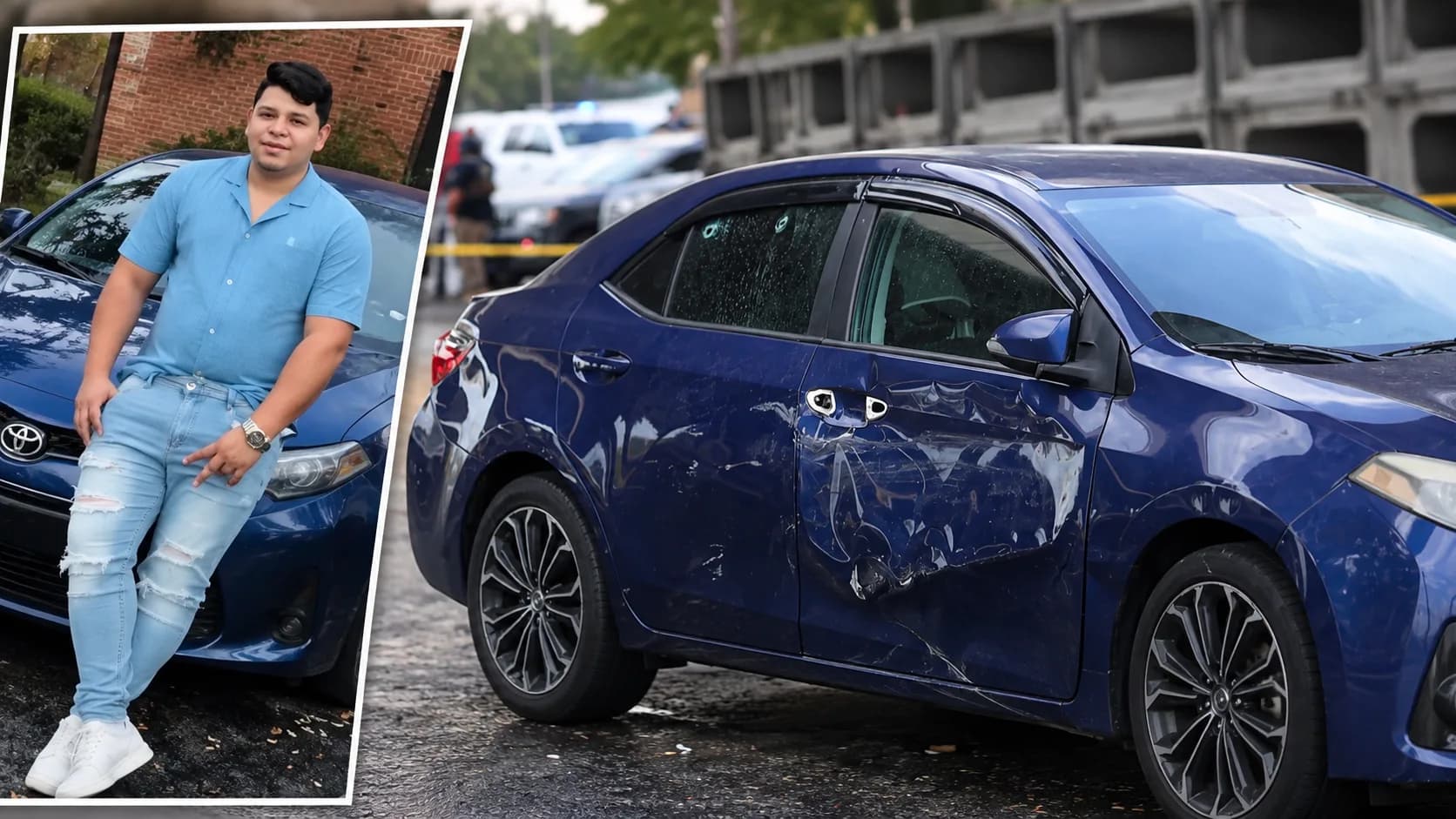
 Linkedin
 Threads
 Facebook
 X
XSomething happened in Austin on Sunday that deserves investigation, not mythology.
An ICE officer shot Wilber Rafael Garces Perez, a Venezuelan man, during an immigration enforcement operation in north Austin. Austin Police Chief Lisa Davis said the shooting followed a brief foot pursuit. Perez was struck once in the torso, hospitalized and later transferred into federal custody.
The Department of Homeland Security says Perez entered the United States unlawfully during the Biden administration and had a final order of removal. His attorney disputes part of that account, saying he entered through a lawful parole process, possessed a valid work permit and was making a DoorDash delivery when agents encountered him. DoorDash confirmed he was completing a delivery.
Those are significant contradictions.
And right now, we do not have enough publicly released evidence to settle them.
One fact should still be obvious: do not escalate encounters with police
There is a lesson here that should not be controversial.
If law enforcement stops you, comply with lawful commands.
Do not run.
Do not fight.
Do not reach suddenly for something.
Do not turn a tense encounter into something more dangerous than it already is.
A brief foot pursuit occurred before this shooting, according to Austin's police chief. That matters because fleeing from law enforcement inevitably changes the dynamics of an encounter.
But another fact matters equally:
Running does not by itself prove that a shooting was legally justified.
DHS policy places restrictions on deadly force, and the circumstances surrounding the Austin shooting are still being investigated. Austin officials, the Texas Rangers, DHS and the FBI are among the authorities involved or seeking involvement in reviewing what happened.
So two things can be true simultaneously:
Citizens and immigrants should not resist law enforcement.
And law-enforcement officers remain accountable for whether the force they use is lawful and proportionate.
That is what an investigation is for.
The media should be careful too
Within hours, protesters gathered.
Political statements followed.
So did headlines.
This is precisely where news organizations have a responsibility not to transform uncertainty into ideology.
If an immigrant runs from federal officers, don't romanticize that behavior because you oppose ICE.
If an ICE officer fires a weapon, don't automatically declare the shooting justified because you support immigration enforcement.
Get the evidence first.
The public deserves the body-camera footage, witness statements, ballistics, commands given by officers and a clear chronology of what Perez did immediately before the shot.
Then judge it.
But Austin is also part of a much larger immigration story
America did experience an extraordinary migration surge during the Biden years.
The numbers were enormous—but they should be stated correctly.
From fiscal 2021 through fiscal 2024, Customs and Border Protection recorded more than 10.8 million encounters nationwide, including 8.72 million at the Southwest border. A Republican-led House Homeland Security Committee, citing CBP data, also reported roughly 2 million known “gotaways” during that period—people detected entering but not apprehended. Those numbers cannot simply be added together and called 12 or 13 million new permanent residents, because encounters include repeat attempts, removals and people processed at ports of entry. But they demonstrate the extraordinary scale of what occurred.
The Associated Press recently obtained federal data showing something even more concrete: about 4.5 million migrants were released into the United States after arriving at the southern border between October 2018 and July 2025, generally while awaiting immigration proceedings or seeking humanitarian relief.
And that surge did not occur against an empty background.
Before it began, the United States already had a large unauthorized population. Pew Research Center estimated approximately 10.5 million unauthorized immigrants were living in the country in 2017. That is the most widely accepted demographic estimate from that period.
So the policy question is legitimate:
Why did Washington allow a historic new migration surge before resolving the status of millions of people who had already lived and worked in America for years?
That is where criticism of the Biden administration becomes much more substantive.
The administration deliberately expanded humanitarian parole programs and created CBP One pathways allowing large numbers of migrants to present at ports of entry and, in many cases, remain temporarily in the United States while their immigration cases proceeded. DHS described those policies as a safer and more orderly alternative to unlawful crossings. Under the CHNV parole program alone, up to 30,000 people per month from Cuba, Haiti, Nicaragua and Venezuela could receive two years of parole and work authorization if they met the program’s requirements.
Supporters argued that those programs reduced dangerous illegal crossings and allowed screening before entry.
Critics argued that they substantially increased the number of migrants living inside the United States while the immigration court system was already overwhelmed.
That disagreement is central to understanding what followed.
Americans really did watch cities spend billions
This part should not be dismissed as some internet myth.
New York City alone spent $1.47 billion in fiscal 2023 and $3.75 billion in fiscal 2024 on services for asylum seekers, according to the city comptroller.
By July 2024, more than 207,000 asylum seekers had passed through New York City’s system, and over 65,000 were living in emergency shelters. The city comptroller reported that approximately 77% were being housed in hotels.
So when ordinary New Yorkers said they were watching hotels converted into migrant shelters, that was not imaginary.
They were.
The city also created a pilot program giving migrant families prepaid cards to purchase food and baby supplies. City officials said participants received about $12.52 per person per day, arguing that the system would actually save taxpayers money compared with contracted food deliveries.
Again, precision matters.
Those cards were not federal SNAP benefits. Mayor Eric Adams explicitly said migrants in that shelter program could not receive SNAP or WIC and defended the cards as a cheaper city-funded replacement for meals the city was already legally required to provide.
But from the viewpoint of a working taxpayer seeing billions spent on hotel rooms, shelters, food and emergency services while struggling with rent, health insurance or care for an elderly parent, the political frustration was entirely predictable.
New York also provides emergency Medicaid to otherwise eligible undocumented residents, and since January 2024 has offered comprehensive Medicaid coverage to qualifying undocumented residents age 65 and older.
Those are real policies.
They can be defended as humanitarian necessities.
They can also be questioned as choices about limited public resources.
Both conversations are legitimate.
The larger failure was allowing two problems to collide
This is the point I think your article should emphasize.
America already had millions of longtime undocumented residents before the recent surge.
Some had lived here 10, 20 or even 30 years.
Some raised American children.
Some operated businesses.
Some paid taxes and became deeply embedded in their communities.
Congress repeatedly failed to resolve what to do with that population.
Then, rather than solving that long-standing problem first, the country experienced one of the largest migration surges in modern American history.
That transformed immigration from one unresolved problem into two.
The first was:
What should America do about people who had quietly built lives here over decades?
The second became:
How many additional people can the country process, shelter, adjudicate and integrate at once?
Those are different questions.
Washington allowed them to become one enormous crisis.
That is a policy legacy the Biden administration and Democrats who defended its border strategy will continue to be asked about.
And now enforcement has consequences
The Trump administration was elected after promising much more aggressive immigration enforcement.
That means people with final removal orders are being located.
Some people who entered recently are being deported.
Others may have lived in the country for years before enforcement reached them.
That is where individual stories become painful.
But one principle remains practical regardless of anyone’s politics:
If law enforcement stops you, do not run and do not physically escalate the encounter.
A foot pursuit occurred before the Austin shooting. That does not establish whether the officer was legally justified in firing; the investigation must determine that.
But fleeing unquestionably turns an already tense encounter into a more dangerous one.
The responsible message from politicians and the media should therefore be twofold:
Demand accountability from law enforcement.
And do not encourage people to resist lawful enforcement.
America can investigate an ICE officer without pretending immigration laws do not exist.
It can show compassion toward migrants without pretending the last several years imposed no fiscal or administrative burden.
And it can acknowledge that the Biden administration faced a genuine global migration challenge while still examining whether its chosen policies increased the scale of the problem inside the United States.
That is the larger context behind Austin.
The shooting is one incident.
The immigration system that produced the confrontation was decades in the making—and the unprecedented surge of the Biden years made an already unresolved problem substantially larger.