 7 min read
 2.4k
2.4k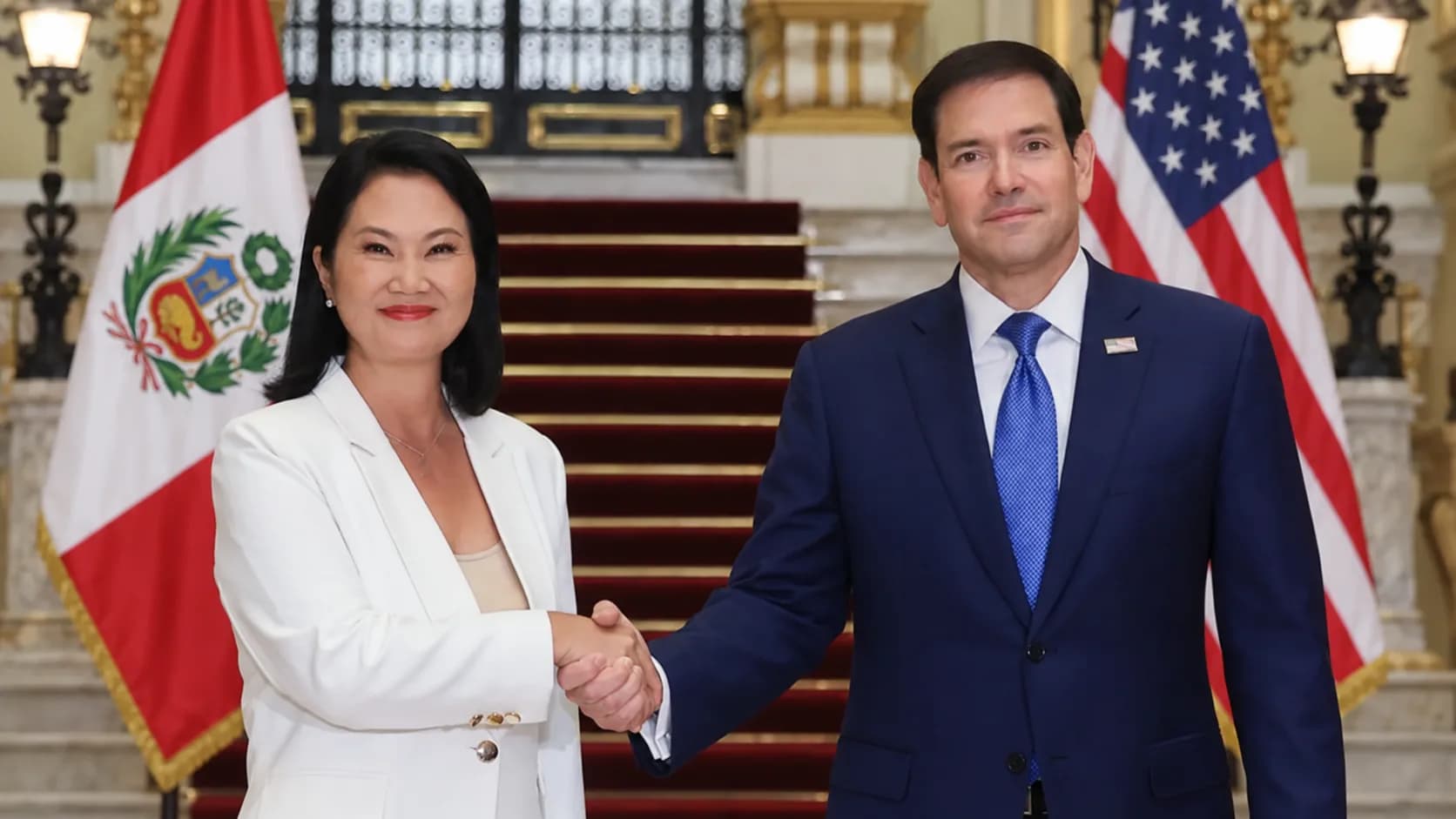
 Linkedin
 Threads
 Facebook
 X
XAmerica Looks South Again: Rubio’s Andean Tour Signals a New Fight for the Hemisphere
Excerpt: Marco Rubio’s visits to Colombia, Ecuador, and Peru were received by their governments as more than routine diplomacy. The three countries used the tour to deepen security and economic cooperation with Washington at a moment when the United States is trying to rebuild relationships across a hemisphere where China has dramatically expanded its trade, investment, and infrastructure footprint over the past quarter century.
For decades, Washington has talked about Latin America as its neighborhood.
But neighborhoods require attention.
While successive U.S. administrations devoted enormous diplomatic, military, and political resources to the Middle East, Europe, and increasingly Asia, something remarkable was happening much closer to home.
China was building relationships.
Buying commodities.
Financing infrastructure.
Investing in mines.
Building ports.
Signing trade agreements.
And becoming indispensable to economies throughout South America.
In 2000, China's annual trade with Latin America was only about $12 billion.
Today, it is roughly $520 billion, according to the Council on Foreign Relations. China has become South America's largest trading partner, while Chinese companies and lenders have established major positions in ports, electricity, mining, telecommunications, and critical minerals.
That transformation did not occur overnight.
And Washington did not entirely disappear from Latin America. The United States remains the region's largest overall trading partner and continues to maintain extensive diplomatic, commercial, security, and cultural ties.
But even analysts at the Council on Foreign Relations describe the U.S. response to China's expanding South American footprint as late.
Secretary of State Marco Rubio's September journey through Colombia, Ecuador, and Peru suggests Washington has decided that period of relative strategic complacency cannot continue.
This was not simply a three-country diplomatic tour.
It looked increasingly like an attempt to reconnect the United States with its own hemisphere.
Three Presidents, Three Welcomes
Rubio traveled September 8 through 10 to meet Colombian President Abelardo De La Espriella, Ecuadorian President Daniel Noboa, and Peruvian President Keiko Fujimori.
The State Department described the mission as an effort to strengthen American partnerships through security cooperation, counter-narcotics efforts, disaster assistance, and deeper commercial relationships.
But the public reactions from the three governments revealed something more.
They were not treating Rubio's arrival as an unwelcome American intrusion.
They were signaling interest in a closer relationship.
In Colombia, De La Espriella called Rubio's visit the beginning of a strategic conversation about the country's future and publicly thanked the United States for providing $26.5 million in humanitarian assistance following Colombia's August earthquake.
He then went considerably further.
“Ningún país del mundo nos ha ayudado tanto como los Estados Unidos,” the Colombian president said, before calling for the relationship to advance from emergency solidarity toward a long-term strategic partnership.
The two governments announced what they called the Acuerdos de Barranquilla, built around reconstruction, economic cooperation, and hemispheric security.
They also signed memorandums involving critical minerals and peaceful civil nuclear cooperation.
De La Espriella explicitly described the moment as a revival of a historically close U.S.-Colombia relationship that had deteriorated during the previous four years.
That is not the language of a government trying to keep Washington at arm's length.
It is the language of a government seeking renewed partnership.
Ecuador Has Already Been Moving Closer
Rubio's reception in Ecuador was similarly warm.
President Daniel Noboa's government described the relationship with Washington as strategic and centered on shared goals involving security, peace, and development.
Noboa also presented Rubio with Ecuador's Grand Cross of the National Order of Merit, the country's highest-ranking national decoration.
The symbolism was difficult to miss.
Ecuador has been dealing with an extraordinary security crisis involving heavily armed criminal organizations linked to international narcotics trafficking.
Rubio used the visit to announce that the administration would seek an additional $45 million from Congress for Ecuadorian security cooperation.
Washington also designated Los Tiguerones, one of Ecuador's most notorious criminal organizations, as a terrorist organization.
For Noboa's government, closer relations with the United States are therefore not purely ideological.
They are practical.
Ecuador wants intelligence.
Equipment.
Training.
Financing.
Security cooperation.
And commercial opportunities.
That may explain why Quito has welcomed Rubio so visibly.
Peru May Have Delivered the Clearest Message
Then Rubio arrived in Peru.
President Keiko Fujimori's words were striking.
“Your presence in Peru, Secretary Rubio, represents much more than an official visit,” she said during their joint appearance.
She described the encounter as part of a 200-year relationship based around sovereignty and independence and announced that Peru would join the Shield of the Americas, the U.S.-led regional initiative against transnational criminal organizations.
But perhaps the most revealing part came later.
Fujimori explicitly praised what she described as President Trump's decision to refocus American attention on Latin America.
She said previous U.S. administrations had not given the region the same level of importance and argued that Rubio's presence demonstrated a change in Washington's political view of Latin America.
That statement gets to the heart of the larger story.
The United States is rediscovering that the Western Hemisphere cannot be treated as strategically automatic.
Because China Never Treated It as Automatic
While Washington's attention frequently moved elsewhere, Beijing developed a very different approach.
China followed opportunity.
It purchased copper from Peru and Chile.
Soybeans from Brazil.
Oil from Venezuela.
Minerals from across the continent.
It financed roads, electrical systems, ports, mines, telecommunications, and energy infrastructure.
More than 20 Latin American and Caribbean countries eventually joined China's Belt and Road Initiative. Colombia became one of the most recent.
Chinese policy banks have loaned more than $120 billion to Latin American and Caribbean governments and state-owned companies since 2005.
Peru provides perhaps the most dramatic symbol of Beijing's economic arrival.
In 2024, Chinese President Xi Jinping attended the inauguration of the approximately $3.6 billion Port of Chancay, a massive Chinese-financed and Chinese-built deepwater facility expected to become an important trans-Pacific logistics hub.
China also has free-trade agreements with both Peru and Ecuador.
This is why the strategic competition cannot be reduced to speeches about ideology.
China showed up with money.
Markets.
Loans.
Construction.
Infrastructure.
And trade.
Latin American governments responded because many of those offers addressed real economic needs.
Washington Cannot Compete by Simply Saying “No to China”
This may be one of the most important lessons from Rubio's trip.
Latin American countries are unlikely to abandon enormous commercial relationships with China simply because Washington asks them to.
Peru is not about to stop selling minerals to Chinese buyers.
Ecuador is not likely to abandon its Chinese trade agreement.
Colombia cannot erase years of commercial relationships overnight.
Even governments that want stronger American ties generally want relationships with both major powers.
That means the United States has to offer something affirmative.
Investment.
Trade.
Security.
Technology.
Infrastructure.
Market access.
Education.
Energy partnerships.
Critical-mineral cooperation.
Rubio appears to understand that.
Before beginning the trip, he wrote that Washington wanted to build security while facilitating economic growth and ensuring that countries in the hemisphere retained control over their own futures.
And the official agenda repeatedly paired security with commerce.
That distinction matters.
America cannot rebuild its influence in Latin America exclusively through military cooperation.
It also has to become an attractive economic partner.
Colombia May Show What That Model Looks Like
The agreements signed in Barranquilla offer an example.
Security was one component.
But the two governments also moved into areas with enormous long-term strategic importance:
critical minerals and nuclear energy.
Those are industries connected to future technologies, electricity generation, advanced manufacturing, defense, batteries, and global supply chains.
For Washington, partnerships like these can reduce dependence on China.
For Colombia, they can potentially attract American investment and integrate the country more deeply into U.S.-linked supply chains.
That is where foreign policy becomes mutually beneficial rather than transactional.
The United States gains a reliable nearby partner.
Colombia gains capital, technology, and market opportunities.
And both governments have incentives to maintain the relationship.
Security Is the Other Binding Force
There is another reason Rubio's message resonated with these governments.
Crime has become transnational.
Cocaine produced in South America moves through multiple countries before reaching American streets.
Weapons move in the opposite direction.
Human trafficking networks cross borders.
Money laundering involves financial systems in several jurisdictions.
Criminal organizations increasingly cooperate internationally.
Rubio repeatedly argued during the tour that those networks can no longer be confronted country by country.
Peru's decision to join the Shield of the Americas reflects that logic.
Colombia wants expanded intelligence and military modernization cooperation.
Ecuador is seeking American help against gangs whose resources sometimes rival those of the government itself.
These countries are not identical.
Neither are their interests.
But organized crime creates one area where American and regional security concerns overlap considerably.
Rubio Also Offered an Important Assurance
American involvement in Latin America carries historical baggage.
Governments across the region remember coups, covert operations, military interventions, and periods when Washington treated Latin American sovereignty as secondary to American geopolitical objectives.
That history helps explain why deeper U.S. security involvement inevitably produces suspicion.
There were protests during Rubio's visit to Peru, and critics of the administration's regional strategy have warned about excessive American military influence.
Rubio addressed that concern directly in Lima.
He said the United States would not simply conduct unilateral operations inside partner countries and argued that joint cooperation with sovereign governments is more effective.
Whether Washington consistently follows that principle will matter enormously.
A renewed American presence will be more durable if Latin American countries see themselves as partners, not subordinates.
China Is Watching
Beijing clearly recognizes what is happening.
Chinese officials reacted sharply to Rubio's criticism of China's role in Latin America and argued that the region does not belong to any country's exclusive sphere of influence.
That response is understandable.
China has spent decades building commercial relationships that it has no intention of surrendering.
And Latin American governments have their own agency.
They are not pieces on a chessboard waiting for Washington or Beijing to move them.
Most will seek whichever relationships they believe produce the greatest benefit.
That competition could actually create opportunities for the region.
If the United States offers better investment terms because it fears losing influence to China, Latin American countries benefit.
If China improves its offers because Washington has returned as a serious competitor, those countries may benefit again.
The challenge is ensuring that competition does not force nations into an unnecessary binary choice.
A Hemisphere Rediscovered
Perhaps that is the deeper meaning of Rubio's trip.
Colombia, Ecuador, and Peru are not distant strategic abstractions.
They are part of the same hemisphere as the United States.
Their economic stability affects migration.
Their security affects narcotics trafficking.
Their ports affect global commerce.
Their minerals affect advanced technology.
Their political orientation affects regional alliances.
Their prosperity creates markets for American companies.
For years, Washington often behaved as though geography alone guaranteed American influence.
China demonstrated that it did not.
Influence follows engagement.
Trade.
Presence.
Investment.
Relationships.
Showing up.
China understood that lesson early.
Washington is relearning it now.
The Presidents Appeared Ready to Listen
And that may be the most important immediate result of Rubio's journey.
Colombia did not merely receive him. Its president talked about a renewed strategic alliance.
Ecuador did not merely schedule a diplomatic meeting. Noboa's government openly described its relationship with Washington as strategic and honored Rubio with the country's highest national decoration.
Peru did not simply host him. Fujimori announced deeper security cooperation and publicly welcomed renewed American attention toward Latin America.
That does not mean the three countries have chosen Washington over Beijing.
Nor does it mean disputes over trade, sovereignty, tariffs, or China have disappeared.
It means something more practical:
The door is open.
After a quarter century in which China transformed itself from a marginal economic player in Latin America into South America's largest trading partner, the United States appears increasingly determined to walk back through that door.
Rubio's trip may therefore be remembered not for three presidential meetings, but as part of a larger change in American strategy.
Washington is looking south again.
And this time, it is finding a hemisphere where it is no longer the only major power asking for a seat at the table.