 5 min read
 766
766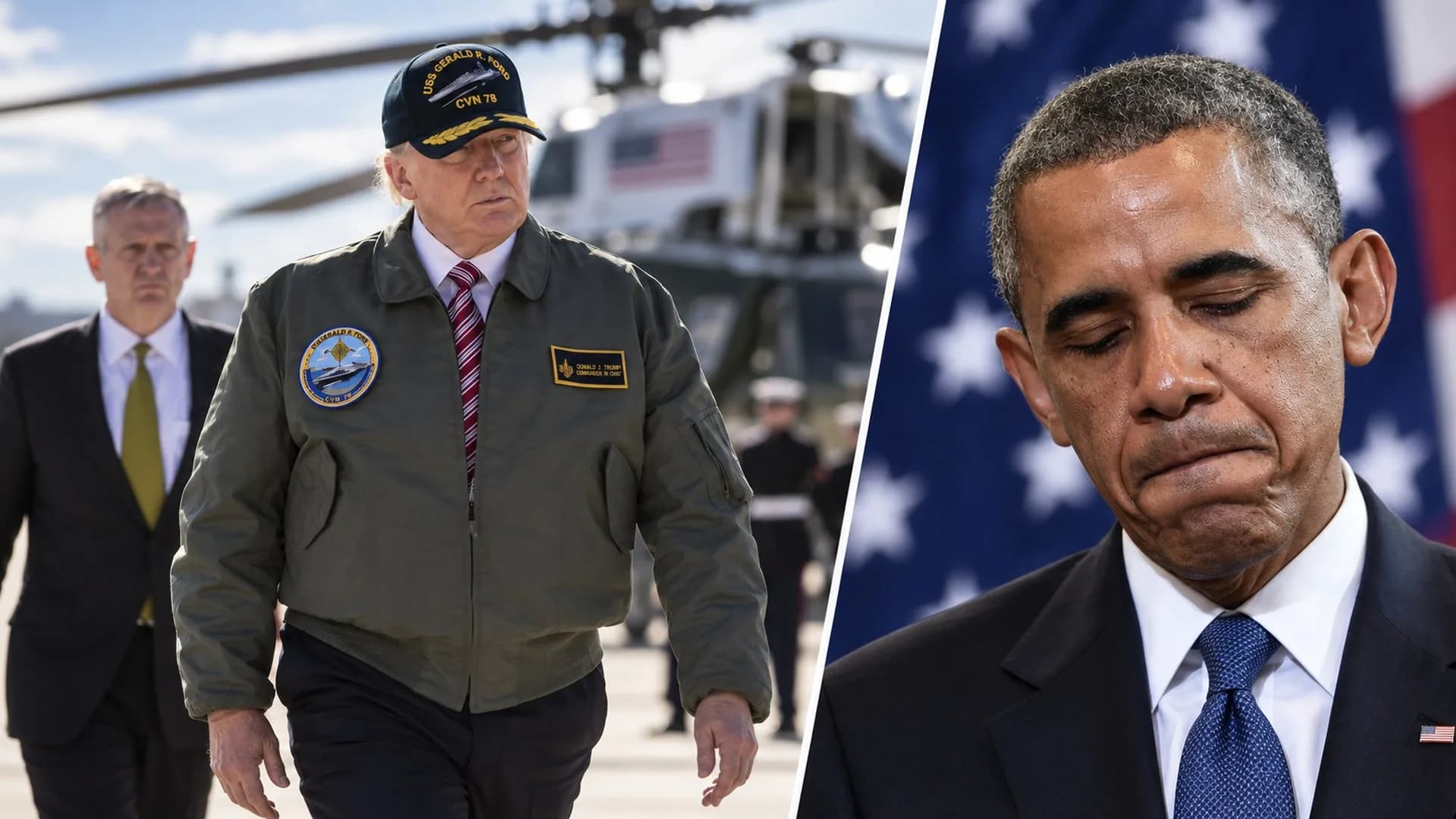
 Linkedin
 Threads
 Facebook
 X
XSometimes the most important question in a breaking-news moment is not What are people saying?
It is:
What do we actually know?
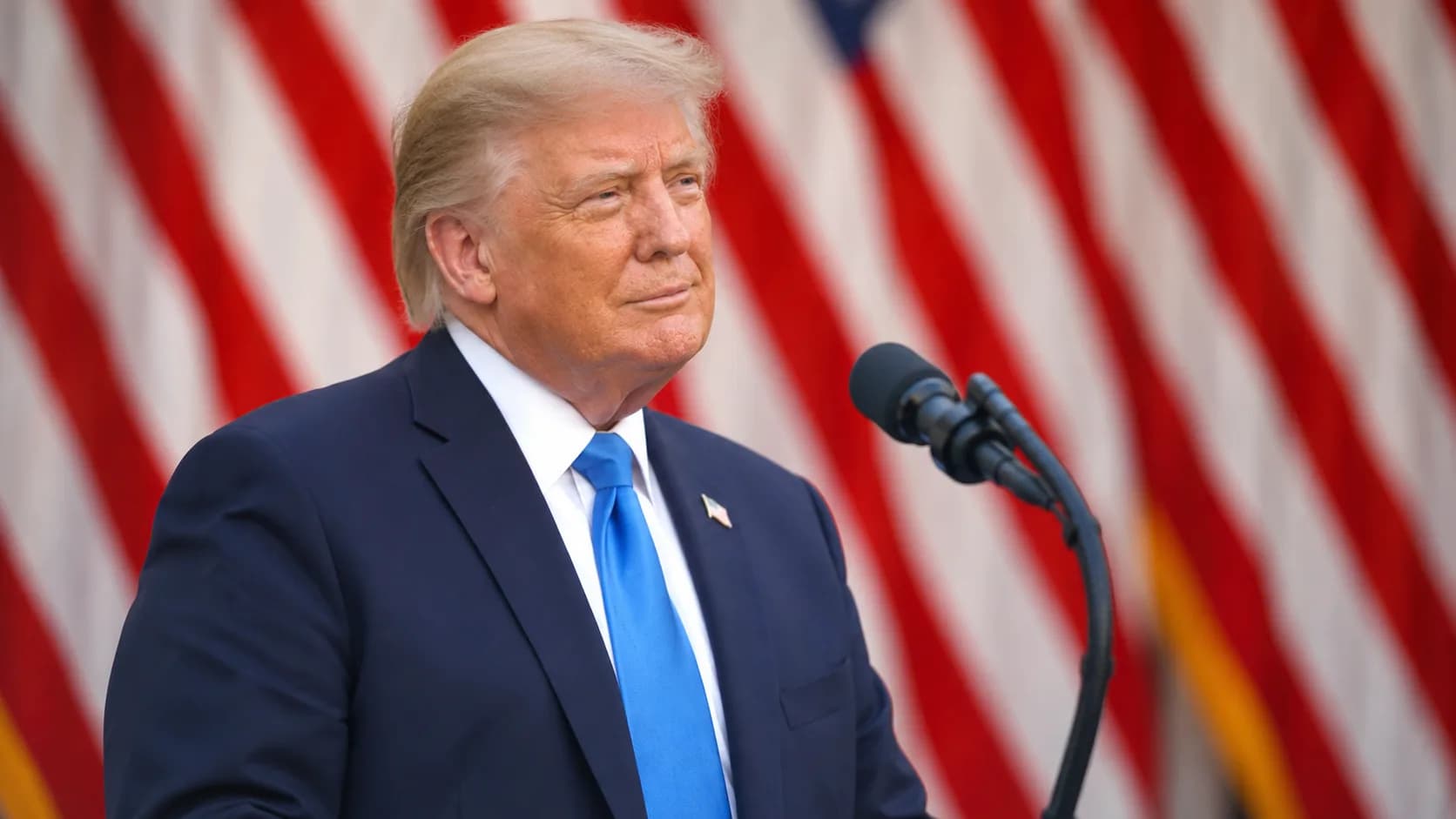
President Donald Trump returned to Washington from Camp David a day earlier than scheduled. The White House has not publicly explained the change. The move came as Iran-backed Houthi forces fired a ballistic missile toward Riyadh and regional tensions increased sharply.
At nearly the same time, U.S. diplomatic missions across the Middle East issued security warnings telling Americans to exercise heightened vigilance and prepare for potential flight cancellations, airspace closures and travel disruptions because the conflict could escalate rapidly.
Then came another claim: Iran had supposedly activated “Code 100,” described online as its highest military alert for the IRGC, regular army and security services.
Is that confirmed?
Not yet by the strongest independent or official sources available this morning.
Multiple outlets are reporting it, but even some reports carrying the claim acknowledge that Iranian authorities have not independently confirmed it.
That distinction matters.
Because in moments like this, speculation travels faster than missiles.
So why did Trump come back early?
We don't know.
And that may be the most honest answer available right now.
Could it involve military planning? Certainly possible.
Could it involve intelligence the public has not seen? Also possible.
Could there be another explanation entirely? Yes.
Trump told Axios only days ago that he was approaching an important decision point concerning the Iran conflict and was weighing whether larger military operations would be necessary.
That makes today's developments worth watching closely.
But coincidence is not yet evidence of a secret operation.
That leads to another question.
Could the recent White House media bans be connected?
It is tempting to look at CNN, MS NOW and Politico losing White House access this weekend and suddenly wonder:
Did the administration know something was coming? Was operational secrecy part of the decision?
At this moment, there is no evidence establishing that connection.
Trump publicly said he was excluding those organizations because of what he considers years of false and unfair reporting. Their reporters were denied White House entry Saturday.
That is the documented explanation.
There is a legitimate broader discussion about sensitive information during military operations. Governments routinely protect classified plans, intelligence sources and operational details precisely because premature disclosure can endanger service members or compromise missions.
But reporters entering the White House do not automatically receive classified battle plans.
Connecting the access dispute to today's Iran developments may make an intriguing theory.
Right now, it remains a theory.
And when the subject is war, theories should not be published as facts.
But to understand Iran, go back 47 years
Here is where today's story becomes much bigger.
The Islamic Republic that Americans know today did not always govern Iran.
Before 1979, Iran under the Pahlavi monarchy was rapidly modernizing. Women gained the right to vote and run for office, family-law protections expanded, university participation grew, and women entered government and the workforce in increasing numbers. By 1978, one-third of university students were women, 22 women sat in parliament and millions of women participated in the workforce.
The monarchy was also politically against politicians who wanted to use their religion as a weapon to the citizens of Iran, and opposition to the Shah was real. But the revolution that followed was not a simple transition from what a Kingdom to freedom.
It became something else.
A coalition of clerics, secular nationalists, leftists and other opponents helped topple the Shah. Yet within months, Ayatollah Ruhollah Khomeini and the clerical establishment increasingly concentrated power around the doctrine of rule by Islamic jurists. U.S. diplomatic records from the period described how the constitutional process shifted power toward the clergy while secular democratic figures unsuccessfully pushed for a more pluralistic system.
That distinction matters.
Many people who participated in the revolution believed they were fighting for independence, justice and greater political freedom.
They did not all believe they were voting for nearly five decades of clerical control.
What happened to Iranian women?
Here the historical record becomes especially revealing.
Khomeini had publicly said before taking power that women would remain free to attend universities, work and participate politically.
Then the revolution succeeded.
Within weeks, thousands of women were protesting efforts to impose compulsory Islamic dress. They marched under a painful slogan:
“In the dawn of freedom, there is an absence of freedom.”
The new government dismantled parts of the pre-revolutionary Family Protection Law, restricted women’s rights in divorce and custody, barred women from certain positions and gradually imposed mandatory dress requirements.
Those policies did not disappear with time.
Successive generations have grown up under a system in which political dissent, religious rules and state coercion intersect.
The United Nations has documented arbitrary detention, torture, enforced disappearance, killings and violence against women and protesters. The 2022 death of Mahsa Amini after her detention by Iran’s morality police became the catalyst for the “Woman, Life, Freedom” movement precisely because the conflict between ordinary Iranians and the system controlling them had been building for decades.
So when people outside Iran hear government-organized chants against America, another Socratic question is worth asking:
Are we listening to an entire civilization—or to the political system that has spent nearly half a century controlling that civilization?
Persia is older than the Islamic Republic.
The Iranian people are bigger than the regime ruling them.
Then comes the money
This is where American foreign policy enters the story.
How does a government project influence across Lebanon, Yemen, Iraq, Syria and Gaza?
Ideology matters.
Weapons matter.
Organization matters.
But can those organizations operate without money?
Not effectively.
The United States has repeatedly documented Iranian financial, military and logistical support for groups including Hezbollah, Hamas, the Houthis and Iraqi militias.
So the logical question becomes:
If Tehran receives more accessible resources, does that automatically mean every dollar finances terrorism?
Not necessarily.
But does it increase the overall financial capacity of a government already funding proxies?
That was exactly the concern Republicans as Senator Marco Rubio and many others raised during the Obama administration’s Iran nuclear negotiations.
The number was debated. The risk was not imaginary.
Much confusion still surrounds the money Iran received or regained access to during the Obama years.
There were two different issues that frequently get mixed together.
First was a $1.7 billion legal settlement announced in January 2016.
Iran had deposited $400 million decades earlier to purchase American military equipment before the revolution. The equipment was never delivered after relations collapsed.
The Obama administration agreed to return the $400 million, plus roughly $1.3 billion in negotiated interest, arguing that settling the decades-old claim would protect American taxpayers from potentially losing billions more at The Hague. Legally, that was the administration’s case. But politically, the reality was far more uncomfortable: the money was not being returned to the monarchy that originally deposited it. It was being transferred to its successor government—the Islamic Republic of Iran. And Washington knew exactly who it was dealing with. Obama’s own State Department described Iran in 2016 as the world’s foremost state sponsor of terrorism, documenting its support for Hezbollah and other armed proxies across the Middle East. The administration also knew the regime’s record of repression at home. Even Secretary of State John Kerry acknowledged separately that some of the economic relief Iran was receiving could reach the IRGC or terrorism-linked actors. So the controversy was never simply about whether Iran had a legal claim to the money. The deeper question was whether returning substantial resources to that particular government was strategically wise. The Obama administration knew the character of the regime, understood the risk, and chose to proceed anyway.
Did Iran’s proxies operate independently?
Of course.
Hezbollah has its own leadership.
Hamas has its own objectives.
The Houthis have their own local ambitions.
Iran does not personally write every operational plan carried out by every allied armed group.
But that leads to another simple question:
Would those organizations possess the same reach, weapons, training and staying power without Iranian support?
That is much harder to argue.
Money does not necessarily write the plan.
Money helps make the plan possible. It amplifies the plan.
That is why sanctions policy matters.
That is why banking restrictions matter.
That is why oil exports matter.
And that is why arguments over whether the Obama administration released $55 billion, $100 billion or some larger theoretical figure should not obscure the larger issue.
The policy intentionally exchanged substantial economic pressure for limits on Iran’s nuclear program.
Obama officials believed that tradeoff reduced a greater threat.
Republican critics warned that easing pressure on the regime would strengthen the same government financing destabilizing forces throughout the region.
Those were the competing arguments.
History now gives Americans more evidence with which to evaluate the Democratic party.
And this is where Trump’s strategy is different
The Trump administration has pursued essentially the opposite theory. Not just thinking about America positioning, is about the World.
Instead of assuming economic relief can moderate Tehran while nuclear restrictions contain the greatest danger, Trump’s approach has emphasized coercive pressure, military deterrence and restricting the resources available to the Iranian government.
Trump told Axios this week that he is approaching a major decision point over whether larger military action may again be necessary. Meanwhile, Iran-backed Houthis have launched new attacks in the region, and U.S. travel warnings continue to cite Iranian missile and drone threats.
Supporters of Trump’s strategy describe this as an effort to reverse what they regard as the central mistake of the Obama approach:
trying to separate Iran’s nuclear program from the regime financing and directing power throughout the region.
Critics of Trump argue that maximum pressure and military escalation can create their own risks.
That argument deserves examination too.
But the strategic difference is unmistakable.
Obama sought constraints through negotiated sanctions relief.
Trump is seeking constraints through pressure.
The question Americans should ask now
So when missiles fly and Iranian proxies move, the question is larger than:
What happened this weekend?
Ask instead:
Who funded the infrastructure that made these networks possible?
Which policies weakened Iran economically?
Which policies released pressure?
What did American officials know about where some of that money could eventually go?
And when John Kerry himself acknowledged that some sanctions-relief funds were likely to reach the IRGC or terrorism-linked entities, was Washington sufficiently realistic about the nature of the regime it was bargaining with?
That is the uncomfortable question the current crisis brings back.
Iran’s people have endured almost half a century under a system that promised freedom to many revolutionaries and then consolidated clerical authority.
Women who expected liberation protested almost immediately when the new order began restricting them.
Regional armed groups have benefited from Iranian financing for decades.
And successive American administrations made profoundly different judgments about whether economic relief or economic pressure was the safer way to contain Tehran.
Today, the Trump administration is confronting this crisis through the opposite philosophy of the Obama administration. And that history matters. The Obama White House knowingly relieved economic pressure on Tehran even after its own Secretary of State acknowledged that some of the money could reach the IRGC or other terrorism-linked entities. The administration made the calculation that restricting Iran’s nuclear program justified that risk. Critics warned that giving Tehran greater financial breathing room would strengthen the very regime financing proxies throughout the Middle East. In my view, the Obama administration therefore bears significant responsibility for helping create the financial environment in which Iran’s regional network was able to grow stronger.
Whether that ultimately produces greater stability will be judged by events.
But the policy debate should begin with an honest understanding of what came before.
The crisis Americans are watching today was not created overnight. Neither were the financial and political decisions that helped shape the battlefield Washington is now confronting.