

 3 min read
 114
 Linkedin
 Threads
 Facebook
 X

This is a question Organizations, Unions, Political Movements, Congress and the Trump administration should urgently examine.
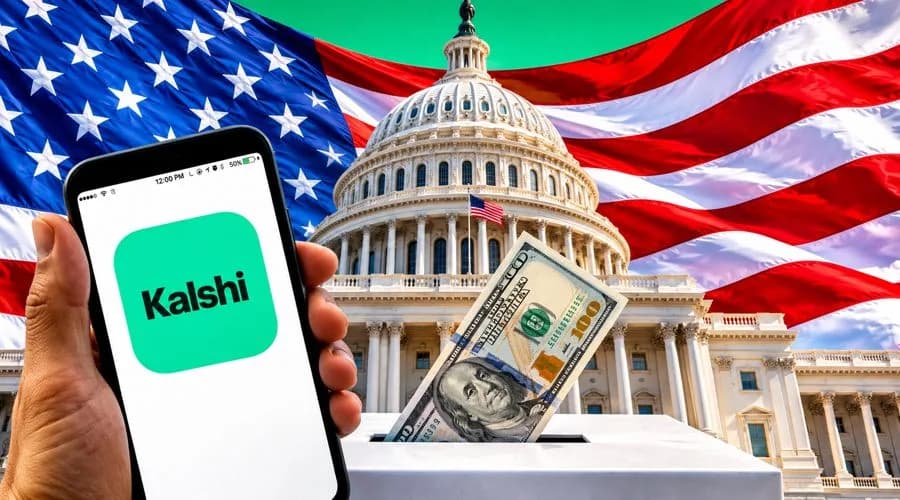
Platforms like Kalshi, Coinbase allow people to trade contracts tied to election outcomes. Their probabilities fluctuate according to the prices participants are willing to pay. However, those prices do not necessarily represent the sentiments of the American population, nor are they scientific polls.
The problem begins when a financial prediction is presented to millions of Americans as though it were an objective reflection of the will of the people.
Truth Should Not Be Determined by Whoever Risks the Most Money
Imagine a prediction platform announcing that a particular candidate has an 81% chance of winning an election.
What does that number actually mean?
It does not mean that 81% of Americans support that candidate. Nor does it mean that 81% of registered voters intend to vote for that person.
It represents a market price converted into an implied probability, influenced by participants' trades, expectations, and market conditions.
That distinction is fundamental.
When journalists, commentators, and influencers circulate these numbers without explaining their nature, they risk transforming a financial signal into an apparently unquestionable political narrative.
And when money is involved, we should ask who participates in these markets, how much capital they can deploy, and what financial incentives they might have to influence public perception.
This does not establish that Kalshi is manipulating elections. But it raises a legitimate concern deserving regulatory scrutiny.
🚨🇺🇸 Who had waking up on election morning to see Abdul El-Sayed now has an 81% chance of winning a seat in the U.S. Senate on their 2026 bingo card? According to Kalshi, El-Sayed has increased his lead over Republican Mike Rogers overnight... This, despite Rep. Haley Stevens abandoning her party to endorse Rogers, along with other Democrats. Strap in, today is going to be one hell of a ride!! Writer: Jamie https://t.co/BW8kAS0lGV
— Mario Nawfal (@MarioNawfal) November 3, 2026
Betting on a Football Game Is Not the Same as Betting on the Future of a Nation
In a sporting event, a bettor can analyze statistics, injuries, and team performance. Ordinarily, that bettor has no direct ability to change the outcome.
An election is different.
Citizens actively participate in determining the result. They can vote, donate, organize campaigns, finance advertisements, mobilize communities, and persuade other voters.
Now imagine an individual, politicians, billionaires, or organization holding a substantial financial position in an election-related contract.
That participant could have an economic incentive to influence the result through political activities, information campaigns, or voter mobilization.
Many such activities are perfectly legal when conducted within election laws. Others, including voter intimidation, vote buying, and unlawful campaign contributions, are prohibited.
The potential conflict emerges when someone can financially benefit from an election outcome while simultaneously attempting to influence the conditions that produce it.
Democracy should not become an instrument for maximizing private profits at the expense of public confidence.
When Greed Competes With Conscience
Elections involve deeply personal decisions.
Americans vote according to their faith, family values, understanding of justice, economic priorities, children's education, and hopes for their communities.
Reducing that process to a speculative financial opportunity raises a serious ethical question.
Do we want a society where decisions about government are increasingly shaped by financial incentives, or one where citizens can exercise their judgment independently?
The danger is not simply that a prediction might be wrong. Every forecast can fail.
The deeper concern is that financial interests could encourage misleading narratives, attempts to manipulate expectations, or improper pressure on participants in the electoral process.
We should not confuse a potential risk with proven wrongdoing. But neither should we wait for a scandal before examining vulnerabilities.
FlashPoint Calls on Congress and the Trump Administration to Act
From FlashPoint, and as responsible citizens we call on members of Congress, the Trump administration, and federal regulators to examine election prediction markets and establish clear safeguards.
Measures worth considering include greater transparency around substantial financial positions, stronger conflict-of-interest protections, restrictions on insider trading, and rules preventing speculative market prices from being presented as representative public-opinion polling.
Lawmakers should also examine whether individuals with direct influence over election administration should face additional restrictions on participating in these markets.
Economic freedom matters, but no industry should operate beyond the principles of democratic integrity and public accountability.
What If a Red Wave Defies the Predictions?
If tonight's election results produce a sweeping Republican victory—a Red Wave—contrary to probabilities circulated by certain prediction markets, the discrepancy will deserve serious examination.
It would not automatically prove manipulation, fraud, or corruption. Predictions can be wrong without anyone breaking the law.
But it would provide an opportunity to evaluate the accuracy of these markets, how their prices are established, and how their probabilities were communicated to the public.
An election is not a casino. A vote is not a gambling chip. And the conscience of a nation should never carry a price tag.
Congress should not need to wait to see which political party wins before opening this debate.
Because regardless of who emerges victorious, the American people's trust in democracy must be worth more than any fortune made by gambling on their future.