 8 min read
 2.8k
2.8k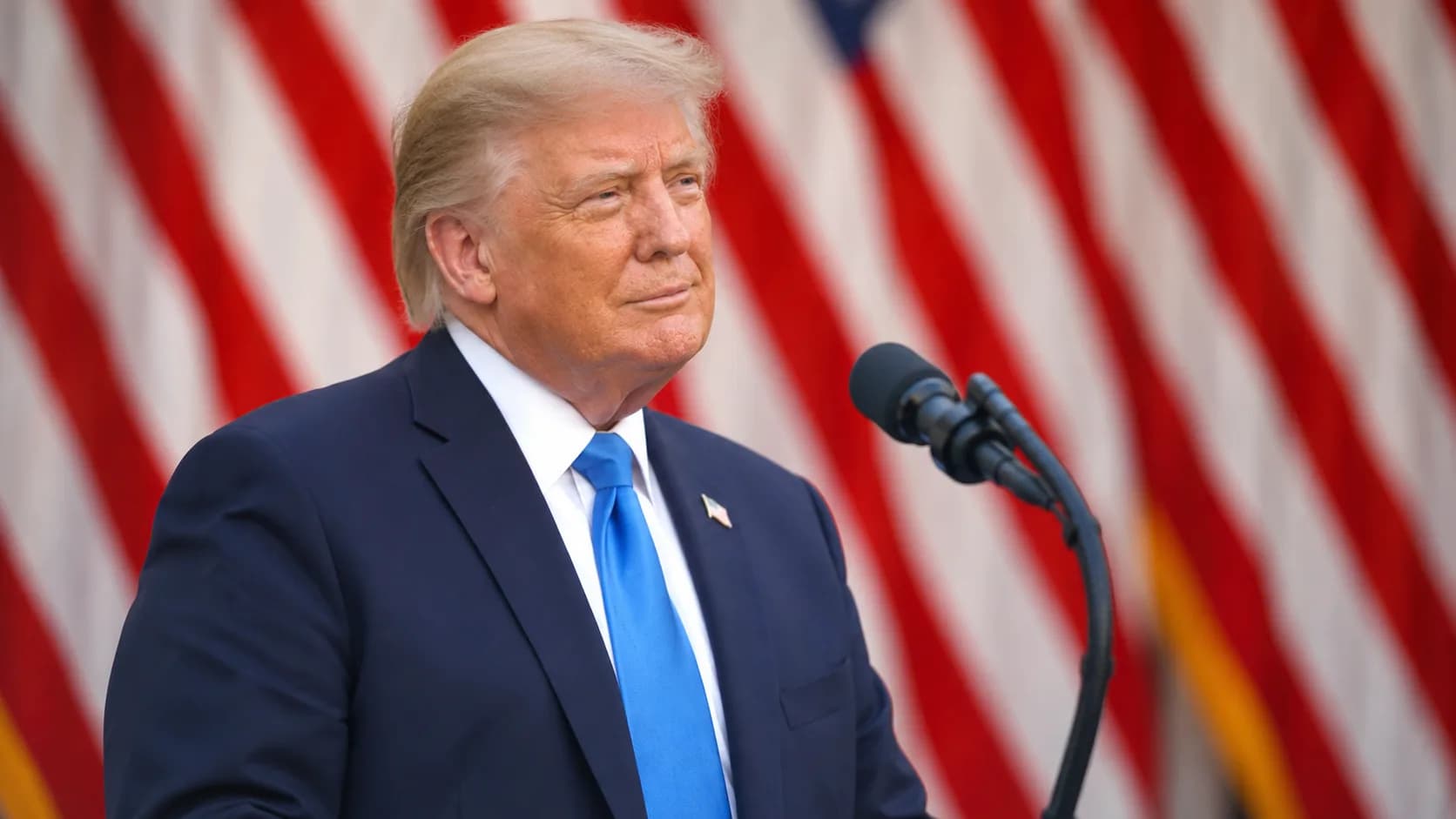
 Linkedin
 Threads
 Facebook
 X
XThere is an old political rule in Washington: midterms punish the president.
Historically, the party controlling the White House tends to lose House seats during a president’s first midterm. Fox News congressional correspondent Chad Pergram notes that the average loss has been roughly 25 seats, one reason conventional political analysis currently gives Democrats significant opportunities heading into November. President Donald Trump’s approval ratings, economic concerns and other national issues would ordinarily reinforce that historical pattern.
But 2026 has one complication that makes the historical comparison unusually difficult.
Donald Trump has rarely operated according to the conventional political playbook.
And this year, Republicans are explicitly attempting to change the structure of the midterm campaign rather than simply endure it.
Trump creates something American politics had never seen
On September 9, Republicans gathered in Dallas for what Trump called the “first ever midterm convention of any party.” The event was deliberately designed to give an off-year congressional election some of the spectacle, national attention and emotional intensity normally associated with a presidential convention.
That distinction matters.
Presidential elections receive enormous attention. Midterms usually do not. Turnout falls, presidential candidates disappear from the ballot and congressional candidates are left to create their own enthusiasm.
Trump's strategy attempts to eliminate that psychological difference.
Instead of distancing himself from difficult congressional races, Trump is trying to make himself central to them.
Republican National Committee leaders described the Dallas gathering beforehand as an effort to energize Trump voters, and several Republicans running in competitive House races publicly embraced the president during the convention rather than treating him as someone from whom they needed distance.
That represents a very different approach to the traditional midterm problem.
“Pretend that I’m on the ballot”
Trump made the strategy explicit from the stage in Dallas.
After discussing the historical difficulty presidents face during midterms, he told supporters:
“I’m asking you to pretend that I’m on the ballot.”
He later repeated the idea, asking supporters to behave as though he were personally running again in November.
The political logic is straightforward.
Trump wants to transform congressional turnout into presidential turnout.
Fox News notes that turnout was substantially higher during the presidential elections in which Trump appeared on the ballot than during recent midterms. Whether his supporters will respond the same way when his name is absent from their ballots is one of the central unanswered questions of 2026.
That is why this election cannot be understood simply by opening an old political-science textbook and assuming history will repeat itself exactly.
Trump is openly trying to change one of the variables.
Democrats entered the fall with reasons for confidence
There is also an important reality Republicans cannot simply dismiss.
Democrats entered September increasingly optimistic about their chances of gaining congressional seats. Fox News reported that Democrats were ahead on the generic congressional ballot and had expanded the number of Republican-held House districts they were targeting. Fox's own Power Rankings in early September also placed Democrats ahead in its House assessment, with a group of highly competitive districts still unresolved.
Trump's overall approval rating has also remained below 50%, while economic issues—including inflation and the cost of living—continue to rank among voters' major concerns.
Those are real political headwinds.
But the Republican argument is that those numbers do not necessarily answer the turnout question.
And recent history offers evidence for why both parties should be careful about assuming voters will behave exactly as expected.
The 2024 map revealed something unusual
Trump's 2024 victory produced several striking examples of split-ticket voting.
Trump carried Michigan, yet Democrat Elissa Slotkin won the state's Senate election.
He carried Wisconsin while Democratic Sen. Tammy Baldwin won another term.
Trump won Nevada, but Democratic Sen. Jacky Rosen was reelected.
And in Arizona, Trump won the presidential contest while Democrat Ruben Gallego captured the state's open Senate seat.
Official Federal Election Commission results confirm Trump carried each of those presidential battlegrounds.
That is an important lesson for both parties in 2026.
A voter who supports Trump does not automatically vote Republican everywhere else on the ballot. Likewise, dissatisfaction with Trump does not automatically translate into support for every Democratic congressional candidate.
Modern voters have demonstrated that they are willing to split their tickets.
That makes turnout—and the composition of that turnout—particularly important.
Republicans are making a calculated bet on Trump himself
The Dallas convention therefore looks less like an ordinary party celebration and more like an experiment.
Can Republicans reproduce some of the enthusiasm and turnout associated with a Trump presidential campaign without Trump actually being a presidential candidate?
Trump believes they can.
During his convention remarks, he argued that presidents historically struggle in midterms and said Republicans would attempt to change that pattern. He also said he intends to campaign in competitive states and hold rallies for Senate and House candidates.
The approach is unusually personal.
Rather than asking voters merely to support Republican congressional candidates, Trump is effectively attempting to make control of Congress a continuation of his own 2024 campaign.
For Republicans, that could help motivate people who normally participate primarily when Trump is running.
For Democrats, it provides its own mobilizing opportunity because voters who strongly oppose Trump may also view congressional races as another referendum on his presidency.
That is why Fox's description of the Trump factor “cutting two ways” is important.
The old playbook versus the Trump playbook
If traditional midterm history dominates, Republicans face a difficult environment.
If turnout behaves differently because Trump successfully converts the election into something resembling another presidential campaign, historical comparisons become less informative.
There are additional complications: redistricting has reduced the number of genuinely competitive House districts, both parties have consolidated large numbers of safe seats, and control of the chamber could depend on a relatively small collection of races rather than a uniform national wave.
That makes 2026 less about a single national narrative and more about whether several competing political forces collide differently than they have in previous midterms.
Trump's response is characteristically unconventional: don't accept the traditional midterm.
Try to turn it into something else.
The Dallas convention was the clearest demonstration yet of that strategy. Instead of allowing November to become an election in which the president fades into the background, Trump stepped onto a convention stage and effectively told his coalition to imagine his name printed on the ballot one more time.
Whether voters respond that way remains an open question.
But one thing has already changed: Republicans are not approaching 2026 as a conventional midterm.
They are testing whether the political rulebook itself still describes the electorate they are dealing with.