 5 min read
 34
34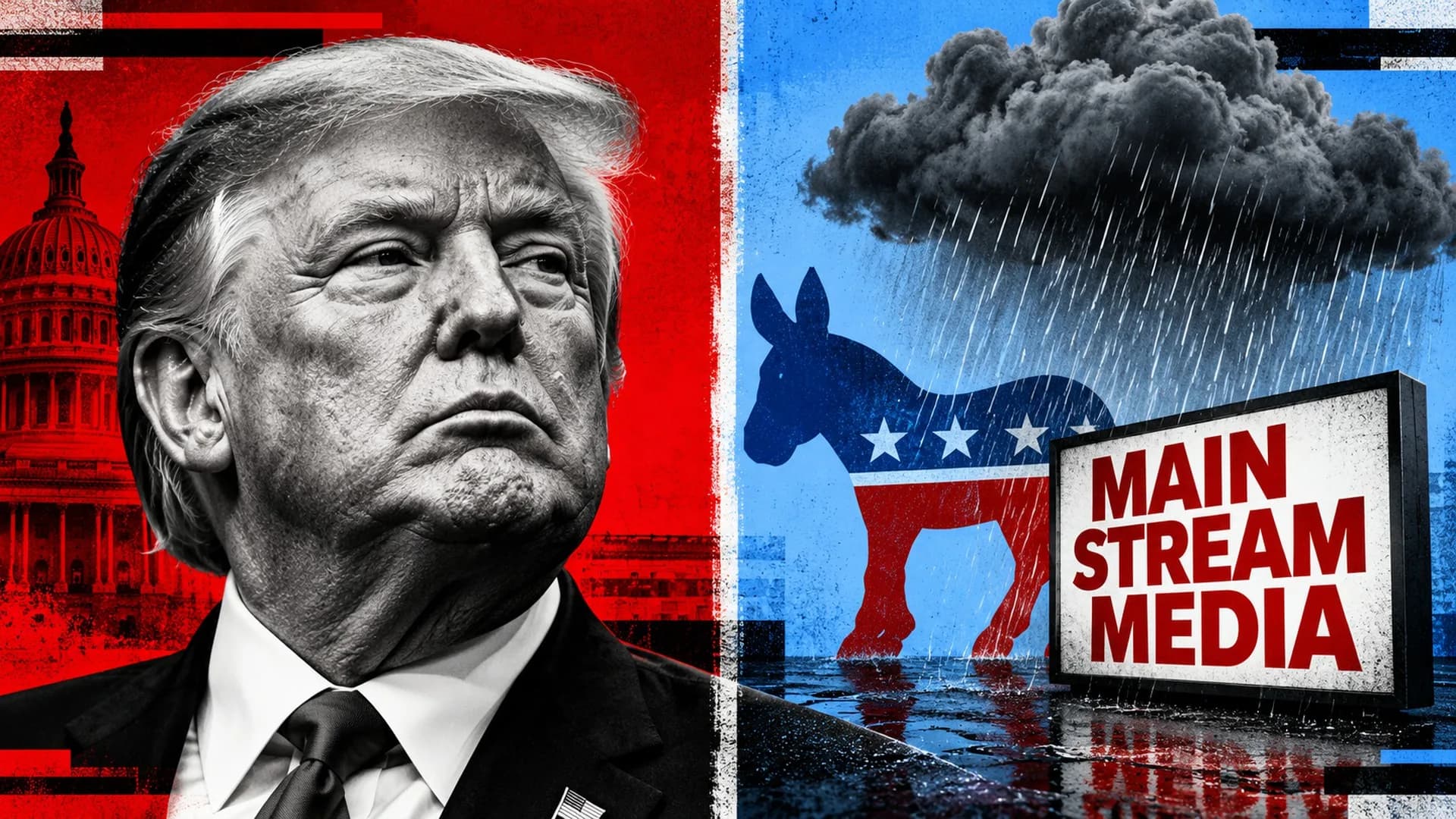
 Linkedin
 Threads
 Facebook
 X
XThere is an old principle that applies far beyond farming:
What you plant eventually produces a harvest.
For years, President Donald Trump has accused several of America's largest news organizations of presenting his presidency through an overwhelmingly negative lens.
On Friday, that conflict crossed into new territory.
Trump announced that CNN, MS NOW and Politico would no longer receive White House access, accusing the outlets of repeatedly publishing what he described as “fiction,” “lies” and “fake news.”
On Saturday, the threat became reality.
CNN White House reporter Betsy Klein, MS NOW correspondent Akayla Gardner and Politico reporter Cheyenne Haslett were denied entrance to the White House complex, with their credentials deactivated or confiscated.
Predictably, the three organizations immediately framed the decision as an attack on journalism and their First Amendment rights.
CNN said it would continue covering the administration. Politico said it would “vigorously defend” its rights. MS NOW promised to take whatever steps it considered necessary to challenge the decision. The White House Correspondents' Association likewise condemned the action.
That legal dispute is real.
But it is not the only story.
There is another story beneath it:
How did trust between a massive portion of the American public and the national press deteriorate this badly in the first place?
This did not begin Saturday morning
Trump says the decision was not triggered by one report.
It was cumulative.
His argument is that the problem is not simply aggressive journalism—which every president should expect—but what he sees as an established pattern in which negative assumptions about his presidency routinely become the starting point of coverage.
Whether every accusation Trump makes against individual stories is justified must be examined story by story.
But the broader distrust he is speaking to is unquestionably real.
The Reuters Institute's 2026 Digital News Report found that only 25% of Americans say they trust news overall, the lowest level the institute has recorded for the United States since it began tracking the measure.
Among politically right-leaning Americans, trust falls to only 15%.
That is an extraordinary number.
When 85% of Americans on one side of the political spectrum do not generally trust the news, the industry has a credibility problem that cannot simply be explained away by saying audiences are partisan.
Journalism also has to ask what it has done to lose them.
Millions of Americans see a country that often looks different from the news feed
Consider the numbers from the last presidential election.
Trump received 77,302,580 votes, representing 49.8% of all presidential votes cast in 2024, according to the Federal Election Commission.
That does not mean 49.8% of every American currently supports every Trump decision.
It does mean tens of millions of Americans deliberately chose him after years of intense national scrutiny.
They are not an obscure political subculture.
They are business owners, parents, pastors, workers, veterans, retirees, entrepreneurs, Hispanics, Black Americans, rural families, suburban families and churchgoers.
Yet many of those voters open national news feeds and feel that the America they know is almost absent.
They encounter Trump stories dominated by conflict, controversy, investigations, warnings, opposition and criticism.
That experience does not automatically prove that every individual story is unfair.
But it helps explain why so many readers have begun asking a larger question:
How can a political movement supported by more than 77 million voters so often appear in national coverage primarily through the perspective of the people who oppose it?
That is a legitimate media question.
You do not need a secret meeting to produce similar coverage
People sometimes describe this phenomenon by saying the media are all “reading from the same script.”
That language can easily imply coordination for which there is no evidence.
There is a simpler explanation.
Large newsrooms can independently share similar professional cultures, editorial assumptions, sources, definitions of importance and political frames.
Nobody needs to call everyone at 8 a.m. and give them instructions.
If editors at multiple institutions view the same presidency through similar assumptions, they can independently produce stories that feel remarkably similar.
That is editorial convergence, not necessarily conspiracy.
And to a reader scrolling through dozens of headlines, the distinction may hardly be noticeable.
The result can feel synchronized even when the newsrooms never coordinated with one another.
Google can amplify that perception without being the cause of it
Try something simple:
Search “Trump” in Google News.
Depending on the day's events, readers may encounter a large concentration of reporting from established national organizations.
That does not demonstrate that Google has decided to attack Trump.
Google publicly says its ranking systems consider numerous factors, including relevance, usability, freshness and the expertise and reputation of sources. Prominent sites linking to or referencing another source can also contribute to perceptions of reliability.
That matters because America's largest news organizations have enormous digital footprints.
They publish constantly.
They are linked by thousands of websites.
Their stories are cited repeatedly.
Their domains have existed for decades.
Consequently, when several major organizations independently adopt similar framing, search results can magnify that framing simply because those publishers possess exceptional online reach.
The issue therefore does not require blaming Google.
The deeper question is what happens when the publishers most capable of dominating the information ecosystem increasingly sound alike.
A search page can then give readers the impression that virtually everybody sees an issue one way—even when the American public itself is much more divided.
Americans themselves say something is wrong
Recent Pew Research provides an unusually revealing picture.
A large majority of Americans believe major institutions sometimes keep important news from reaching the public.
79% said news organizations do this at least sometimes.
Republicans were especially likely to say news organizations and journalists frequently keep important stories from the public.
That does not prove those suspicions are correct in every case.
It does demonstrate the depth of the credibility crisis.
Pew also found something else worth considering: Americans overwhelmingly support press freedom as a principle, yet 53% said preventing inaccurate reporting can be more important than unrestricted press freedom when forced to choose between the two.
Those findings reveal a public holding two ideas simultaneously:
A free press is important.
And accuracy matters.
That tension sits directly underneath the current White House fight.
The outlets now say they are the victims
CNN, MS NOW and Politico now argue that they are being punished for reporting critically on the government.
That argument deserves to be reported accurately.
Criticism of government cannot itself justify censorship; Pew found that only 10% of Americans believe government should be able to force removal of a news report simply because it criticizes the government.
But that legal and constitutional question does not erase another fact:
Press access and public credibility are different things.
A court may eventually determine whether the White House has exceeded constitutional limits.
No court can order the American public to trust CNN.
No judge can compel viewers to believe Politico.
And no First Amendment lawsuit can restore credibility that audiences believe has been squandered.
That has to be earned through journalism.
The timing makes the confrontation even more significant
The next regularly scheduled federal general election is November 3, 2026. Every House seat and approximately one-third of Senate seats will be contested.
We are therefore entering the final weeks of a consequential midterm campaign.
That guarantees dramatically increased coverage of Trump, Republicans, Democrats, candidates, scandals, speeches, polls and policy disputes.
Some Trump supporters worry that organizations already regarded by conservatives as deeply hostile will become even more aggressive as Election Day approaches.
That prediction cannot be established in advance.
But the distrust surrounding those organizations is measurable.
And media outlets should understand that every disputed headline published during the next several weeks will be viewed through that existing credibility gap.
The stakes are therefore significant not only for politicians.
They are significant for journalism itself.
Perhaps White House access should represent more of America
There is another dimension worth discussing.
The national media environment is far broader today than ABC, NBC, CBS, CNN and the traditional newspapers that once dominated presidential coverage.
Millions of Americans now receive news through streaming networks, independent publishers, podcasts, regional organizations and faith-based media.
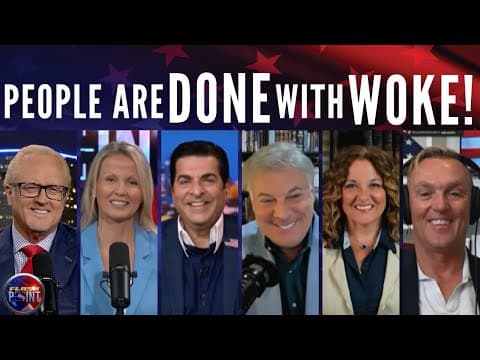
FlashPoint Television Network, for example, openly describes its programming as combining current events with a Biblical perspective and produces news, political and cultural content aimed substantially at Christian audiences.
Whether any individual outlet receives White House credentials should depend on established access, security and press procedures.
But the broader question is legitimate:
Does the White House press ecosystem adequately represent the diversity of audiences consuming American news today?
Expanding legitimate access to regional, independent and faith-oriented organizations would produce a wider variety of questions and perspectives than relying primarily on the traditional national press corps.
That is not about replacing journalism with praise.
It is about broadening who gets to practice journalism inside America's most important political institution.
Christians should especially care about the difference between criticism and truth
There is an important responsibility here for Christian readers.
Truth does not become true because it helps Trump.
And it does not become false because CNN reports it.
The biblical standard is more demanding than partisan loyalty.
Test the claim.
Examine the evidence.
Look at the original speech.
Read the government document.
Compare what was actually said with the headline describing it.
Christians should be among the hardest audiences in America to manipulate precisely because truth is supposed to matter more than tribe.
That also means media organizations should not expect Christian conservatives to accept their authority simply because they carry prestigious names.
Trust must be earned.
The harvest did not appear overnight
CNN, MS NOW and Politico are now describing Trump's action as an assault on their ability to report.
Trump is describing the same action as accountability for years of what he considers deliberately false and hostile journalism.
Those positions will continue colliding.
But perhaps the most important story is not Saturday's confiscated press badges.
It is the collapse of trust that preceded them.
No institution loses credibility in a single afternoon.
It happens headline by headline.
Correction by correction.
Omission by omission.
Exaggeration by exaggeration.
And eventually audiences begin seeking information elsewhere.
The Reuters Institute finding that only 15% of right-leaning Americans trust news overall should concern every serious newsroom in the country, regardless of its opinion of Donald Trump.
Because once an audience believes you have already decided what the story means before reporting it, restoring that trust becomes extraordinarily difficult.
There is another old saying that captures this moment better than almost anything else:
Every tree is known by its fruit.
The White House will ultimately be judged by the consequences of its decisions.
The courts may judge the legality of restricting these outlets.
And CNN, MS NOW, Politico—and every other news organization—will be judged by something government cannot control:
Whether Americans still believe them.