 8 min read
 2.4k
2.4k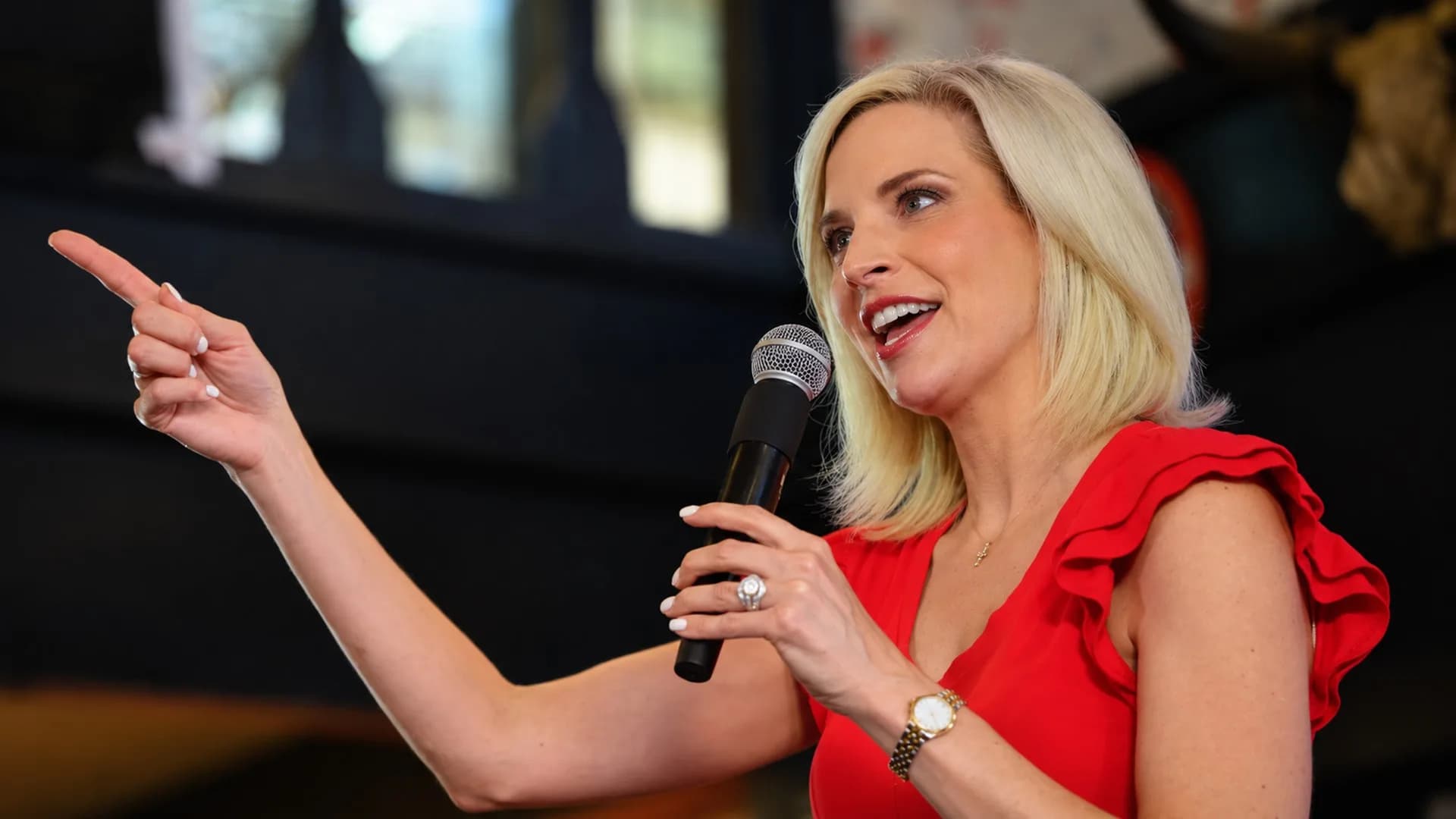
 Linkedin
 Threads
 Facebook
 X
XIowa was not supposed to be one of the most dramatic Senate battlegrounds of 2026.
Donald Trump carried the state comfortably in 2024.
Republicans control most of Iowa’s statewide political machinery.
No Democrat has won a U.S. Senate election there since 2008.
And yet, less than two months before the midterm elections, the race for Iowa’s open U.S. Senate seat has become competitive enough that one of the nation’s leading nonpartisan election analysts now categorizes it as a Toss Up.
The Republican trying to keep the seat is Rep. Ashley Hinson, a former television journalist who currently represents Iowa’s 2nd Congressional District.
Her Democratic opponent is state Rep. Josh Turek, a two-time Paralympic gold medalist who has attempted to build his campaign around a working-class, populist message.
They are competing for the seat being vacated by Republican Sen. Joni Ernst.
And the latest independent polling shows something Republicans will welcome:
Hinson is ahead.
Ashley Hinson Leads the Latest Independent Iowa Poll
An Emerson College Polling/Nexstar survey released in early September found:
Ashley Hinson: 50%
Josh Turek: 45%
Hinson had improved from 48% in Emerson’s August survey, while Turek remained at 45%.
That five-point advantage is significant in a race that has spent much of the year looking considerably closer.
But there is another poll Republicans cannot simply ignore.
An internal survey conducted for Turek’s campaign found the Democrat ahead 46% to 42%, with Libertarian Thomas Laehn receiving 6% and another 6% undecided. Because that survey was commissioned by Turek’s own campaign, it should be interpreted differently from an independent poll such as Emerson’s. Still, it is another indication that neither party is treating Iowa as settled.
That is why Iowa has suddenly become so important.
The question is no longer whether Republicans have a path to victory.
They clearly do.
The question is whether the electorate that gave Trump such a decisive victory two years ago looks similar enough in November 2026 to keep this Senate seat in Republican hands.
Trump’s 2024 Iowa Victory Is Impossible to Ignore
The numbers from 2024 tell the story.
Trump received 927,019 votes in Iowa, or 55.73% of all ballots cast for president.
Kamala Harris received approximately 707,000.
Trump therefore carried Iowa by roughly 13 percentage points and won all six of the state’s electoral votes. More than 1.6 million Iowans participated in the election.
This was not a narrow swing-state victory.
Iowa gave Trump a commanding statewide mandate.
That creates an obvious political question in 2026:
Where do those Trump voters go when Trump himself is not on the ballot?
For Hinson, that question could become one of the defining factors in the race.
Hinson has Trump's endorsement, and AP reported that she entered the general election with backing from Trump and Republican leadership.
But presidential turnout and midterm turnout are different political environments.
A candidate cannot automatically assume that every voter who turned out enthusiastically for Trump will participate with the same intensity two years later.
That is why Republican mobilization matters so much in Iowa.
The Republican Opportunity Is Already Visible
Hinson does not need to invent a Republican electorate in Iowa.
It already exists.
Trump proved that in 2024.
The challenge is converting enough of that electorate into a Senate vote in an election where he is not personally running.
Hinson also enters the closing stretch with institutional Republican support.
The Iowa Farm Bureau endorsed her Senate campaign in September, and her campaign has organized coalitions including Iowa sheriffs while emphasizing agriculture, taxes, border security and cost-of-living issues.
But this cannot simply be a replay of 2024.
Some of the political conditions have changed.
Emerson's September survey found Trump's job approval in Iowa at 44% approval and 52% disapproval.
That means Hinson is attempting to benefit from the Republican coalition Trump built in Iowa without assuming that every voter currently evaluates Washington exactly as they did on Election Day 2024.
Independents Could Decide Everything
Perhaps the most revealing number in the Emerson poll is not the overall five-point Hinson advantage.
It is what is happening among independents.
Turek led Hinson among independent voters 46% to 44% in the September survey.
That is nearly even.
And it represents an improvement for Republicans compared with Emerson's August poll, when Turek led independents 49% to 38%.
That movement helps explain why Hinson's overall position improved.
Iowa has a long tradition of voters who do not simply vote a straight party ticket.
Emerson found evidence of exactly that this year.
Approximately 6% of voters in its September survey said they supported Republican Hinson for Senate while also supporting Democrat Rob Sand for governor.
That should tell both parties something.
There are voters in Iowa making candidate-by-candidate decisions.
They cannot be assumed.
Why Turek Has Made This Race Competitive
Democrats believe Turek gives them an unusual candidate for Iowa.
He represents territory where Trump has previously performed well, and election analysts have specifically pointed to his history of winning in Trump-carried areas as one reason the race became more competitive.
Turek has tried to brand himself as a “prairie populist,” emphasizing health care, corruption, the cost of living and economic pressure on working families.
That message is aimed not only at Democrats.
It is aimed at independents and Republicans willing to split their ticket.
And the strategy has been effective enough that Cook Political Report moved Iowa from Likely Republican, then Lean Republican, and eventually to Toss Up in August.
That progression should eliminate any assumption that Iowa is automatically decided because Trump dominated the state in 2024.
But Hinson Has Something Democrats Cannot Erase: Iowa’s Recent Voting History
Democrats may have made Iowa competitive.
They have not changed its recent electoral history.
Trump has now carried Iowa three consecutive times.
Republicans have controlled both of the state's U.S. Senate seats for years.
And no Democrat has won an Iowa Senate election since Tom Harkin's reelection in 2008.
Trump's 2024 result is especially important because it demonstrates how large the Republican coalition can become when motivated.
His 55.73% share was not achieved only through Iowa's rural counties.
Official results show Trump accumulated hundreds of thousands of votes across the state's broader suburban counties as well.
That coalition remains politically relevant even though the candidate at the top of the ballot has changed.
For Hinson, the electoral math therefore begins with a simple reality:
There were substantially more Trump voters than Harris voters in Iowa in 2024.
The unresolved question is how many of those voters participate in 2026 and whether they remain with the Republican Senate candidate.
The Economy Is Driving Iowa’s Election
The biggest issue in Emerson's September polling was not immigration.
It was not partisan politics.
It was the economy.
Thirty-eight percent of Iowa voters identified the economy as their most important issue, followed by health care at 19%.
Housing, education, immigration and concerns about democracy followed farther behind.
That puts both candidates under pressure to speak directly about household finances.
Iowa families are particularly sensitive to issues involving agriculture, energy, fertilizer, tariffs and commodity prices because those policies affect both producers and consumers.
Cook Political Report has cited concerns over tariffs and higher fuel and fertilizer prices as part of the political environment making Iowa more competitive for Democrats this year.
Hinson therefore faces a campaign requiring more than party identification.
She has to convince voters that Republican economic policies will improve their circumstances.
Turek has to convince those same voters that changing parties would produce better results.
That argument will likely dominate the final weeks.
Iowa Has Become a Test of the Trump Coalition Without Trump on the Ballot
This may be the larger national story.
Trump demonstrated that Republicans can win Iowa decisively.
In 2024, he did.
Two years later, Ashley Hinson is testing whether another Republican can inherit enough of that coalition during a midterm election.
The latest independent poll provides evidence that she can compete from a strong position.
Hinson leads 50% to 45%.
But Democratic polling points in the opposite direction, independents remain closely divided, and nonpartisan analysts now consider the race competitive enough to call it a Toss Up.
That combination makes Iowa one of the clearest examples of why turnout can change the complexion of a midterm election.
The state did not suddenly stop being a place Trump carried by 13 points.
Those voters are still there.
But a presidential victory does not automatically transfer to another candidate two years later.
Republicans will be watching whether Hinson can retain enough of Trump's 2024 coalition.
Democrats will be watching whether Turek can continue peeling away independents and voters willing to split their tickets.
And because control of the Senate could depend on only a handful of races, Iowa has moved from what once looked like Republican territory into one of the states both parties can least afford to ignore.
Trump proved that a Republican can build a commanding statewide majority in Iowa.
Ashley Hinson's challenge is showing how much of that coalition still exists when Trump himself is no longer the name at the top of the ballot.