
 6 min read
 1.3k
1.3k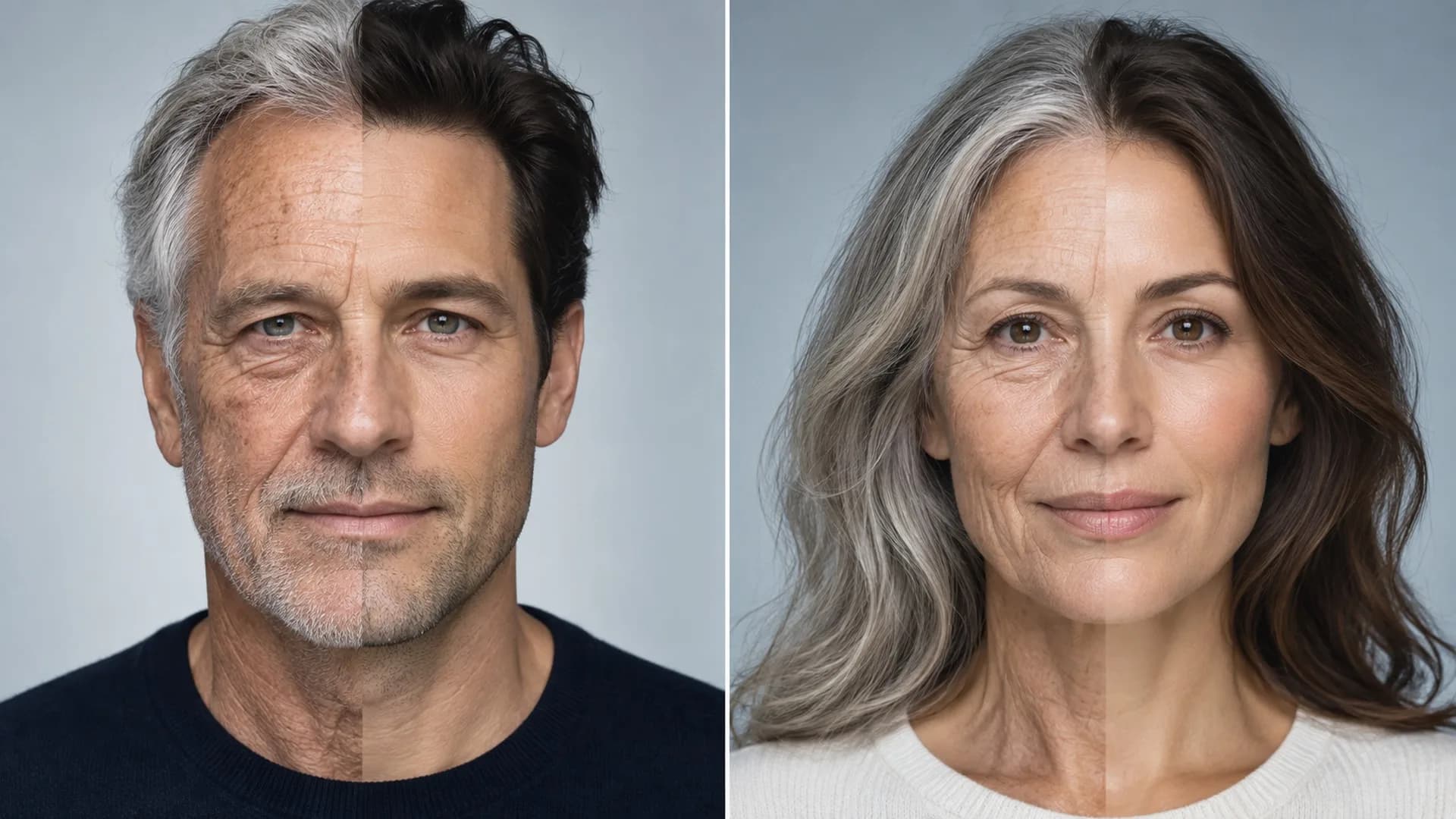
 Linkedin
 Threads
 Facebook
 X
XAt 62, aging becomes less theoretical.
At 25, you hear about longevity and think, Interesting.
At 62, you notice that the years suddenly move differently. You still feel like yourself, but your body occasionally sends little reminders that it has been keeping count even when you haven't.
So when I read that the FDA had allowed the first human clinical trial of a technology designed to partially “reprogram” aging cells, my first reaction wasn't fear.
It was:
Wait. Are we seriously getting close to this?
Not immortality.
Not downloading our minds into robots.
Something much more believable—and therefore much more interesting.
Scientists are attempting to persuade old or damaged human cells to function more like younger ones.
And yes, the first human patient has already been treated.
First, calm down: nobody has cured aging
The headlines can easily run ahead of the science.
Life Biosciences received FDA clearance to begin human testing of an experimental therapy called ER-100. The treatment is being studied initially in people suffering from two serious optic-nerve diseases: open-angle glaucoma and non-arteritic anterior ischemic optic neuropathy, or NAION.
This is a Phase 1 trial.
That means the first big question is not:
Can this make Grandpa 35 again?
It is:
Is this safe enough to use in human beings?
The study plans to enroll up to 18 participants and monitor them for years, looking closely for side effects while also examining whether visual function improves.
So no, your doctor will not be offering you “age reversal injections” next Tuesday.
But something historically significant has happened.
For the first time, a therapy built around partial epigenetic reprogramming has crossed from laboratory animals into actual human testing.
That doorway has now opened.
So what exactly are they “reprogramming”?
Here is the easiest way I understand it.
Your DNA is something like the enormous instruction manual inside your cells.
The epigenome is more like the system of bookmarks, switches and instructions telling the cell which pages of that manual to read.
As we age, those instructions can become disorganized.
Genes that should be active can become quieter. Others can switch on at the wrong time. Cells gradually lose some of the youthful patterns that once helped them function efficiently.
ER-100 attempts to reset part of that system.
It uses a modified viral delivery system to carry instructions for three proteins known as OCT4, SOX2 and KLF4—OSK for short. Researchers hope these factors can restore more youthful gene-expression patterns while allowing the cell to remain the same type of cell.
In other words:
They aren't trying to replace the book.
They're trying to correct some of the bookmarks.
And according to the clinical-trial description, ER-100 is not designed to alter the patient's underlying genes.
That is where this starts becoming fascinating.
Is this medicine—or are we trying to play God?
That's probably the question many Christians will eventually ask.
And I think it's a fair question.
Human beings have limits.
Mortality is part of the human condition.
At what point does healing disease become an obsession with escaping something every generation before us had to accept?
But then I ask myself another question.
Where exactly would we draw that line?
We take antibiotics.
We replace hips.
We implant pacemakers.
We correct eyesight.
We use insulin.
We remove tumors.
We lower cholesterol.
We perform heart bypasses.
Some of us swallow vitamins every morning because we'd like our bodies to work better a little longer.
Millions of people color gray hair.
Women—and plenty of men—use Botox.
People inject hyaluronic acid because they want their face to retain some of the volume it had when they were younger.
We use sunscreen partly because we don't want our skin aging prematurely.
Nobody looks at a grandmother receiving a cataract operation and says:
“Stop playing God. Accept blurry vision.”
So perhaps the moral question isn't simply whether we intervene in aging.
Human medicine has been intervening in the consequences of aging for centuries.
The harder question may be:
What are we trying to preserve—and why?
If I could live another 20 years, would I?
Twenty healthy years?
Absolutely, that sounds pretty attractive.
Another 20 years with my mind working, my body moving, watching children grow, meeting grandchildren, building things, traveling, learning, loving people?
Why wouldn't that sound beautiful?
But then someone says:
What about 50 extra years?
Now the conversation changes.
Suppose 80 someday feels like today's 50.
Suppose age-related disease becomes something physicians can delay dramatically.
Suppose people remain productive into their 90s.
Would retirement change?
Would marriage change?
Would people have children later?
Would wealth inequality become worse because wealthy people could purchase therapies first?
Would Social Security survive?
Would younger generations struggle to move into positions occupied for decades longer by older adults?
Longevity science is not merely a medical question.
If it ever succeeds on a large scale, it becomes an economic, spiritual, cultural and philosophical question.
And an unbelievably interesting one.
But would living longer actually make us happier?
This may be the question underneath everything else.
Imagine science gives you another 30 years.
What exactly are you planning to do with them?
Spend another decade complaining?
Keep postponing the vacation?
Stay angry at your brother?
Work yourself to death so that someday you can begin enjoying life—except now “someday” keeps moving further away?
Maybe the greatest danger of longevity technology isn't that we live too long.
Maybe it is that people convince themselves they cannot really begin living until science solves aging.
That would be tragic.
There is something slightly hypocritical about condemning all anti-aging science
Sometimes people hear “reversing aging” and immediately describe it as unnatural or sinister.
I understand the instinct.
There absolutely should be boundaries.
Gene therapies deserve extreme scrutiny.
Cancer risk matters.
Unexpected immune reactions matter.
Long-term consequences matter.
This particular trial follows participants for up to five years precisely because researchers need to understand delayed risks, not merely what happens the week after treatment.
But declaring the entire idea evil before we know what it can accomplish seems premature.
Especially while many of us are already doing everything reasonably available to preserve health and youth.
You cannot spend your morning taking supplements, your afternoon receiving a cosmetic treatment and your evening complaining that scientists trying to restore damaged cells are violating nature without at least acknowledging the contradiction.
There is a difference between vanity and healing.
There is also a difference between extending lifespan and extending healthspan.
I am far more interested in the second.
Give someone 20 additional years unable to walk, remember their children or live independently, and you haven't necessarily given them 20 desirable years.
But imagine delaying blindness.
Imagine keeping neurons functioning.
Imagine repairing tissues that currently deteriorate simply because the body has become old.
That is not a dystopian idea.
That's medicine doing what medicine has always tried to do—reduce suffering.
Why the eyes?
Interestingly, researchers aren't starting by attempting to rejuvenate the entire human body.
They are beginning with the eye.
ER-100 is injected into one eye and is intended to affect retinal cells involved in vision loss. Participants then receive doxycycline for a limited period to activate the OSK system.
That makes the eye a relatively contained environment in which researchers can study safety and potential effects.
And there is another reason for excitement: previous laboratory work with partial reprogramming showed restoration of visual function in animal models, which helped support moving the research toward humans.
But animal success is not human success.
Plenty of treatments look extraordinary in mice and disappear somewhere between the laboratory and the pharmacy.
Which is precisely why this trial matters.
We have reached the point where the question can finally begin being tested in humans rather than debated entirely in theory.
Would you actually want to be younger?
Here's another strange question.
If someone offered to make you biologically younger, what age would you choose?
Twenty-five?
Thirty-five?
Forty-five?
At 52, I'm not convinced I would want to become 25 again.
I would happily borrow the knees.
Maybe the metabolism.
Definitely the recovery time.
But would I surrender everything I've learned between 25 and 52?
No chance.
Youth has tremendous advantages.
So does age.
Confidence becomes different.
Priorities change.
You understand people better.
Certain things that once terrified you become almost funny.
You realize how many arguments weren't worth winning.
So perhaps the dream isn't becoming young again.
Maybe the dream is simpler:
Keep the wisdom. Repair the machinery.
Now that is an idea I can get excited about.
And what if this eventually means living to 120?
Nobody knows.
The current ER-100 trial cannot answer whether humans can live 20, 30 or 50 additional years.
It is testing a very specific experimental therapy in very specific eye diseases, with safety as the central objective.
Any claim that this technology has already been shown to extend human lifespan would be fiction.
But today's narrow experiment could eventually teach scientists something much larger about biological aging.
That is how science often works.
The first airplane didn't fly across the Atlantic.
The first computer didn't fit in your pocket.
The first gene therapies did not rejuvenate entire organs.
You start somewhere.
Then you discover what is possible.
Maybe the future will be stranger—and better—than we think
I actually like moments like this.
Human beings are curious.
We experiment.
We discover.
We fail repeatedly and occasionally find something extraordinary.
Some developments will frighten us.
Others will force ethical debates we haven't even imagined yet.
And some will save lives in ways our grandparents would have considered miraculous.
We should be cautious.
We should ask hard questions.
We should insist on safety.
But we don't have to greet every breakthrough with fear.
There is something deeply human about wanting another healthy morning.
Another Christmas.
Another conversation with your children.
Another project.
Another sunrise.
Another chance to say something you should have said years earlier.
Wanting more life is not automatically the same thing as refusing to accept mortality.
Sometimes it simply means we appreciate being alive.
But here is where I would leave it
Perhaps science eventually gives us another 20 healthy years.
Maybe 50.
Maybe it doesn't.
Maybe epigenetic reprogramming becomes one of the great medical revolutions of this century.
Or maybe researchers discover limitations that nobody can yet see.
Either way, don't make one mistake:
Do not postpone happiness until the future arrives.
Don't tell yourself:
I'll enjoy my life when they fix aging.
Or when you lose 20 pounds.
Or when you have another million dollars.
Or when the kids grow up.
Or when you retire.
Or when your face looks younger.
Or when your body feels like it did at 30.
If science someday gives us more healthy years, wonderful.
I hope we celebrate them.
But those years should be an addition to a life already appreciated—not compensation for decades we forgot to enjoy.
The future may bring therapies that allow us to repair things humans once believed were irreversible.
That's exciting.
But today, while scientists work on tomorrow, we still have something far more valuable:
this day.
Use it.
Love people now.
Build something now.
Laugh now.
Take care of your body now.
Be grateful now.
And if one day medicine hands us another 20 good years?
We'll know exactly what to do with them.