 8 min read
 2.6k
2.6k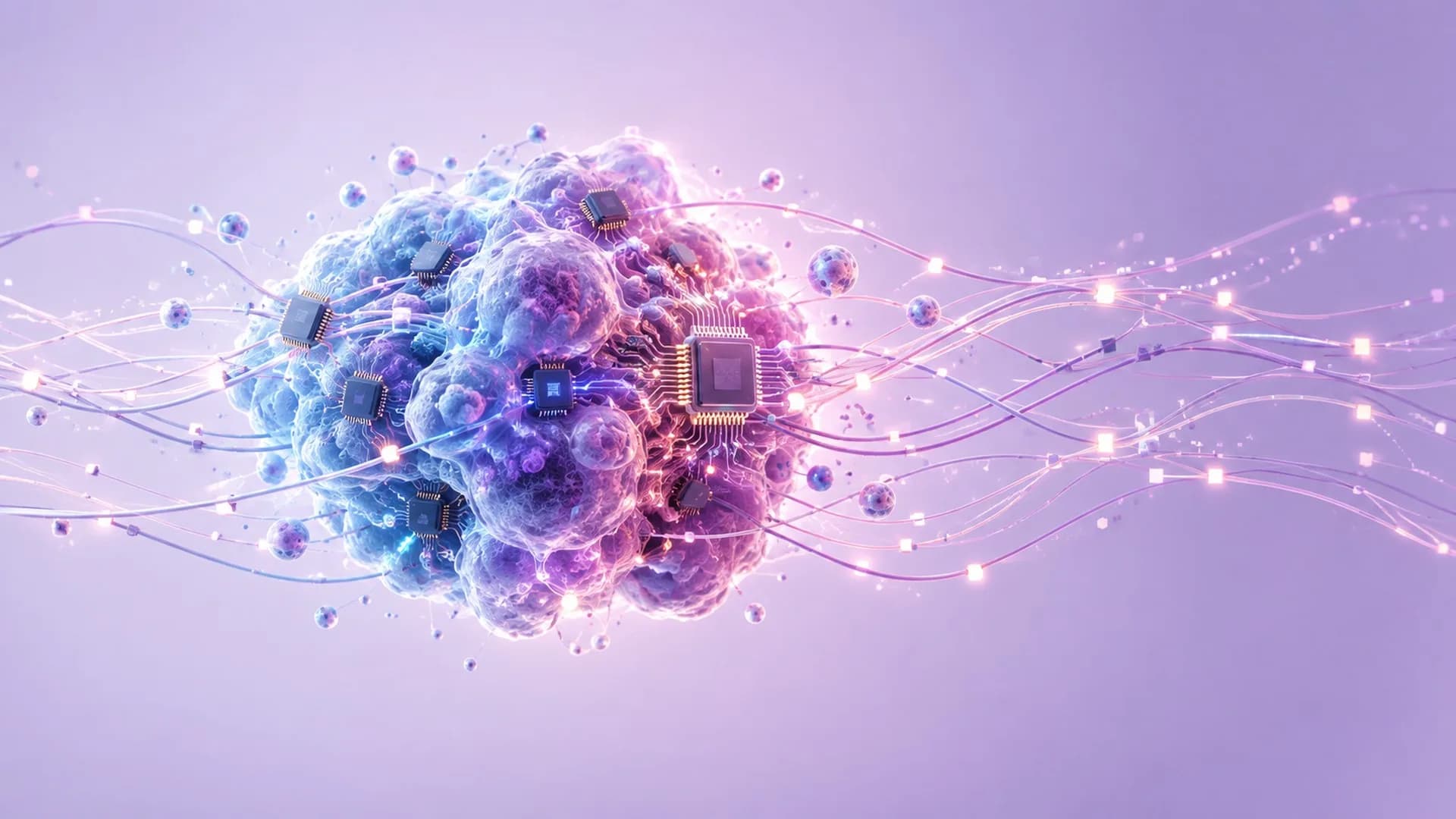
 Linkedin
 Threads
 Facebook
 X
XFor most people, artificial intelligence still means ChatGPT.
An email written faster.
A photograph generated from a sentence.
A computer answering a question that previously required ten Google searches.
Useful? Absolutely.
Life-changing?
Sometimes.
But then you read what researchers are actually doing with AI inside laboratories and hospitals, and suddenly the conversation becomes much bigger.
UC San Diego recently assembled nine examples of breakthroughs made possible or accelerated by artificial intelligence across medicine, science, public safety and the arts. Some are experimental. Some may take years to reach ordinary patients. None should be confused with a guaranteed cure.
But taken together, they force us to reconsider what this technology actually represents.
Because we're no longer discussing whether AI can write a poem.
We're talking about whether it can help scientists understand why Alzheimer's develops.
Whether it can identify a new tuberculosis drug.
Whether it can reduce mistakes when planning radiation treatment for breast-cancer patients.
Whether it can see biological patterns the human eye simply cannot detect.
And at that point I find myself asking a very uncomfortable question:
What would have happened if we had decided five years ago that AI was simply too dangerous to develop?
AI helped scientists see something hidden inside Alzheimer's disease
One of the most remarkable examples involves a protein called PHGDH.
Researchers had already observed that elevated PHGDH was associated with Alzheimer's disease.
But association isn't causation.
The mystery was why.
UC San Diego researchers used AI to model the protein's three-dimensional structure with enough precision to uncover a previously unknown secondary function. The protein appeared able to interfere with the mechanisms controlling which genes brain cells switch on and off.
Researchers then connected that function to Alzheimer's progression and identified a compound, NCT-503, that could interfere with it.
In mouse models, treatment significantly reduced disease progression and improved memory and anxiety-related performance.
Stop there for a moment.
This is not an Alzheimer's cure.
It hasn't been proven to cure human patients.
Researchers themselves acknowledge important limitations, including the imperfections of existing animal models.
But AI helped scientists identify a biological mechanism they previously could not see.
And that mechanism points toward a possible treatment pathway.
How do we put a value on that?
If that line of research eventually gives doctors another weapon against Alzheimer's, the real result isn't an impressive computer model.
It's somebody remembering his wife's name.
It's somebody recognizing her children longer.
It's a family potentially getting more good years before dementia takes them away.
That is what is hiding behind the phrase “AI breakthrough.”
Tuberculosis: finding what human eyes miss
Another UC San Diego team applied deep learning to tuberculosis.
Researchers developed a system called MycoBCP, combining an imaging technique for observing how antibiotics affect bacteria with machine learning capable of detecting tiny cellular changes that would be extraordinarily difficult for researchers to evaluate manually.
The objective is straightforward: accelerate the search for drugs that can defeat tuberculosis, including increasingly troublesome drug-resistant strains.
Again, AI isn't walking into the laboratory wearing a white coat and replacing the scientist.
It is extending the scientist's ability to see.
That's an important distinction.
The human asks the question.
The human designs the experiment.
The human determines whether the answer makes biological sense.
But the machine can analyze enormous quantities of information and identify patterns at a speed and scale that would otherwise consume enormous amounts of human time.
That partnership may ultimately prove far more important than the popular fear that machines are simply coming to replace everybody.
Breast cancer: what if weeks become minutes?
Cancer produces a brutal relationship with time.
Once somebody hears “you have cancer,” every day waiting for another test feels longer.
UC San Diego researchers have developed AI tools that can examine routine biopsy images and predict characteristics of some breast and ovarian tumors that normally require additional genomic testing.
One such system, DeepHRD, was developed to identify homologous recombination deficiency—a tumor characteristic that can influence which treatments are likely to work.
Traditional genomic testing can take weeks.
The researchers' AI approach is designed to provide information directly from routine biopsy images much sooner.
Other UC San Diego teams have used deep learning to improve breast-cancer radiation planning, including reducing unwanted radiation exposure to critical organs such as the heart and lungs.
That doesn't sound like science fiction.
It sounds like better medicine.
And perhaps that is exactly why the AI discussion needs to mature.
We keep debating AI as though nothing good is happening
Much of America's AI conversation understandably focuses on danger.
Job displacement.
Deepfakes.
Privacy.
Bias.
Cyberattacks.
Children becoming dependent on machines.
Weapons.
Surveillance.
Those concerns are real.
Ignoring them would be irresponsible.
But there is another danger nobody talks about nearly enough:
What happens if fear causes us to unnecessarily delay technologies that can also reduce human suffering?
There are two ways government can make mistakes.
One is allowing something dangerous to develop without sufficient safeguards.
The other is becoming so terrified of hypothetical danger that beneficial innovation becomes unnecessarily difficult.
Both mistakes can hurt people.
And medicine provides perhaps the clearest illustration of that balance.
Regulation and prohibition are not the same thing
This distinction gets lost constantly.
Saying AI should be regulated is not the same as saying AI development should be broadly stopped.
Medicine already demonstrates how the difference can work.
The FDA and European Medicines Agency published joint principles this year for responsible AI use throughout drug development.
Their framework emphasizes human-centered design, appropriate risk assessment, data governance, transparency, performance testing and lifecycle monitoring.
Notice what that means.
They aren't saying:
“AI is powerful, therefore don't use it.”
They're saying:
“AI is powerful, therefore build systems for using it responsibly.”
That is a very different philosophy.
The FDA is simultaneously examining ways artificial intelligence can help address practical challenges in generic-drug development and regulatory assessment.
So we already have evidence that regulation and accelerated scientific development do not necessarily have to be enemies.
The difficult work is determining which risks require boundaries without treating every innovative use as though it carries the same danger.
This is where the Trump AI debate deserves more precision
President Trump's administration has explicitly pursued an AI policy centered on accelerating American innovation and removing what it considers unnecessary barriers to development.
The administration's 2025 AI framework said its objective was to strengthen U.S. leadership in AI for economic competitiveness, national security and what the White House described as “human flourishing.”
Its subsequent AI initiatives have continued emphasizing rapid adoption and American technological leadership.
But an important detail sometimes disappears from the political argument.
The administration's own national-security AI directive simultaneously calls for advanced systems to be robust, controllable and accountable, with humans remaining responsible for consequential decisions.
In other words, the real policy debate does not have to be:
Trump wants AI. Critics want safety.
Reality is more complicated.
The meaningful debate is about how much restriction, what kinds of safeguards, who enforces them, and which applications carry enough risk to justify stronger controls.
That's where adults should be having the conversation.
Imagine we had simply banned it
Let's conduct a thought experiment.
Imagine Congress had responded to the first frightening AI headlines by passing sweeping restrictions that made advanced AI research extraordinarily difficult for American universities.
Would Alzheimer's researchers have obtained the same protein-modeling capabilities?
Would tuberculosis researchers have developed the same pattern-recognition tools?
Would cancer teams have been able to experiment with deep learning as freely?
Maybe.
Maybe researchers would have found another path.
We cannot honestly prove the counterfactual.
But it's exactly the kind of question policymakers should consider before adopting broad restrictions.
Every regulation has potential benefits.
Every regulation can also have costs.
And sometimes those costs are invisible because they take the form of something that never gets invented.
That is one of the hardest things about regulating emerging technology.
You can easily count a visible accident.
You cannot easily count the treatment that was delayed five years because a laboratory could no longer access the computational tools it needed.
We're beginning to see AI everywhere medicine has information overload
Modern medicine generates astonishing quantities of information.
MRI scans.
Pathology slides.
Genomic sequencing.
Protein structures.
Electronic medical records.
Drug-response data.
Cell images.
Continuous monitoring from wearable devices.
No human physician can examine every possible relationship across all of that information simultaneously.
AI can.
That doesn't make it omniscient.
It can make mistakes.
Bad training data produce bad results.
Models can identify correlations that mean nothing.
Algorithms can behave differently when used on populations unlike the ones they were trained on.
That is exactly why medicine requires validation.
But when used properly, AI can become something extraordinary:
a microscope for patterns rather than cells.
UC San Diego researchers are already using AI to reconstruct activity inside heart-muscle cells from measurements taken outside those cells, potentially allowing researchers to study cardiac behavior in less invasive ways.
Other researchers are using AI with retinal imaging to help physicians diagnose disease faster, select treatments and develop new therapies.
Once you understand that, “Should we stop AI?” begins sounding like the wrong question.
What if AI doesn't cure diseases itself—but gets us there faster?
This may ultimately be the more realistic vision.
AI may not suddenly announce:
“I cured Alzheimer's.”
Instead, it may compress thousands of hours of scientific analysis into hundreds.
It may rank ten thousand molecules and tell researchers which 40 deserve laboratory testing.
It may notice a relationship in biological data that no researcher thought to investigate.
It may identify the patient population most likely to respond to a drug.
It may help doctors detect disease months earlier.
Each advantage seems incremental.
Combine enough of them and the timeline of medical progress can change dramatically.
That matters.
If a treatment normally takes fifteen years to discover and AI eventually helps researchers find it in ten, that isn't merely “five years of efficiency.”
For somebody diagnosed during those missing five years, it can mean everything.
A cure tomorrow begins with research today
This is where we should be hopeful without becoming irresponsible.
None of UC San Diego's nine examples proves that AI is about to eliminate Alzheimer's, cancer or tuberculosis.
Scientific development does not work that way.
Animal studies fail in humans.
Promising molecules fail clinical trials.
Diagnostic systems sometimes perform worse outside laboratory conditions.
Drug development is filled with disappointment.
But look at the direction.
AI is already helping researchers identify disease mechanisms.
It is already assisting cancer diagnostics.
It is already improving radiation planning.
It is already helping scientists search for antibiotics.
It is already helping cardiologists and ophthalmologists analyze biological signals.
It is already being used to predict wildfire behavior and help emergency officials respond faster.
Those aren't promises from a futuristic movie.
They are projects underway now.
And that should make us optimistic.
Maybe somebody alive today benefits because we didn't stop
Think about a child born this year.
She may live into the 2100s.
What diseases will medicine consider routine by then that terrify families today?
Perhaps Alzheimer's eventually becomes manageable.
Perhaps many cancers become chronic conditions rather than death sentences.
Perhaps personalized drugs can be designed around an individual's biology.
Perhaps physicians detect illness years before symptoms appear.
We don't know.
But nearly every major medical advance sounded improbable before it became ordinary.
There was once no antibiotic.
No MRI.
No organ transplant.
No mRNA vaccine.
No robotic surgery.
No human genome map.
We have a strange habit of regarding yesterday's miracle as today's routine.
AI may eventually join that list.
We should be careful—but being careful is different from being afraid
There are legitimate AI applications that deserve strict oversight.
A medical model deciding treatment needs very different scrutiny from an algorithm recommending music.
An autonomous weapon deserves different safeguards from a weather prediction system.
A system accessing confidential medical records deserves far stronger privacy protections than a public chatbot.
That is precisely why broad arguments such as “regulate AI” or “don't regulate AI” are often inadequate.
AI is not one thing.
It is thousands of applications with radically different levels of risk.
And the strongest regulatory frameworks may ultimately be those capable of distinguishing among them.
That's also why the FDA's risk-based approach is worth understanding: medical AI can be encouraged while still demanding evidence, documentation, testing and patient protection.
That is very different from pretending innovation carries no danger.
And it is equally different from assuming danger requires prohibition.
The question policymakers should keep asking
Every time Washington debates another AI rule, perhaps somebody should place photographs on the conference table.
A patient with Alzheimer's.
A woman beginning breast-cancer treatment.
A child with drug-resistant tuberculosis.
A firefighter approaching a wildfire.
And then ask:
Will this rule make those people safer?
Good.
Then perhaps it belongs.
But ask a second question:
Could this rule also prevent researchers from developing something those people desperately need?
That question belongs there too.
Because innovation policy ultimately isn't about computers.
It is about people.
We may be watching the opening chapters
The most exciting part about UC San Diego's report isn't any one breakthrough.
It's that there are already nine examples from one university.
Multiply that across America's universities, hospitals, biotechnology companies, pharmaceutical laboratories and startups.
Then multiply it across the world.
We are probably still extraordinarily early.
And maybe that's why the loudest conversations around AI shouldn't only be about what we're afraid it might become.
We should also pay attention to what it is already helping human beings accomplish.
The answer doesn't require abandoning regulation.
It doesn't require blind faith in technology companies.
It doesn't require pretending every AI system is safe.
It requires enough confidence to hold two thoughts at once:
Powerful technologies need boundaries.
And:
Powerful technologies can do extraordinary good.
Somewhere inside today's laboratory data may be a treatment that saves somebody twenty years from now.
Somewhere inside millions of medical images may be a pattern no physician has noticed.
Somewhere inside the structure of a protein may be the clue researchers have searched for their entire careers.
And increasingly, AI is helping them look.
The great mistake would be believing our only options are uncontrolled AI or no AI at all.
The challenge—and perhaps one of the defining responsibilities of this generation—is creating enough guardrails to protect human beings without building a wall around human discovery.
Because the next breakthrough isn't really about artificial intelligence.
It's about the person who gets to go home because we found it.