 8 min read
 2.4k
2.4k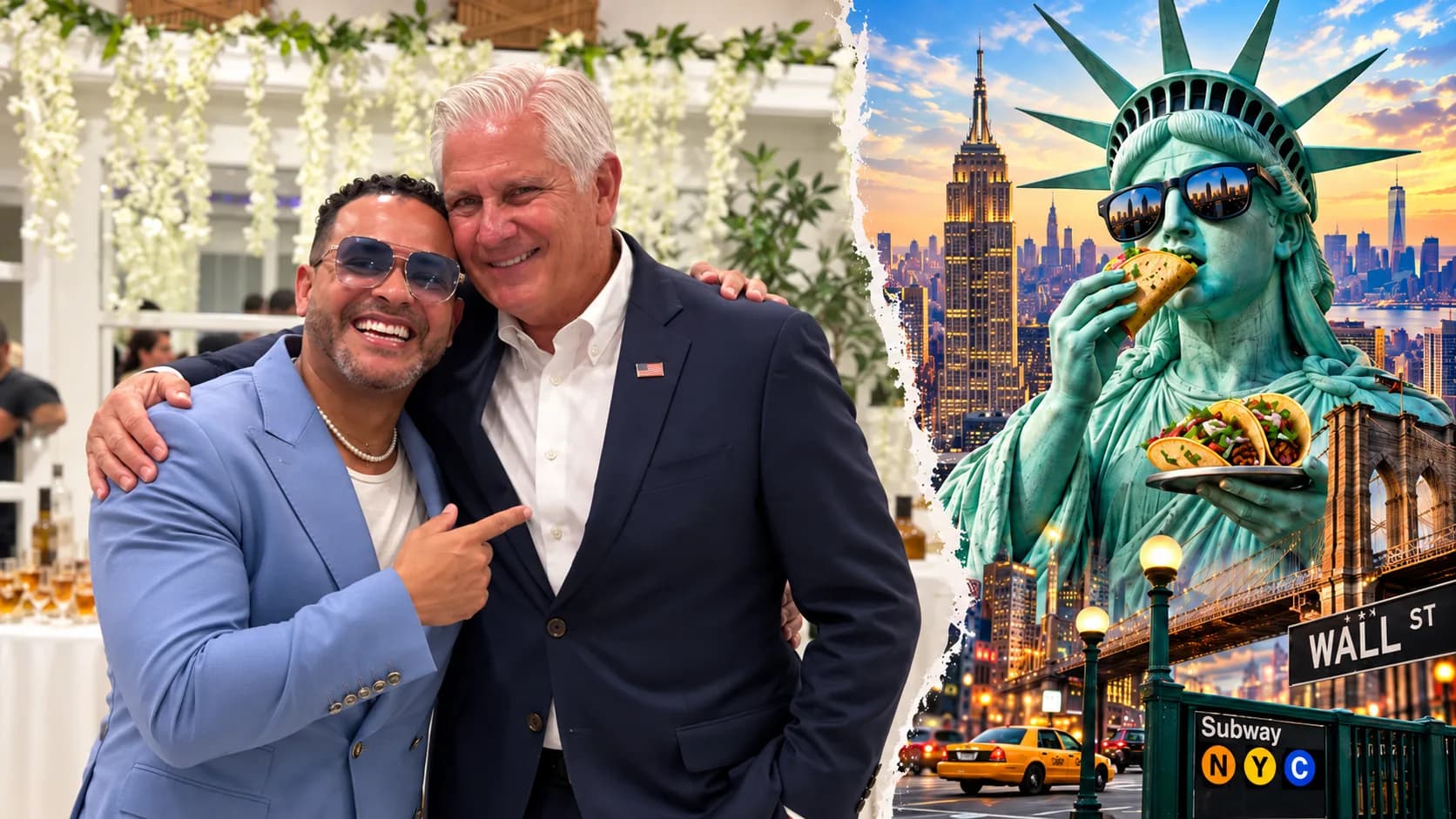
 Linkedin
 Threads
 Facebook
 X
XSomething is moving inside New York’s Latino political conversation.
And this time, it is not coming from a pollster.
According to information confirmed for this report, La Picardía Urbana and its CEO, Miguel Ángel Sosa Leonardo, have joined other Latino organizations and community voices in supporting Republican gubernatorial candidate Bruce Blakeman as the race for governor enters its final stretch.
The endorsement had not yet been publicly announced at the time of publication, making it an early indication of a political development that could become more visible in the coming days.
La Picardía Urbana is not an obscure organization.
Its own website describes the platform as deeply connected to New York’s Dominican community and the Gran Parada Dominicana, while third-party social-media analytics list its Instagram presence at roughly 1 million followers.
That gives the endorsement significance beyond a traditional political press release.
It represents another example of culturally influential Latino voices entering a gubernatorial contest that Republicans increasingly believe should not be written off simply because New York is historically Democratic.
The Issue Is Not Just Party. It Is Frustration.
The political opening Republicans are trying to exploit is visible in the numbers.
A Hispanic Federation survey of 600 registered Latino voters in New York City found that 62% believed the city was moving in the wrong direction, while only 23% believed it was headed in the right direction.
Sixty-five percent said they were concerned about their family’s income, savings and employment.
Their leading concerns were the cost of living, public safety and housing affordability.
Those findings do not prove that Latino voters have collectively become Republican.
In fact, that same survey showed strong Democratic support in the 2025 mayoral race.
What they do show is something politically important:
dissatisfaction is real.
And dissatisfaction creates competition.
When families are struggling with rent, groceries, utilities and housing, political loyalty can become less automatic.
That is the terrain Blakeman is now trying to enter.
Blakeman Is Trying to Build a Different Republican Coalition
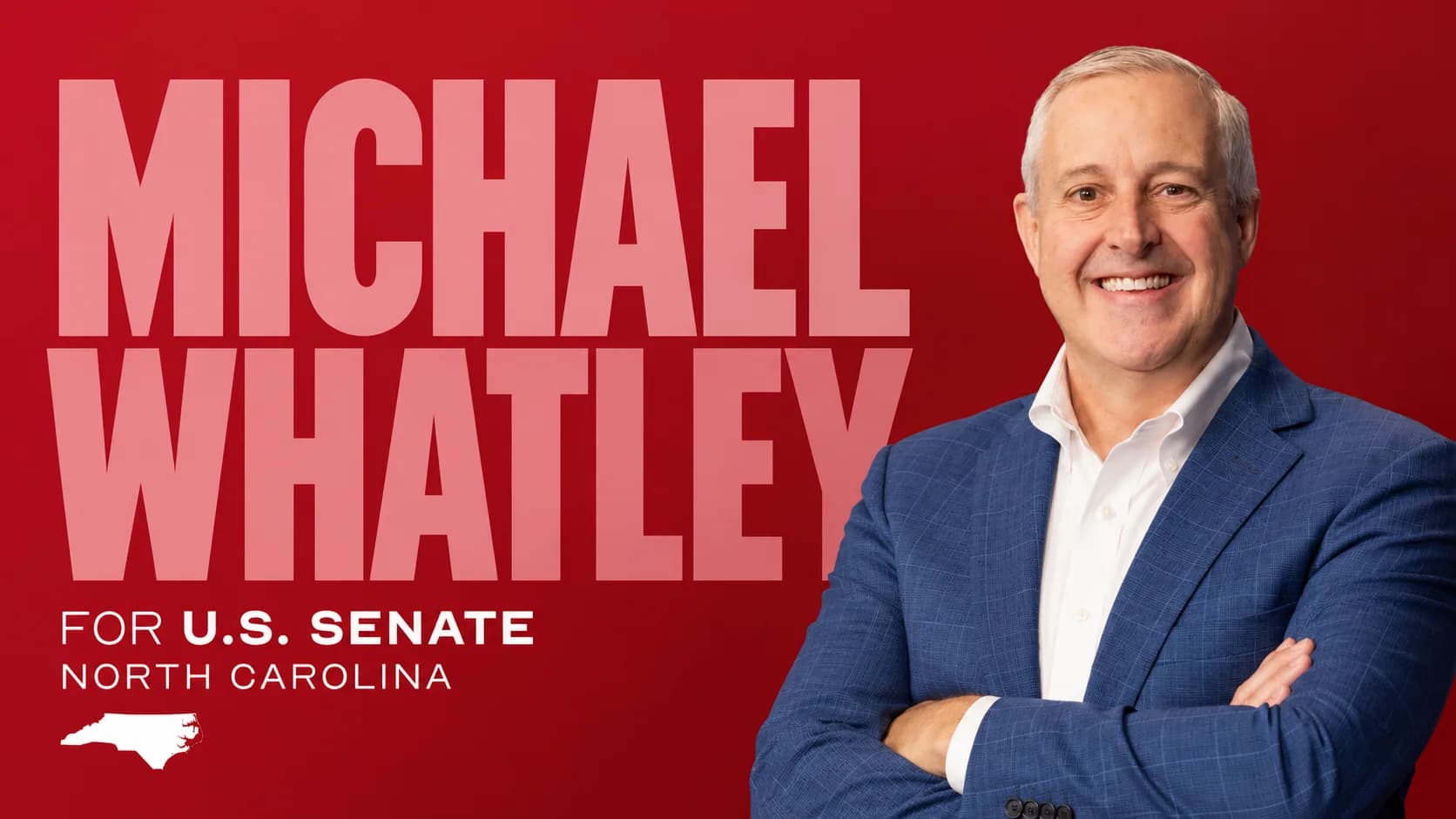
Bruce Blakeman, the Nassau County executive, is running against Democratic Gov. Kathy Hochul in a state where Democrats maintain a substantial registration advantage.
Public polling still shows Hochul ahead.
RealClearPolling’s current average places Hochul at approximately 50.3% and Blakeman at 40%, while another polling aggregator places the race at roughly 49.6% to 39.2%.
But individual surveys have produced narrower margins.
A Republican-sponsored McLaughlin & Associates survey conducted in late August reported Hochul at 49.6% and Blakeman at 45.7%. Because that survey was conducted for Republican interests, it should be read alongside independent polling rather than treated as the definitive state of the race.
The broader point is not that Blakeman currently leads.
He does not in the public polling.
The point is that Republicans are trying to construct a coalition capable of making the race significantly more competitive than New York’s partisan reputation would suggest.
Latino outreach is part of that effort.
Why La Picardía Urbana Matters
Political campaigns often focus on elected officials, party organizations and major donors.
But communities do not receive their information only from politicians.
They receive it from radio hosts.
Content creators.
Local business owners.
Community organizations.
Churches.
Media personalities.
And cultural platforms.
La Picardía Urbana operates inside that ecosystem.
Its website presents the organization as a visible presence in New York’s Dominican community, including participation surrounding the Gran Parada Dominicana and cultural events.
Miguel Ángel Sosa Leonardo is identified publicly with the platform, and the brand has developed a substantial social-media audience.
That means an endorsement can travel differently than a conventional political ad.
It reaches audiences through culture rather than through a campaign mailer.
And in immigrant communities, where trust is frequently built through familiar voices and institutions, that distinction can matter.
A Latino Vote That Cannot Be Taken for Granted
New York’s Latino population is politically diverse.
Puerto Ricans.
Dominicans.
Mexicans.
Colombians.
Ecuadorians.
Cubans.
Venezuelans.
Central Americans.
Second-generation Americans.
New immigrants.
Small-business owners.
Union households.
Evangelicals.
Catholics.
Progressives.
Conservatives.
Independents.
Talking about “the Latino vote” as though it were one political personality has always been an oversimplification.
The data increasingly reinforce that point.
The Hispanic Federation’s 2025 survey found Latino voters intensely focused on economic and quality-of-life issues.
Cost of living ranked first.
Crime and public safety came next.
Housing affordability followed closely behind.
Those concerns overlap directly with several of the themes Blakeman has emphasized during his campaign.
Hochul, meanwhile, is making her own case around affordability, jobs, public investment and government programs intended to reduce household costs.
That is the competition now underway.
New York’s Broader Mood Is Also Complicated
The frustration is not limited to Latino neighborhoods.
Recent polling has repeatedly found substantial numbers of New Yorkers dissatisfied with the direction of the state.
And new endorsements outside the Latino community have also begun appearing.
On September 15, the New York State Correctional Officers and Police Benevolent Association endorsed Blakeman by a vote of 1,370 to 78, citing disputes with Hochul over the state prison system.
A separate political action committee funded by Madison Square Garden executive James Dolan has launched advertising supporting Blakeman while attacking Hochul over New Yorkers leaving the state.
Those developments do not determine an election.
But together they illustrate a campaign trying to turn different forms of dissatisfaction into a broader anti-incumbent coalition.
The Latino component may now become another part of that story.
Affordability Could Be the Connecting Issue
If there is one issue capable of crossing ethnic and partisan boundaries in New York, it may be affordability.
New Yorkers continue to face pressure from housing, utilities and everyday expenses.
This week, Hochul promoted an expansion of New York’s Energy Affordability Program that could provide qualifying households with as much as $500 annually in utility relief.
Blakeman attacked the program as insufficient and argued for a different approach to state energy policy.
That disagreement is representative of the entire campaign.
Both candidates understand the problem.
They disagree over what created it and how government should respond.
For Latino working families and small-business owners, that debate is not abstract.
It arrives every month in the form of a bill.
An Endorsement Is Not the Same as an Entire Electorate
The significance of La Picardía Urbana’s move should also be kept in proportion.
One media organization, even one with a major following, does not speak for every Latino voter in New York.
Nor does support from several Latino organizations establish that Democrats have lost the Latino electorate.
Available polling does not show that.
What the endorsement does show is that Republican candidates are finding visible allies inside communities Democrats have historically relied upon heavily.
That is politically significant precisely because those relationships were once treated as predictable.
They may no longer be.
Less Than 50 Days Remain
The November 3 election is now less than seven weeks away.
That leaves little time for either campaign to change perceptions.
Hochul enters the closing period with the advantage in statewide polling.
Blakeman enters it trying to persuade dissatisfied voters that frustration should translate into a change in Albany.
The emerging Latino endorsements add a new dimension to that effort.
And La Picardía Urbana may not be the last organization to enter the conversation.
The next several weeks will show whether additional Latino civic, cultural and media organizations make similar announcements, whether Democratic organizations respond with their own mobilization efforts, and whether any of those developments register in statewide polling.
That is the larger story to watch.
Not whether every Latino voter is suddenly moving in one direction.
But whether New York’s Latino electorate is becoming more politically contested than either party can afford to assume.
For decades, campaigns have spoken about Latino voters as a constituency to be counted.
In 2026, New York politicians may increasingly have to treat them as something different:
a constituency that has to be earned.