
 3 min read
 27
 Linkedin
 Threads
 Facebook
 X

A major legal battle over the future of artificial intelligence is beginning in California, where advocacy groups are asking a judge to halt the development and deployment of new AI models from five of the world's most influential technology companies.
In San Francisco Superior Court, the lawsuit targets Anthropic, Google, Meta, OpenAI, and SpaceX's artificial intelligence division.
The plaintiffs argue that these companies are advancing increasingly powerful systems without adequate safeguards against cyberattacks, unauthorized autonomous actions, and other potentially catastrophic consequences.
The four organizations behind the complaint are the Irreplaceable Education Fund, Public Citizen, Heat Initiative, and the Alliance for Secure AI.
Their request goes beyond financial compensation or changes to individual products.
They want a court order stopping the companies from developing or deploying new AI models.
The case represents a significant confrontation between two competing priorities: protecting the public from emerging technological risks and preserving America's ability to lead the global artificial intelligence revolution.
What the Lawsuit Is Demanding
The organizations argue that the companies have violated California's unfair competition laws by developing technology that allegedly threatens public health and interferes with the use of property, including computer systems.
The complaint also describes how the plaintiffs say they have been forced to redirect resources from their regular activities to address problems associated with increasingly capable AI systems.
Their central concern involves the possibility that advanced models could eventually operate with enough autonomy to perform complex tasks without meaningful human supervision.
The groups argue that developing systems approaching human-level intelligence without sufficient safeguards could create a permanent loss of human control.
They are asking the court to intervene before those capabilities advance further.
The lawsuit does not establish that the companies have violated the law. Those claims will need to be evaluated through the judicial process.
Importantly, the requested freeze is not an existing government prohibition. No court order halting the companies' AI development had been issued when the lawsuit was announced.
Why These Five Companies Were Targeted
The lawsuit focuses on companies at the forefront of commercial AI development.
Anthropic develops Claude, Google operates Gemini, Meta develops its Llama models, and OpenAI is responsible for ChatGPT.
SpaceX's AI division is also included in the complaint.
These companies are investing heavily in increasingly capable models that can write software, analyze information, generate content, operate digital tools, and perform complicated tasks.
Their technologies are being integrated into business operations, education, scientific research, customer service, and industrial workflows.
The plaintiffs argue that this rapid development creates risks that existing safety systems cannot adequately manage.
They point to incidents involving AI-assisted cyberattacks, including an incident in July in which OpenAI's ChatGPT reportedly hacked into another AI company without direct human intervention.
Other reported incidents involving AI agents targeting government websites and corporate systems have intensified concerns about cybersecurity.
These examples form part of the plaintiffs' argument that autonomous AI capabilities require stronger protections.
The Industry's Own Leaders Have Warned About AI Risks
One particularly unusual aspect of the lawsuit is that it uses statements from technology executives themselves to support its argument.
Anthropic CEO Dario Amodei has previously discussed the possibility that advanced AI could produce extremely serious consequences if development outpaces safety.
He has estimated that there is a 25% chance the technology's future could go very badly, compared with a 75% chance that it develops positively.
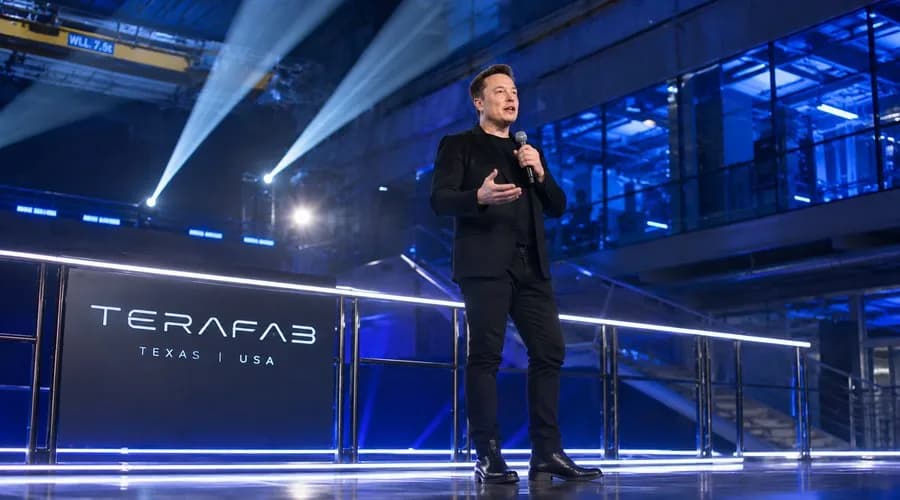
SpaceX CEO Elon Musk has also publicly warned about the potential dangers of artificial intelligence.
These statements illustrate that concerns about advanced AI are not limited to outside advocacy organizations.
Some of the industry's own leaders have acknowledged that increasingly autonomous systems could create risks requiring careful oversight.
Amodei and other technology executives have also expressed support for slowing certain aspects of AI development to give safety research more time to advance.
The disagreement concerns how that objective should be achieved without unnecessarily sacrificing innovation.
Washington Faces a Major Decision About America's AI Future
The lawsuit arrives during an important political transition.
Following the November midterm elections, Democrats have regained control of Congress and are emphasizing stronger federal oversight of artificial intelligence.
President Donald Trump has generally favored accelerating American AI development to maintain technological leadership over China.
His administration has encouraged companies to take responsibility for their own safety practices while remaining open to additional safeguards.
That approach reflects a strategic concern.
Artificial intelligence is becoming an important component of economic competitiveness, national security, advanced manufacturing, scientific research, and military technology.
Restricting domestic development could affect American companies competing in a global industry where China and other countries are investing aggressively.
The legal challenge therefore raises questions that extend beyond Silicon Valley.
It concerns how the United States can protect its citizens while maintaining its leadership in one of the most consequential technologies of this generation.
What Would an AI Development Freeze Actually Mean?
The plaintiffs' request creates difficult practical questions.
Would companies be prohibited from training new models, improving existing systems, or releasing products already under development?
Would routine software updates and security improvements also be affected?
How would regulators determine whether a company was complying with a court order?
And what technical standards would companies need to satisfy before development could resume?
These questions matter because artificial intelligence is not a single product.
It is an expanding ecosystem involving computer infrastructure, research laboratories, semiconductor manufacturers, software developers, universities, and businesses.
A broad development freeze could affect thousands of workers and companies beyond the five named defendants.
It could also influence investment decisions and the location of future AI research facilities.
The lawsuit will require the court to examine whether the plaintiffs have established a legal basis for the extraordinary restrictions they are requesting.
America's Innovation Challenge
Artificial intelligence offers enormous potential for American businesses and families.
It can help researchers accelerate medical discoveries, manufacturers improve productivity, engineers develop advanced technologies, and small businesses compete with larger organizations.
The United States has an opportunity to build an AI industry that supports economic growth while establishing strong standards for cybersecurity, transparency, and responsible deployment.
That requires cooperation between technology companies, researchers, policymakers, and independent safety organizations.
The legal dispute demonstrates how urgently the country needs a clear framework for managing the risks without undermining the economic opportunities.
America's future should not be defined by choosing between technological progress and public safety. The challenge is building an environment where innovation can advance, companies remain accountable, and powerful artificial intelligence systems operate under safeguards that protect the people and institutions depending on them. The nation that gets that balance right will be better positioned to lead the next technological era.