 3 min read
 0
0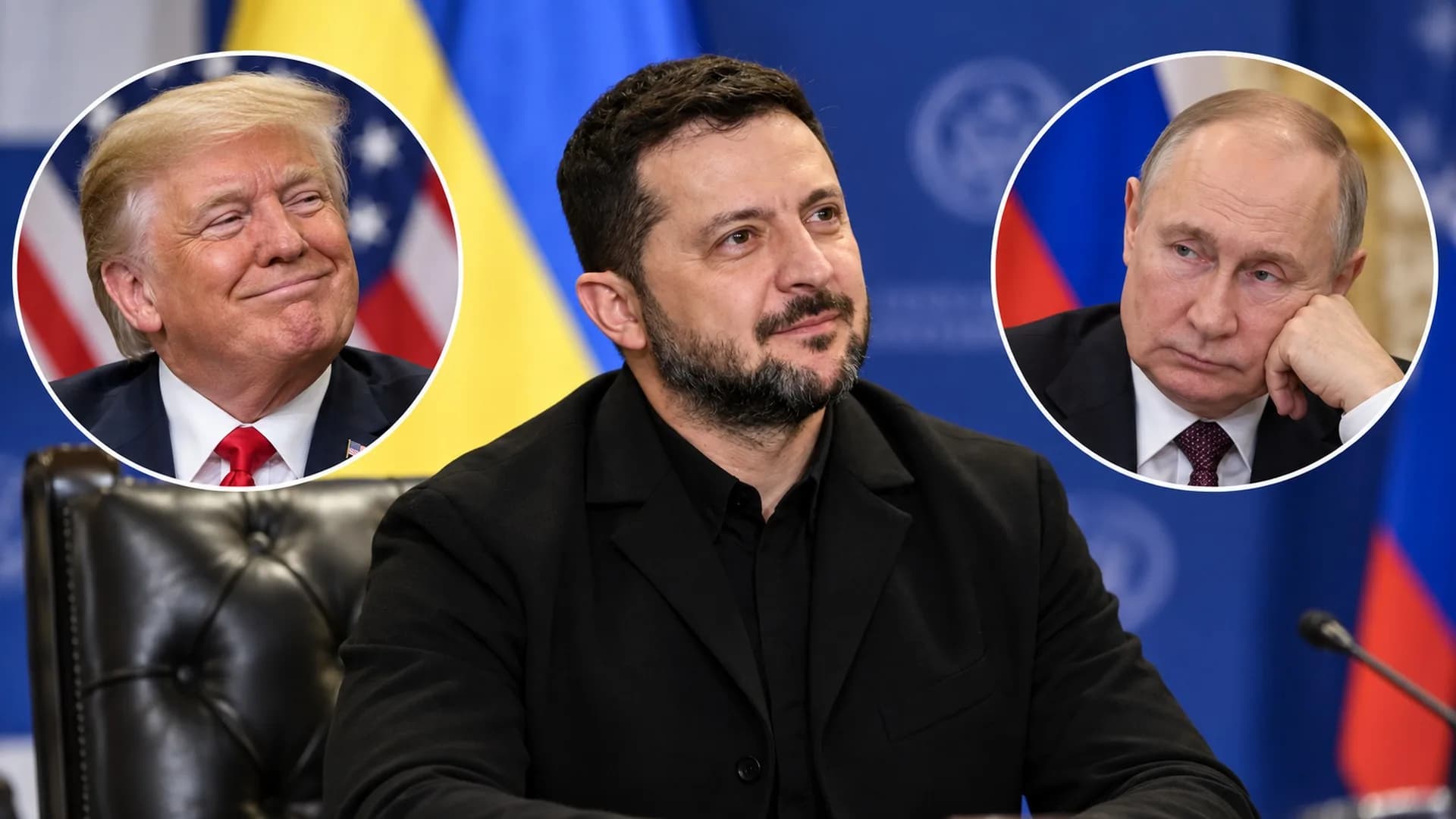
 Linkedin
 Threads
 Facebook
 X
X
After more than four years of war, Washington is trying something more practical than beginning with the hardest question on the table.
Not territory.
Not NATO.
Not Crimea.
Not even a permanent peace treaty.
The Trump administration is instead proposing a sequence of smaller moves intended to stop part of the fighting, rebuild diplomatic contact and then attempt the larger negotiation.
According to Ukrainian President Volodymyr Zelensky, the American proposal currently contains three immediate steps:
A reciprocal halt to attacks on energy infrastructure.
The reopening of the Black Sea grain corridor.
And a trilateral negotiating format involving the United States, Ukraine and Russia. Washington has discussed Abu Dhabi as a possible location.
That may sound procedural.
It isn't.
If representatives of all three governments actually sit together again, it would mark a significant reopening of a diplomatic channel that has repeatedly stalled.
Ukraine says yes
Zelensky's position is unusually clear.
“On the table now there is a proposition: energy ceasefire. We are ready,” he told Axios after meeting President Donald Trump in New York during the U.N. General Assembly.
Ukraine has also publicly backed efforts to restore maritime exports through the Black Sea.
Following talks with Turkish President Recep Tayyip Erdoğan this week, Zelensky said countries across the world remain dependent on Ukrainian food exports and that several options are being considered to restore the corridor fully. Kyiv's position is that Russia must stop attacking Ukrainian infrastructure and Ukraine would reciprocate by halting its own long-range strikes.
That matters because the war has increasingly expanded beyond trenches in eastern Ukraine.
Ukraine has been striking Russian oil refineries and energy facilities with long-range drones. Russia continues hitting Ukrainian power infrastructure, cities and logistical targets with drones and missiles. AP reported another series of Russian strikes this week even as diplomatic discussions were underway in New York.
Washington's theory appears to be straightforward:
Start by stopping the attacks that are easiest to define and verify.
Then use that limited agreement to build toward something larger.
Why energy comes first
Energy is not a side issue.
It is now connected to both the battlefield and the world economy.
Ukraine has intensified attacks against Russian refineries, trying to reduce Moscow's capacity to finance and sustain the war. Zelensky has indicated that Kyiv would halt those strikes if Russia reciprocates against Ukrainian energy infrastructure.
Trump has also raised concerns about the effect of refinery attacks on global fuel supplies and prices. AP reported this week that Ukrainian strikes against Russian refining capacity have contributed to broader concerns over diesel availability at the same time other geopolitical crises are pressuring energy markets.
So an energy truce could theoretically accomplish several things at once:
Reduce civilian vulnerability before winter.
Lower pressure on Ukrainian electricity infrastructure.
Protect Russian refining capacity.
And reduce one source of volatility in international energy markets.
But that also explains why reaching an agreement is difficult.
Both sides currently consider energy infrastructure a source of leverage.
Stopping attacks means giving up a weapon.
Then comes the Black Sea
The second piece is food.
Ukraine remains a major agricultural exporter, and securing its maritime export routes affects countries far beyond Europe.
Zelensky's government says it has been working with Türkiye, Egypt and other Middle Eastern partners to restore safer maritime trade. The Ukrainian presidency says there are countries “on every continent” dependent on those exports.
Reuters reported Wednesday that Ukraine is prepared to support a maritime truce based on proposals involving Türkiye, Egypt and India.
Secretary of State Marco Rubio, after meeting Russian Foreign Minister Sergey Lavrov, said both sides had expressed interest in limited arrangements involving grain and energy.
But there is an important qualification:
The Kremlin has not publicly accepted the proposal.
That is where the diplomacy stops being simple.
The third step is the big one
The United States wants the three countries together.
There are two possible versions.
The first would involve technical or negotiating teams.
The second—and far more consequential—would eventually place Trump, Zelensky and Putin at the same table.
Zelensky says Ukraine is open to either.
“We are open — any country, any format,” he said.
He has also suggested another possibility: the G20 summit in Miami in December, where a leaders-level trilateral meeting could potentially occur.
Rubio confirmed this week that Putin has been invited to attend the G20.
That creates an interesting diplomatic possibility.
Rather than organizing an entire summit around the Russia-Ukraine war, the leaders could use an already scheduled international gathering to meet.
But nobody should mistake an invitation for an agreement.
Putin remains the unanswered question
Ukraine wants talks.
The United States is pushing talks.
Russia says it remains open to negotiations in principle.
Yet Kremlin spokesman Dmitry Peskov said this week that Moscow currently sees “no prerequisites” for moving toward a wider peace process, even while saying Russia remains open to peace discussions.
That contradiction has followed the negotiations repeatedly.
Russia says it is willing to negotiate.
Then the parties disagree about what must happen before negotiations begin.
Kyiv wants meaningful de-escalation and security.
Moscow continues pressing territorial and political demands.
Previous U.S.-mediated discussions in 2026 failed to resolve the most fundamental dispute: what happens to Ukrainian territory occupied by Russia.
That problem has not disappeared.
No energy ceasefire can solve it.
No grain corridor can solve it.
And simply getting Trump, Putin and Zelensky into one room cannot solve it automatically.
But Washington appears to be betting that you do not begin with the impossible question.
You begin with something both sides might actually agree to.
Why this moment is different
There has been movement behind the scenes for weeks.
CIA Director John Ratcliffe traveled to Moscow in late August and raised the idea of trilateral negotiations. Trump envoys Steve Witkoff and Jared Kushner then held separate discussions with Russian and Ukrainian officials in early September. Zelensky later said the American team had presented several “decent ideas” worth developing.
Trump met Zelensky in New York this week.
Rubio met Lavrov.
Witkoff and Kushner continued discussions with Ukrainian and European officials.
Türkiye is discussing Black Sea security.
And American negotiators are continuing to send proposals toward Moscow.
That does not amount to peace.
But it does amount to diplomacy becoming active again.
The war is still speaking louder than the negotiators
Perhaps the best illustration of where things stand happened while Zelensky was discussing diplomacy this week.
During his interview about the proposed talks, Russian ballistic missiles were again being launched toward Kyiv.
That is the reality surrounding every peace proposal.
Negotiators are discussing an energy ceasefire while energy facilities are being attacked.
They are discussing a maritime agreement while Black Sea security remains contested.
They are discussing a meeting between leaders while the governments still disagree over the basic terms required to end the war.
So the latest development is not a peace agreement.
It is something smaller—but still meaningful:
Washington has reduced the next stage of diplomacy to three concrete tests.
Can Russia and Ukraine stop attacking each other's energy systems?
Can the Black Sea food corridor operate more safely?
And can the three sides finally sit down together?
Ukraine has said yes.
The United States is pushing forward.
Now much of the attention shifts to Moscow.
Because before anyone can negotiate the final map of the war, they first have to prove they can negotiate at all.